


Zach Blas
Associate Professor, Visual Studies
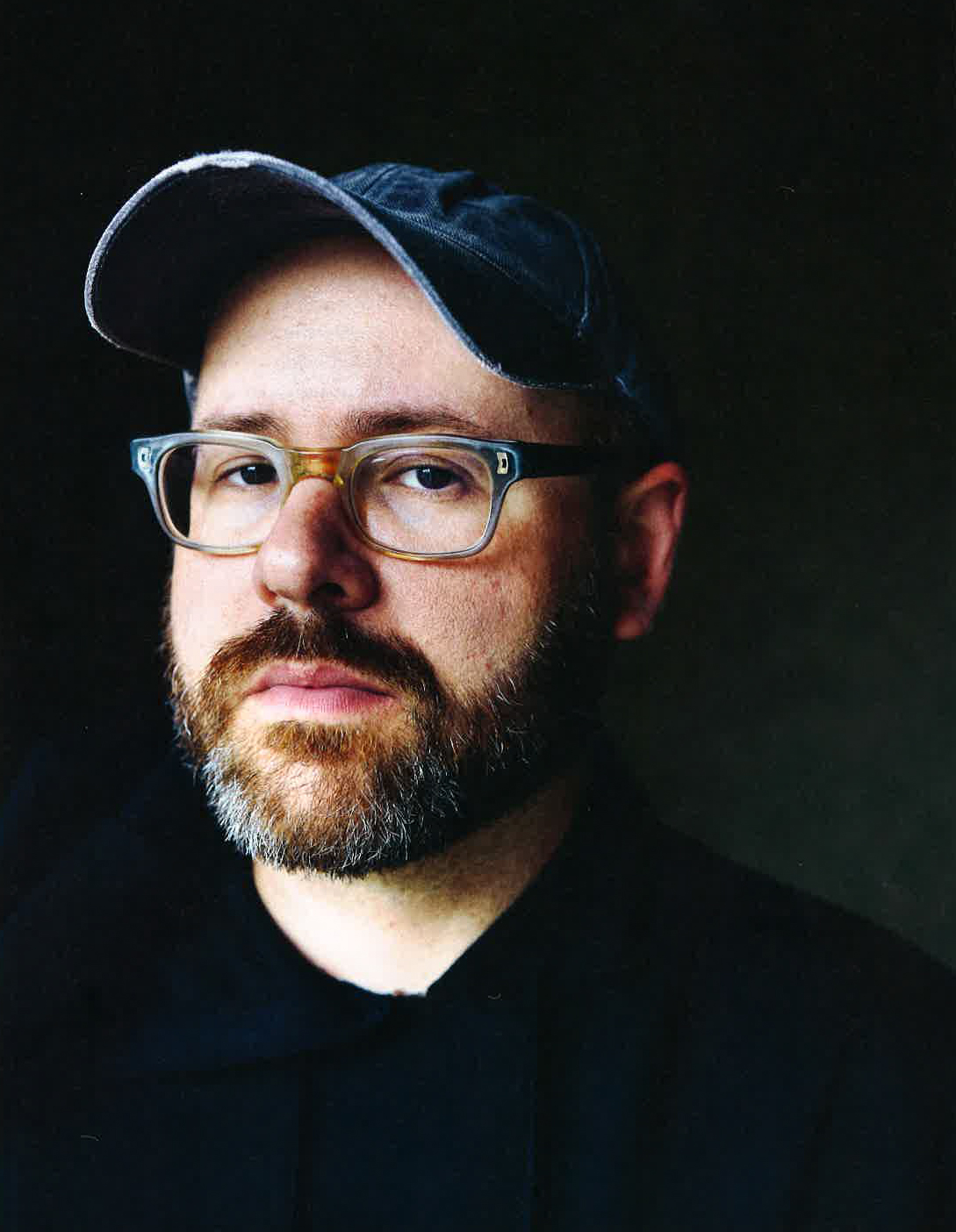
Zach Blas (b. 1981, Point Pleasant, West Virginia, USA) is an artist, writer, and filmmaker whose practice contends with computational technologies, their industries, and the powers that constitute and animate them. Forefronting critical inquiry, technical experimentation, and concept engineering, Blas creates installations that feature moving image and sculpture, films and videos, lecture-performances, publications, and web-based media.
Since 2006, his practice has addressed power and queer resistance in digital, networked systems. Works include Facial Weaponization Suite (2012–14), a series of protest masks against biometric facial recognition; transCoder from Queer Technologies (2008), a queer programming anti-language; and SANCTUM (2018), a sex dungeon recast as a temple to security and surveillance. In 2018, he commenced Silicon Traces, a trilogy of immersive moving image installations and related works that explore the histories, philosophies, beliefs, fictions, and fantasies that shape Silicon Valley’s visions of the future as means to domination. CULTUS (2023, part two of the trilogy) is a techno-religious computer that invokes a pantheon of AI gods. The Doors (2019, part one) is a psychedelic trip on nootropics as an AI liquid light show in an artificial garden. Contra-Internet: Jubilee 2033 (2018, prologue) is a science-fiction film that depicts Ayn Rand time-traveling to a future Silicon Valley overthrown by queer militants.
Blas has exhibited in major international exhibitions including the 82nd Whitney Biennial, New York (2026); 12th Berlin Biennale for Contemporary Art (2022); British Art Show 9, Aberdeen (2021); and 12th Gwangju Biennale (2018), and at venues including Los Angeles County Museum of Art (2024); Galerie Rudolfinum, Prague (2023); KANAL – Centre Pompidou, Brussels (2023); Australian Centre for Contemporary Art, Melbourne (2022); de Young Museum, San Francisco (2020); Walker Art Center, Minneapolis (2019); transmediale, Berlin (2018, 2015); Whitechapel Gallery, London (2016); and ZKM Center for Art and Media, Karlsruhe (2015). He has also presented solo exhibitions at Vienna Secession (2024); arebyte Digital Art Centre, London (2023); Van Abbemuseum, Eindhoven (2020); Haus für Medienkunst Oldenburg (2019); Abierto x Obras, Matadero Madrid (2018); Art in General, Brooklyn (2018); and Gasworks, London (2017). Blas’s work is included in the collections of the Whitney Museum of American Art, New York; Museo Universitario Arte Contemporáneo, Mexico City; and National Museum of Modern and Contemporary Art, Seoul.
Blas has published books, essays, and texts, in which he has created and developed a range of theoretical concepts, including queer technology (2007), queer darkness (2012), viral ascesis (2012), informatic opacity (2014), contra-internet (2014), utopian plagiarism (2015), metric mysticism (2017), xeno-telos (2021), and informatics of domination (2025). His publications include the artist monograph Unknown Ideals (Sternberg Press and Haus für Medienkunst Oldenburg, 2021) and Informatics of Domination (Duke University Press, 2025), which he co-edited with Melody Jue and Jennifer Rhee. Additional writings have appeared in e-flux Journal, Mousse Magazine, Women Studies Quarterly, and numerous edited volumes and exhibition catalogues.
His practice has been supported by awards, grants, and fellowships from organizations including Canada Council for the Arts, Social Sciences and Humanities Research Council of Canada, United Kingdom Arts and Humanities Research Council, Arts Council of England, and Creative Capital (USA).
Blas is an Associate Professor of Visual Studies in the Daniels Faculty (2021–present) and the Cinema Studies Institute (2026–present) at the University of Toronto. He was previously a Lecturer in the Department of Visual Cultures at Goldsmiths, University of London (2015–21). Blas holds a Ph.D. from The Graduate Program in Literature at Duke University (2014) and an M.F.A. in Media Arts from University of California, Los Angeles (2008).