Peter Tan
Sessional Lecturer


Sessional Lecturer
Sessional Lecturer
Assistant Professor
2025/2027 Emerging Architect Fellow
a.kalimungabo@daniels.utoronto.ca
Anthony Kalimungabo Wako's teaching and research interests encompass conservation and built heritage, with a focus on colonial and postcolonial histories of urban centres in Uganda and East Africa.
Investigating links between historical consciousness and praxis while acknowledging design research and why it is relevant for a holistic output, his research focuses on histories of urban centres. These centres, such as Jinja, Kampala and Fort Portal had a significant development during the colonial period and the socio-political events that contributed to architecture and urbanism of the post-colonial period. His approach to conservation in built heritage architecture begins with unpacking and (re)presenting the hidden histories of ‘colonial’ urban centres. Anthony’s work seeks to develop awareness of intercultural influences of the past on architecture, and the exchange of different cultural groups on urbanism as an integral part of architecture discourse. Interrogating narratives surrounding built heritage is a step away from Western-influenced approaches to learning history in the East African region. While his research project addresses multiple dimensions, the social one presents an important strand that resonates with the suppressed heritage voices of Jinja’s neighborhoods.
Anthony is a recipient of the 2024 Graham Foundation for Advanced studies in the Fine Arts grant for his research project titled ‘Tracing the Footprints of entangled Narratives’. This project documents the socio-cultural encounters of Jinja’s built heritage, highlighting the hidden histories of generations of immigrants from South Asia who built the Uganda Railway from 1896 to 1901. His noteworthy activity is the contribution towards the 2019 Cross-Cultural Foundation Uganda’s assessment of historic sites in Kampala, Entebbe, and Jinja. His research has been presented and published in international peer-reviewed conferences including the Passive Low-Energy Architecture 2020 (Conserving 20th Century Historic Places and Buildings of Jinja Uganda through Environmentally Sustainable Adaptive Reuse); WIT Transactions on The Built Environment (STREMAH) 2019 and 2021 (Historical Study of Jinja, Uganda: A City influenced by Industrial Developments During the Early 20th Century, and Deliberations on Conservation of Built Heritage: Paying Homage to a Historical Past through Architectural Education, Learning and Research); and the Centre for Asian and Middle East Architecture (CAMEA) Adelaide Congress 2021 (Hidden Histories: Indian Influence on Architecture and Urbanism across the East African Interior). Anthony is also a recipient of the 2020 PLEA Jeffrey Cook Student Travel Scholarship, and the 2023 Scott Opler Emerging Scholar Fellowship under the Society of Architectural Historians.
Anthony has held faculty positions at the Faculty of the Built Environment (FoBE), Uganda Martyrs where he has taught Research by Design, Historical Studies, Cultural Studies and Contemporary Aspects of Architecture. He was the Acting Dean at the FoBE until 2025. He holds a Bachelor of Engineering in Civil and Building Engineering from Kyambogo University, an Advanced Diploma in Environmental Design and a Master of Architecture, both from Uganda Martyrs University.

Assistant Professor
2024/2026 Emerging Architect Fellow
humbi.song@daniels.utoronto.ca
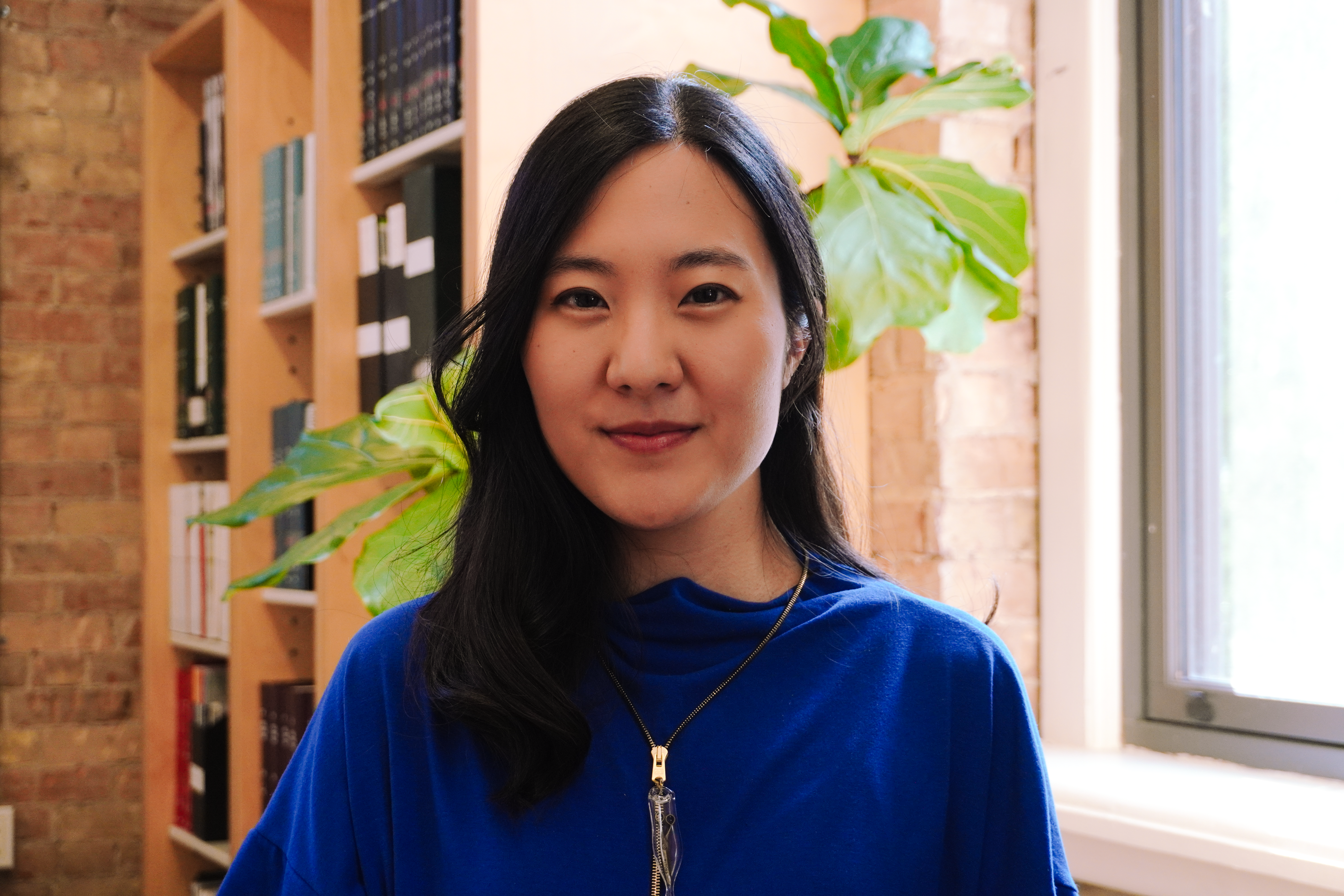
Humbi Song is an Assistant Professor and Emerging Architect Fellow at the University of Toronto. Her work focuses on the intersection of architecture, technology and human-computer interaction.
She investigates the evolving relationships between human creativity and interactive technologies, such as Artificial Intelligence, in the context of broader societal and technological influences on how designs are conceived, created and experienced. In her creative practice, she builds spatial installations to explore these co-creative processes between designers, responsive interactive technologies and AI. These projects often take the form of interactive installations in the public realm that respond dynamically to human presence and movement, serving as playful and poetic explorations of human behaviour and social relationships within the built environment. Her creative practice has been supported by various fellowships and international residencies, including the Loghaven Fellowship, Haystack Mountain School of Crafts and the Digital Stone Project.
Her current research explores questions surrounding co-design and co-creation with AI and digital fabrication tools that seemingly interact with humans with a degree of agency. Current advances in generative AI offer an opportunity for the discipline to further interrogate how we shape and are shaped by the tools of design, who gets to shape our built environment, and whether we can use AI to increase accessibility to design and “making” practices for community members and non-design professionals.
Her recent scholarly contributions include pedagogical research on integrating digital AI literacy in architectural education (SIGRADI 2024), a prototype fabrication project of Human-AI collaborative marble sculpting through real-time VR x AI workflows (ACADIA 2024) and new quantitative methods for understanding spatial experiences and spatial memory in airports (ECADE 2022) and urban neighbourhoods (SIGRADI 2022) through wearable biometric technology, the last of which was recognized with the conference’s Research Innovation Award.
Song has held faculty positions at Harvard GSD, Northeastern University and Wentworth Institute of Technology, where she has taught undergraduate core studios, graduate thesis research studios and seminars in computation, AI, responsive architecture, representation and fabrication. She directs Studio Humbi Song, LLC and previously worked at Michael Van Valkenburgh Associates, Rogers Partners and INVIVIA. She holds a Bachelor’s degree in Social Studies and a Master of Architecture, both from Harvard University.
Professor
Director, PhD in Architecture, Landscape, and Design
claire.zimmerman@daniels.utoronto.ca
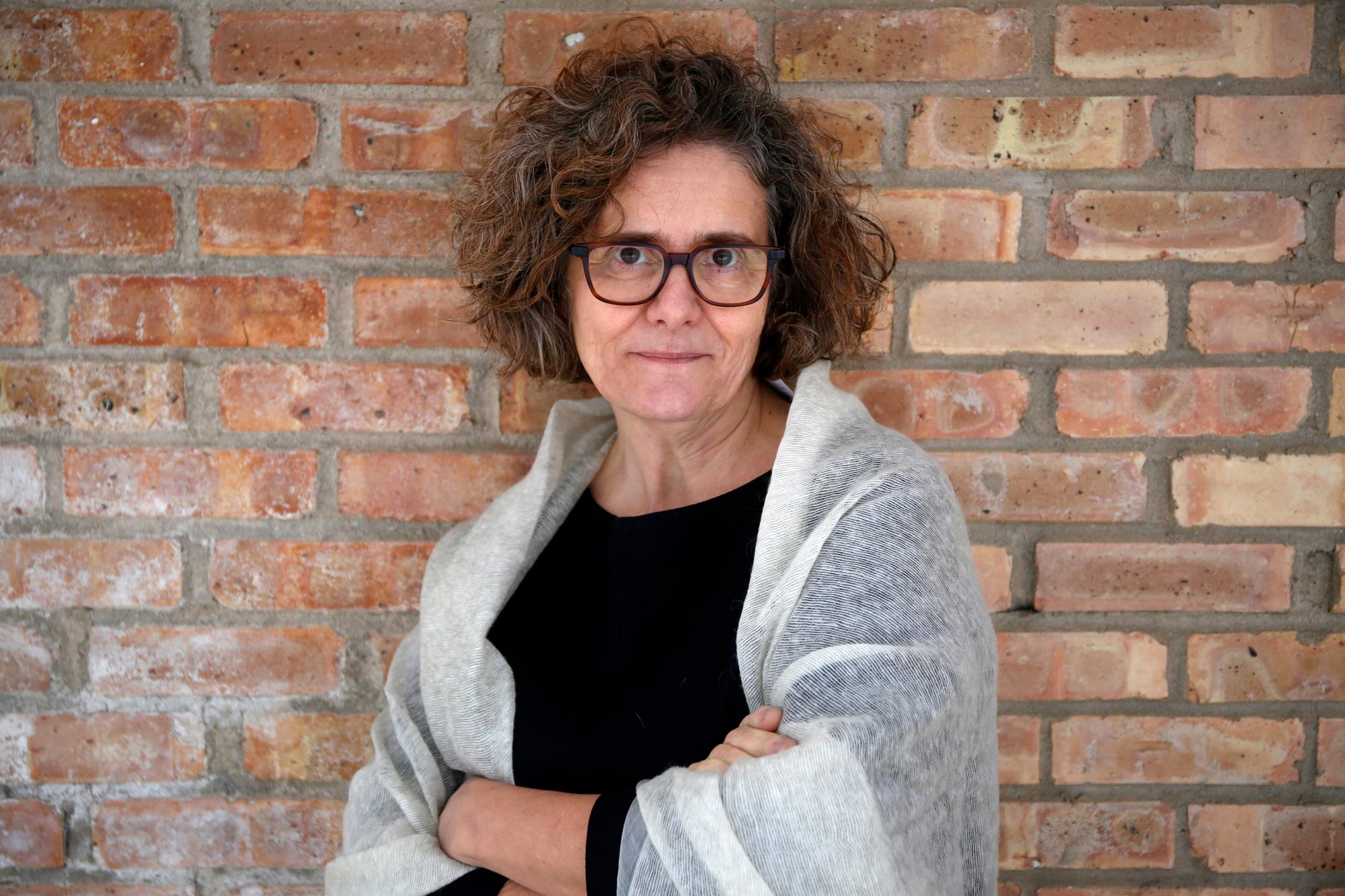
Claire Zimmerman directs the PhD Program in Architecture, Landscape, and Design at the University of Toronto Daniels Faculty. Her current projects include work on industrial architecture, a collective research project on The Costs of Architecture, a co-edited book titled Lines of Property, and a publication project on architectural collage. She has published three solo-authored books (in press: Albert Kahn Inc.: Architecture Labor, Industry), four edited books (most recent: Architecture against Democracy: Histories of the Nationalist International), and many articles, both long and short form.
She studied at the University of Pennsylvania (B.A., 1985), Harvard University (MArch., 1990), and the CUNY Graduate Center (Ph.D., 2005). She directed Doctoral Studies in Architecture at the University of Michigan (2013-2019), where she co-founded the Equity in Architectural Education Consortium, a resource-sharing group of architectural schools with complementary needs. She has chaired the Committee on Equity in the Department of the History of Art and coordinated a community engagement project at UM, Black Washtenaw County (+$500,000).
Zimmerman serves or has served on thirty-nine dissertation committees, as primary advisor for eleven. She is the Associate Editor of the Journal of the Society of Architectural Historians.
Assistant Professor
karen.kubey@daniels.utoronto.ca
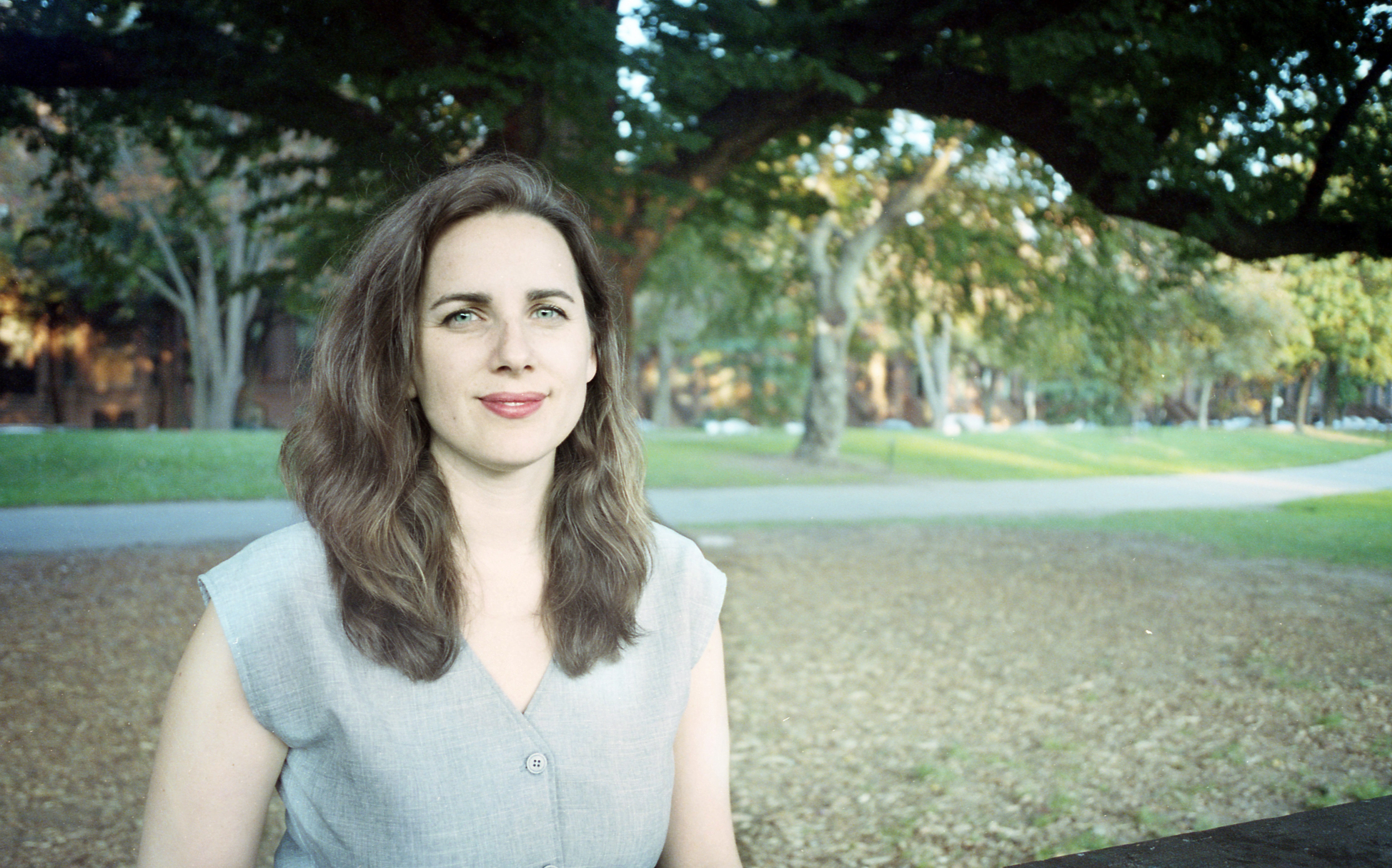
Karen Kubey is an urbanist specializing in housing design and social justice. She is the editor of Housing as Intervention: Architecture towards Social Equity (Architectural Design, 2018) and served as the first executive director of the Institute for Public Architecture. Kubey co-founded the New York chapter of Architecture for Humanity (now Open Architecture/New York) and co-founded and led the New Housing New York design competition.
Holding degrees in architecture from the University of California, Berkeley and the Columbia University Graduate School for Architecture, Planning and Preservation (GSAPP), Kubey began her career as a designer of below-market housing. She has received support from the New York State Council on the Arts and MacDowell, and has completed a Fulbright U.S. Scholar fellowship at the Universidad Torcuato Di Tella in Buenos Aires, Argentina. Kubey has taught at Pratt Institute and Columbia GSAPP and was a 2019-20 Faculty Fellow in Design for Spatial Justice at the University of Oregon.
Assistant Professor, Teaching Stream
zachary.mollica@daniels.utoronto.ca
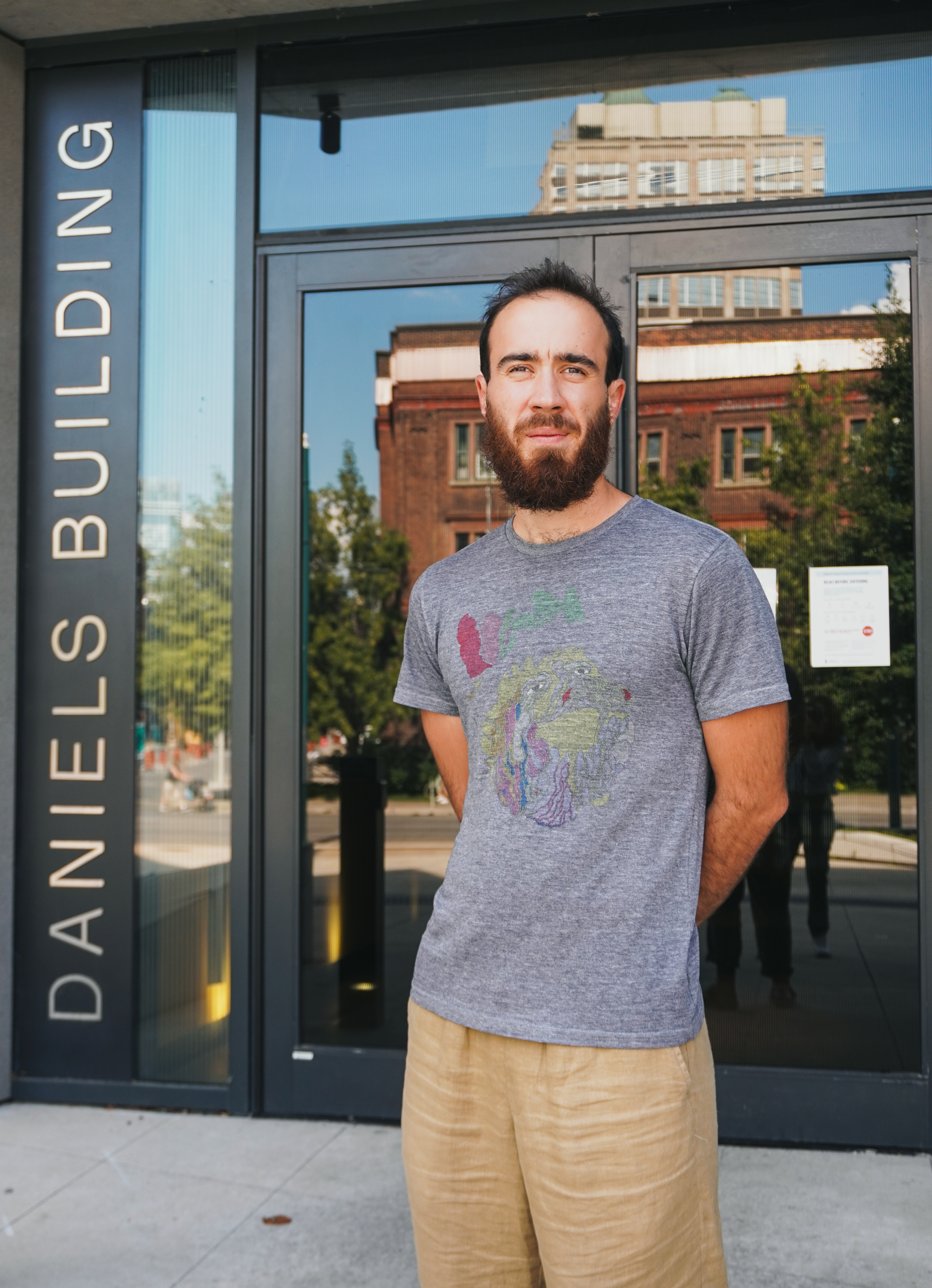
Zachary Mollica is an architect, maker and educator whose work with trees has become a primary reference in alternative wood building futures. Mollica’s work integrates innovative digital methods—particularly 3D scanning—with craft and material knowledge in the pursuit of better natural, social and constructed environments. He joined the Daniels Faculty as one of its inaugural Emerging Architect Fellows in 2022 and will be contributing to wood-focused, hands-on teaching and research at the school.
With collaborators and students, Mollica’s research pursues the development of design and technical tools that intend to spur a re-diversification of wood building methods. Through careful consideration of forest environments and the properties of trees, it seeks to demonstrate new processes that can enable conventionally low-value products of forests to be converted into high-value building components with minimal energy. The approach is best demonstrated by the Tree Fork Truss, a large spanning structure that Mollica led the design and assembly of in 2015.
Before joining the Daniels Faculty, Mollica was Warden of the Architectural Association’s forest campus, Hooke Park in Dorset, England. In leading this unique educational facility and its staff, he was also responsible for teaching M.Arch Design + Make students and was the founding director of the AA Wood Lab.
Mollica regularly appears as a speaker and reviewer at international design schools, and his work has been published widely in both media and academic journals. Besides his work at the Daniels Faculty, Mollica is a consultant to designers, foresters, arts and heritage practices, and educational institutions.
Sessional Lecturer

Carol Phillips Partner B.E.S., B.Arch., AdvDip (HC), OAA (BCDS), NSAA, AIBC, AAA, SAA, AIA, LEED AP, SCUP, FRAIC
Carol Phillips, a Partner at the acclaimed architecture firm Moriyama Teshima Architects, is a Design Leader behind many of the firm’s most celebrated Canadian and international projects.
A graduate of the University of Waterloo School of Architecture, with both global and Canadian experience informing her work, she has led numerous award-winning projects, including the Visitor Welcome Centre in Ottawa, the Multifaith Centre at the University of Toronto, and Limberlost Place for George Brown College, an exceptionally groundbreaking mass timber, net-zero carbon emissions building.
Carol is a passionate educator, teaching graduate courses at the University of Toronto and Toronto Metropolitan University. She has been a frequent keynote speaker and lecturer nationally and internationally and is an active voice in the architectural community, advocating for higher design standards and low-carbon solutions. Carol shares her expertise to the larger professional community, government agencies, research entities and serves on design award juries and review panels.
A Fellow of the Royal Architectural Institute of Canada, Carol is celebrated for her elegant, distinguished by the spare but assertive use of materials and her commitment to sustainability, with an emphasis on mass timber construction. Driven by a collaborative creative process, her work aspires to connect people to each other and the natural environment, embracing architecture’s role in addressing social and climate issues.
Associate Professor
danielh.chung@daniels.utoronto.ca
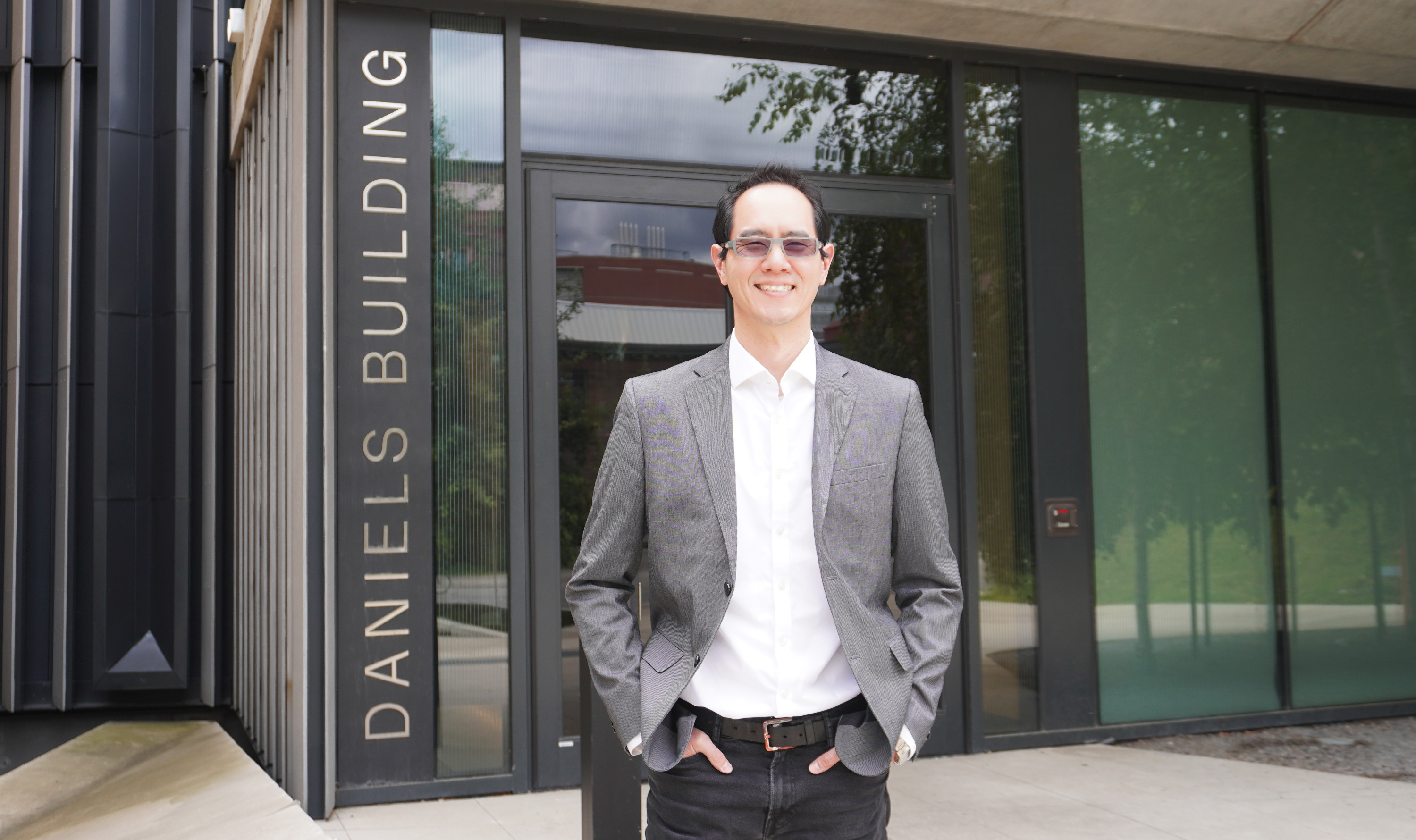
Dr. Daniel Chung is an Associate Professor of Building Science at the University of Toronto, John H. Daniels Faculty of Architecture, Landscape and Design and is cross-appointed to the Department of Civil & Mineral Engineering. He is a registered architect and professional engineer with over twenty years of professional experience in building design, engineering, and construction. He has a PhD in Architectural Engineering, and his research focuses on energy efficiency, hygrothermal analysis, and verification of building envelopes to develop better performing and more resilient buildings in the context of climate change. Degradation, stochastic, and regression analyses are used to study the probabilistic outcomes and long-term behavior of buildings. In addition to validating novel retrofit assemblies with physical testing, material testing is performed in his lab to explore the hygroscopicity of biogenic materials such as biochars and insulations. Dr. Chung served as an expert participant on behalf of the US in the International Energy Agency Solar Heating & Cooling Programme Task 59/Annex 76: Renovating Historic Buildings Towards Zero Energy. He is currently participating in IEA-EBC Annex 95: Human-Centric Buildings for a Changing Climate. For the 2025-2026 academic year Dr. Chung is a Fulbright Scholar in Denmark hosted by Aalborg University Copenhagen.
Education
2019 – Ph.D., Architectural Engineering, Drexel University, Philadelphia, US
2006 – M.Arch., Yale University, New Haven, US
2000 – M.S.E., Civil & Environmental Engineering, Princeton University, Princeton, US
1998 – B.A., Design of the Environment, University of Pennsylvania, Philadelphia, US
1998 – B.S.E., Civil Engineering, University of Pennsylvania, Philadelphia, US
Current externally funded research projects include:
NSERC Alliance: ReCONstruct: Building Energy Retrofit Solutions for Canada, PI: Michael Jemtrud
New Frontiers in Research Fund – Exploration: Creating Equitable, Resilient and Low Carbon Canadian Community Housing that Enhances Social Welfare, PI: Cynthia Cruickshank
National Research Council Canada: Lost in Translation: Knowledge Translation & Mobilization for Building Occupants and Operators, PI: Daniel Chung
Courses
ARC480H1F L0101: Advanced Topics in the Technology of Architecture: Building Envelopes: Systems, Responses, and Affect
ARC2014YS: Architectural Design Studio 4 (Comprehensive Design)
ARC2047HF: Building Science 3: Environmental Systems
ARC2048HS: Building Science 4: Building Science, Materials and Construction 2
ARC3410HS: Selected Topics in Architecture and Technology, Past and Future Building Envelopes
Recent Publications & Presentations
Amiri, A., Jemtrud, M., Chung, D. (2026). A multi-objective optimization framework for analyzing thermal resilience under power outage and varying climatic conditions." Energy Conversion and Management 351: 121013.
Zagar, M., Cruickshank, C., Chung, D., Yassin, K., Papineau, M. (2025). Assessing Residential Deep Energy Retrofit Performance Based on Resilience to Future Weather. Conference Proceedings. 2025 Buildings XVI International Conference, Clearwater Beach, United States of America, Conference Date: December 8-11, 2025.
Baldwin, C., Rowan, K., Dalkowski, T., Chung, D., Cruickshank, C., Malomo, D. (2025). Experimental Evaluation of the Thermal and Hygrothermal Performance of a Double Wythe Brick Energy Retrofit. Conference Proceedings. 2025 Buildings XVI International Conference, Clearwater Beach, United States of America, Conference Date: December 8-11, 2025.
Hilbrecht, R., Baldwin, C., Cruickshank, C., Dalkowski, T., Chung, D. (2025). Exploratory testing of wind driven rain sequences using a pressurized spray rack for hygrothermal modelling. Moisture in Buildings, Proceedings of ICMB25. International Conference on Moisture in Buildings (ICMB25), Guimarães, Portugal, Conference Date: October 23-24, 2025.
Rowan, K., Baldwin, C., Chung, D., Cruickshank, C., Santana Quintero, M., Dalkowski, T., Malomo, D. (2025). Hygrothermal Testing Protocols for Improved Retrofits of Existing Masonry. Conference Proceedings. 14th International Conference on Structural Analysis of Historical Constructions (SAHC 2025), Lausanne, Switzerland, Conference Date: September 15-17, 2025.
Rudnicki, I., Cruickshank, C., Chung, D. (2025). Assessing the behaviour of a commercial building that has undergone a panelized retrofit in future climate weatherscenarios in Canada. 6th International Conference on Building Energy and Environment (COBEE 2025), Eindhoven, Netherlands, July 2025.
Zagar, M., Cruickshank, C., Chung, D. (2025). Developing validated building energy and hygrothermal models to assess deep energy retrofits. 6th International Conference on Building Energy and Environment (COBEE 2025), Eindhoven, Netherlands, July 2025.
Tidwell, P; Malomo, D; Pulatsu, B; Chung, D; Xie, Y. (2025). Timber-based Retrofitting of Unreinforced Masonry: An Experimental Approach to Repair and Reuse. Conference Proceedings. 6th International Conference on Structures and Architecture (ICSA 2025), Antwerp, Belgium, Conference Date: Julu 8-11, 2025.
Liu, J; El-Assaly, M., Garcia Mendez, W., Pulatsu, B., Chung, D., Tidwell, P., Malomo, D. (2025). A lowcost modular timber retrofit for sustainable energy-structural retrofit of masonry buildings: mechanical characterization under diagonal compression. Engineering Structures. 332(119099)
Liu, J., Pulatsu, B., Chung, D., Tidwell, P., Malomo, D. (2025). Structural retrofit of URM pier-spandrel assemblies using an engineered timber cladding systems with thermal insulation: first experimental insights. Conference Proceedings. 14th International Conference on Structural Analysis of Historical Constructions (SAHC 2025), Lausanne, Switzerland, Conference Date: October 23-24, 2025.
Chung, D. (2024). Examining Climate Change, Moisture Risks, and Retrofits for Historic Wood Framed Buildings Using Stochastic Simulations. Conference Proceedings. Comfort At The Extremes (CATE) 2024 Investing in Well-being in a Challenging Future, Seville, Spain, November 2024.
Babula, E; Malomo, D; Chung, D; Tidwell, P; Pulatsu, B. (2024). Simulating the in-plane failure mechanisms of unreinforced masonry walls with timber-based retrofit. 7th International Symposium on Strengthening Historical Buildings, Diyarbakir, Turkey, September 2024.
Chung, D. (2024). Examining Moisture Reference Years and Future Weather for Hygrothermal Analysis. eSim 2024 IBPSA Canada Conference Proceedings, Edmonton, Alberta, Canada, June 5-7, 2024.
Amiri, A., Jemtrud, M., Lavigne, K., Chung, D. (2024). Comparing simulations of deep energy retrofits for a community centre using past and future weather scenarios. eSim 2024 IBPSA Canada Conference Proceedings, Edmonton, Alberta, Canada, June 5-7, 2024.
Malomo, D., El-Assaly, M., Liu, J.,…, Chung, D., Tidwell, P. (2024). A sustainable low-cost timber retrofit design for improving structural and energy performance of existing masonry buildings: preliminary results. Canadian Society for Civil Engineering (CSCE) 2024 Annual Conference Proceedings, Niagara Falls, Ontario, Canada, June 5-7, 2024.
Shen, H., Ho-Von, L., King. T,…Chung, D., Jemtrud, M. (2024). Developing a Building Identification Tool to Support Mass Deep Energy Retrofits. Association of Collegiate Schools of Architecture 112th Annual Meeting Proceedings.
Osborne, P., Kayed, S., Yue, J.,…Chung, D., Jemtrud, M. (2023). Deep 'climate' retrofit: assessing life-cycle thinking of emission calculators in construction. 2023 AIA/ACSA Intersections Research Conference: Material Economies, Amherst, Massachusetts, United States, October 20, 2023.
Chung, D. (2023). Comparing Historic and Future Weather for Envelope Hygrothermal Analysis. 2023 ASHRAE Building Performance Analysis Conference, Austin, Texas, United States, September 11, 2023.
Chung, D., Wen, J., & Lo, J.L. (2023). Examining the Impact of Stochastic Multi-year Weather and Air Infiltration on Hygrothermal Moisture Risks. Journal of Building Physics, 17442591231163459.
Rieser, A., Pfluger, R., Troi, A., …& Chung,D. (2021). Integration of Energy-Efficient Ventilation Systems in Historic Buildings—Review and Proposal of a Systematic Intervention Approach. Sustainability, 13(4), 2325.
Akkurt, G. G., Aste, N., Borderon, J., Buda, A., Calzolari, M., Chung, D., ... & Leonforte, F. (2020). Dynamic thermal and hygrometric simulation of historical buildings: Critical factors and possible solutions. Renewable and Sustainable Energy Reviews, 118, 109509.
Chung, D., Wen, J., & Lo, J.L. (2020). Development and Verification of the Open Source Platform, HAM-Tools, for Hygrothermal Performance Simulation of Buildings Using a Stochastic Approach. Building Simulation. 13(3) 497-514.
Chung, D., & Wen, J. (2019). Building Envelope Moisture Transport in the Context of Assembly Aging and Uncertainty. Technology | Architecture + Design, 3(2), 221-233.
Chung, D. (2019). Evaluation of building envelope performance including uncertainty and degradation within a multi-objective optimization framework. Order No. 13813550, dissertation, Drexel University.
Chung, D. (2018). Real-time Measurement of Building Envelopes to Improve U-Value Characterization. Proceedings of the Architectural Research Centers 2018 Conference Volume 2, 36-44
Chung, D. (2017). Improving Energy Modeling Techniques for Historic Buildings using Preliminary Verification Methods. Proceedings of the Architectural Research Centers 2017 Conference, 336-343
Current supervised graduate students:
Ahmed Shoaib Amiri
Gillian Clayton
Sophia Liu
Teresa Han
Ehsan Yavari
Sunny Sun
To prospective graduate research students:
I am seeking highly motivated and hard-working graduate students interested in building science with an emphasis on building envelope research. Work in the lab often includes simulation and physical testing of envelope assemblies. A background in physical sciences, building physics, architectural technology, or engineering is preferred. Support for graduate students is available.
Assistant Professor, Teaching Stream
ph.harrison@daniels.utoronto.ca
Trained as both an architect and an engineer, Paul Howard Harrison is an Assistant Professor in the teaching stream at the University of Toronto’s John H. Daniels Faculty of Architecture, Landscape, and Design. His design research aims to build equitable and sustainable futures through the integration of simulation, labour and artificial intelligence. Harrison directs HDR’s Design Computation Group, a team of researchers and designers headquartered in Toronto and Vancouver, and he has led the design of major redevelopment projects for clients such as Queen’s University, Canadian Nuclear Laboratories, Kingston General Hospital and London Health Sciences Centre.
Harrison’s work has received awards from The Architect’s Newspaper, Canadian Architect, Fast Company, Architizer, the Canada Wood Council and the European Healthcare Design Awards, among others.
He received a Faculty Design Prize and Frederick Coates Scholarship while completing his Master of Architecture degree at the University of Toronto, where he was advised by Prof. Dr. Benjamin Dillenburger, and he holds a Bachelor of Applied Science in Mechanical Engineering from Queen’s University.