
old_tid
36

08.04.26 - Winter 2026 Reviews (April 8-29)

Wednesday, April 8 to Wednesday, April 29
Daniels Building
1 Spadina Crescent

Whether you're a future student, an alum or a member of the public with an interest in architecture, forestry, landscape architecture or urban design, you're invited to join the Daniels Faculty for Winter 2026 Reviews. 

Throughout April, students from across our undergraduate and graduate programs will present final projects to their instructors and guest critics from academia and the professional community. 

All reviews will take place in the Daniels Building at 1 Spadina Crescent from 9 a.m. to 6 p.m. (unless otherwise stated). Follow @uoftdaniels on Instagram and join the conversation using the hashtags #danielsreviews and #danielsreviews26. 

Please note that times and dates are subject to change. 

Current students should reference the Final Examinations & Reviews schedule for more information.


Wednesday, April 8  

Design + Engineering I (ARC112) | Undergraduate
Instructors: Jay Pooley & Mahsa Malek
Room: 200

Exploring Design Practices (ARC302) | Undergraduate
Instructor: Richard Sommer
Room: Main Hall 

Thursday, April 9  

Design Studio I: How to Design Almost Anything (JAV101) | Undergraduate
Coordinator: Petros Babasikas
Instructors: Anthony Kalimungabo, Mo Soroor, Reza Nik, Erica Kim, Scott Sorli, Harry Wei, Kara Verbeek, Katy Chey, Jeannie Kim
Rooms: Main Hall (170A, 170B), 215, 230, 330 

Friday, April 10  

Drawing and Representation II (ARC200) | Undergraduate
Coordinator: Jeffrey Garcia
Instructors: Roberto Damiani, Nova Tayona
Room: 330

Design Studio II: How to Design Almost Nothing (ARC201) | Undergraduate
Coordinator: David Verbeek
Instructors: Francesco Valente-Gorjup, Daniel Briker, Anne-Marie Armstrong, Maria Denegri, Adrian Phiffer, Michael Piper, Anne Ma, Jay Pooley, Miles Gertler, Fiona Lim Tung
Rooms: Main Hall (170A, 170B, 170C), 230, 215, 240, 2/F hallway


Monday, April 13

Architecture Studio IV (ARC362) | Undergraduate
Coordinator: Shane Williamson
Instructors: Chloe Town, Laura Miller
Rooms: Main Hall (170A, 170B), 230

Technology Studio IV (ARC381) | Undergraduate  
Instructors: Paul Howard Harrison, Suzan Ibrahim
Room: 330

Tuesday, April 14

Design Studio 2 (LAN1012) | Graduate
Instructors: Behnaz Assadi, Liat Margolis
Rooms: Main Hall (170A, 170B, 170C)

Comprehensive Studio III (ARC369) | Undergraduate  
Coordinator: Daniel Briker
Instructors: Mauricio Quiros Pacheco, Fiona Lim Tung
Rooms: 209, 215, 230
Time: 10:30 a.m. - 4:30 p.m. 

Multidisciplinary Capstone Design Seminar (ARC491) | Undergraduate  
Instructor: Erica Kim
Room: 330

Wednesday, April 15

Architectural Design Studio 2 (ARC1012) | Graduate  
Instructors: Fiona Lim Tung (Coordinator), Shane Williamson, John Shnier, Behnaz Assadi, Mauricio Quiros Pacheco, Laura Miller
Indigenous advisor: PhD candidate James K. Bird
First Peoples Leadership Advisory Group: Amos Key Jr., Trina Moyan, Dorothy Peters
Rooms: Main Hall (170A, 170B), 215, 230, 240, 330

Landscape Architecture Studio IV (ARC364) | Undergraduate   
Instructor: Peter North 
Room: 315

Undergraduate Thesis
ARC462

Senior Seminar in Design
Instructor: Jeannie Kim  
Room: 209
Time: 1:00 p.m. - 4:00 p.m.

Thursday, April 16

Comprehensive Studio (ARC2014) | Graduate 
Coordinators: James Macgillivray, Aleris Rodgers
Instructors: Maria Denegri, Jon Cummings, Steven Fong, Pina Petricone, Christopher Cornecelli, Carol Phillips
Rooms: Main Hall (170A, 170B, 170C), 215, 230, 240

Design Studio 4 (LAN2014) | Graduate  
Instructors: Robert Wright, Francesco Martire, Todd Douglas
Room: 330

Friday, April 17

Comprehensive Studio (ARC2014) | Graduate 
Coordinators: James Macgillivray, Aleris Rodgers
Instructors: Maria Denegri, Jon Cummings, Steven Fong, Pina Petricone, Christopher Cornecelli, Carol Phillips
Rooms: Main Hall (170A, 170B, 170C), 215, 230, 240

Design Studio 4 (LAN2014) | Graduate  
Instructors: Robert Wright, Francesco Martire, Todd Douglas
Room: 330


Monday, April 20

Urban Design Studio 2 (URD1012) | Graduate
Instructor: Nusrat Jahan Mim
Room: Main Hall (170A)

Selected Topics in Advanced Computer Applications (ARC3202) | Graduate
Instructor: Alstan Jakubiec
Room: Main Hall (170B)
Time: 9:00 a.m. - 12:00 p.m.

Selected Topics in Architecture (ARC365) | Undergraduate
Instructor: Adrian Phiffer
Room: Main Hall (170B, 170C)
Time: 1:00 p.m. - 4:00 p.m.

Graduate Thesis
LAN3017

Design Studio Thesis
Coordinator: Elise Shelley
Instructors: Behnaz Assadi, Liat Margolis, Francesco Martire, Fadi Masoud, Peter North, Robert Wright
Rooms: 209, 215, 230, 240, 242, 315, 330, 340

Tuesday, April 21

Advanced Topics in Architecture (ARC465) | Undergraduate
Instructor: Zachary Mollica
Room: Main Hall (170C)
Time: 1:00 p.m. - 4:00 p.m.

Graduate Thesis
LAN3017, URD2015

Design Studio Thesis
Coordinator: Elise Shelley
Instructors: Behnaz Assadi, Liat Margolis, Francesco Martire, Fadi Masoud, Peter North, Robert Wright
Rooms: 209, 215, 230, 240, 242, 315, 330, 340

Urban Design Studio Thesis
Coordinator: Mason White
Instructors: Michael Piper, Roberto Damiani, Nusrat Jahan Mim, Mariana Leguia Alegria, Angus Laurie, Simon Rabyniuk
Rooms: Main Hall (170A, 170B)

Wednesday, April 22

Graduate Thesis
ARC3021

Almost Ordinary
Instructor: Michael Piper
Rooms: 209, 230, 240

Rehearsing the Parade: Ephemeral Architectures and Persuasion on the Move
Instructor: Miles Gertler
Room: Main Hall (170B), 330 

Public, Building, Forms
Instructor: Adrian Phiffer
Room: Main Hall (170A) 

Thursday, April 23

Graduate Thesis
ARC3021

Trading Places
Instructor: Jeannie Kim
Rooms: 330, 340

When the Impossible Happens
Instructor: Brian Boigon
Room: 230
Time: 9:00 a.m. - 1:00 p.m.

The Archipelago Studio
Instructor: Petros Babasikas
Rooms: Main Hall (170B, 170C)

Public, Building, Forms
Instructor: Adrian Phiffer
Room: Main Hall (170A) 

Friday, April 24

Thesis II (ALA4022) | Post-Professional
Coordinator: Mason White
Instructors: Brady Peters, Robert Wright, Fiona Lim Tung, Nusrat Jahan Mim, Alstan Jakubiec, Brady Peters
Rooms: 209, 242, 2/F hallway

Graduate Thesis
ARC3021

Trading Places
Instructor: Jeannie Kim
Rooms: 230, 340

Architecture and the Right to Housing
Instructor: Karen Kubey
Rooms: Main Hall (170C), 215, 240

Design Technologies
Instructor: Humbi Song
Rooms: Main Hall (170A, 170B)

Bioregional Futures
Instructor: Sam Dufaux
Rooms: 330, Outdoor Courtyard


Monday, April 27

Undergraduate Thesis
ARC457, ARC462, ARC487

Senior Seminar in History and Theory
Instructor: Simon Rabyniuk
Room: Main Hall (170A, 170C)

Senior Seminar in Design
Instructor: Jeannie Kim  
Room: Main Hall (170B), 240 (a.m.), 242 (p.m.)

Senior Seminar in Technology
Instructor: Nicholas Hoban
Rooms: 230, 242 (a.m.)
Time: 10:00 a.m. - 6:00 p.m.

Tuesday, April 28

Undergraduate Thesis
ARC457, ARC462, ARC487

Senior Seminar in History and Theory
Instructor: Simon Rabyniuk
Room: Main Hall (170A, 170C)

Senior Seminar in Design
Instructor: Jeannie Kim  
Rooms: Main Hall (170B), 209, 242 (p.m.), 330

Senior Seminar in Technology
Instructor: Nicholas Hoban
Room: 230, 242 (a.m.), 1/F Hallway
Time: 10:00 a.m. - 6:00 p.m.

Wednesday, April 29

Selected Topics in Architecture (ARC3703) | Graduate
Instructor: Laura Miller
Room: 330

Modeling and Fabrication in Design (ARC280) | Undergraduate
Instructor: Brady Peters
Room: 215, 230, 240, 2/F Hallway
Time: 9:00 a.m. - 1:00 p.m

Design & Community-Engagement  Capstone Project (ARC492) | Undergraduate
Instructors: Michael Piper & Joshua Kirk
Room: Main Hall (170B, 170C)
Time: 9:00 a.m. - 2:00 p.m

30.03.26 - Liat Margolis named academic co-chair of CECCS

Liat Margolis, an associate professor in the John H. Daniels Faculty of Architecture, Landscape and Design, has been appointed as the new academic co-chair of the President's Advisory Committee on the Environment, Climate Change and Sustainability (CECCS).

Professor Margolis is a former CECCS member and previously served as chair of its Teaching and Learning subcommittee.

Since 2017, the CECCS has worked to coordinate, embed and advance sustainability in every aspect of university activities ranging from teaching to research to operations and community engagement. The committee is currently comprised of 22 presidential appointees from the student body, faculty and staff and has contributed significantly to U of T’s recognition as one of the top two universities in the QS World University Rankings: Sustainability.

Over the next year, CECCS will guide U of T's next chapter for sustainability through a dedicated review and consultation process, culminating in a set of recommended strategies for continued leadership in sustainability in advance of U of T's bicentennial in 2027.

Learn more at sustainability.utoronto.ca

Anne-Marie Armstrong

26.03.26 - Anne-Marie Armstrong awarded BRN IGNITE Grant 5.0

Assistant Professor, Teaching Stream, Anne-Marie Armstrong has received a Black Research Network (BRN) IGNITE Grant 5.0.

The BRN at the University of Toronto offers $5,000 to $15,000 in support of interdisciplinary research and professional development for Black faculty, librarians, postdoctoral scholars, clinical scientists, and medical research fellows and residents at the university.

Since its 2022 launch, $246,750 has been awarded through the BRN IGNITE grant program to 32 researchers across U of T.

Armstrong's project, At the Margins: Architecture, Infrastructure, and Everyday Experience, asks what it means to study architecture not designed for people but that nonetheless shapes the human experience.

Drawing on an ongoing research project, the work examines architectural forms not intended for direct human habitation—such as telecommunication towers, substations, and water systems—to expand understanding of memory, marginality, and cultural identity in urban environments.

Armstrong is a founding member of the Black Architects and Interior Designers Association (BAIDA).

Story by Tina Adamopoulos republished in part from the BRN website

Harold Solomon Kaplan

11.03.26 - Family gift establishes Harold Solomon Kaplan Lecture in honour of prolific architect

Landmarks of entertainment, worship and community defined the career and shaped the legacy of prominent Toronto architect, Harold Solomon Kaplan (1895–1973). 

His daughter, architect Ruthetta Kaplan Reiss, the first woman to graduate from the architecture school at the University of Toronto, and two of Kaplan’s grandchildren, Jonathan Reiss and Rosemary Reiss, have established the Harold Solomon Kaplan Lecture at the University of Toronto’s John H. Daniels Faculty of Architecture, Landscape, and Design. 

The annual named lecture, part of the faculty’s public program series, honours Kaplan by exploring the architecture that fosters collective experiences. 

“These spaces for gathering created by Kaplan for popular entertainment or for religious congregation and community, marks a significant moment in Toronto’s architectural history: Kaplan designed places for shared experiences,” said Robert Levit, acting dean of the Daniels faculty. “This gift by the Kaplan/Reiss family is significant, as it supports our mission as a public university and our building as place for discourse on design and design’s role in shaping the civic space of our cities and towns.” 

The inaugural lecture featuring Peter Sampson and Liz Wreford, co-founders of the Winnipeg-based multidisciplinary practice Public City, is scheduled for March 26.

In this Kaplan family photo, circa 1909, H. Kaplan stands in the background next to his mother, stepfather and stepbrother (supplied photo courtesy of Kaplan Reiss family).

Born in Bucharest, Romania, Kaplan was a young boy when he and his widowed mother, Tillie Hohan, moved to Toronto, where his mother would meet his stepfather, Frank Kaplan. 

The young Kaplan first learned drafting while staying with relatives in Philadelphia, PA. He then studied architecture and building construction during night classes at Toronto’s Technical School.

“When I think of my father, I remember him as a refined, elegant, gentleman – always immaculately dressed in a suit,” said his daughter, Phyllis Kaplan Pepper. “He worked very long hours, going to work at nine, coming home for dinner with the family promptly at six, then returning to the office for a night of work. He was a hard-working successful man, a loving husband, father and grandfather.” 

Kaplan apprenticed with Toronto architect Henry Simpson and worked at the local firm Page & Warrington before establishing a partnership with Abraham Sprachman (1894-1971) in 1929, at the start of the Great Depression. Their modest office was located not far from the U of T campus at Dundas & McCaul Street, near the present site of the Art Gallery of Ontario (AGO).  

Kaplan Reiss assisted in her father’s office as a high school student, eventually choosing architecture as her own career.  

“But my tastes were different; I liked the Bauhaus while his style then was mostly Art Deco,” she says.

Ruthetta Kaplan's graduating class photo (Torontonensis, 1949 by University of Toronto Students' Administrative Council) 

In 1949, Kaplan Reiss became the first woman to graduate from U of T's newly established School of Architecture, which in years prior had been a department within U of T’s Faculty of Applied Science and Engineering, where she was one of only two women among more than 1,000 students.

She recalls that “Architecture students from about that time, including John Daniels, worked during summers at my father’s office.” 

Daniels, who later founded The Daniels Corporation, is the benefactor after whom the Daniels faculty was named in 2008.

Kaplan & Sprachman became Canada’s leading designers of Art Deco and Art Moderne movie theatres from the 1930s through the mid‑20th century. They designed nearly 80 per cent of Canada’s marquee movie houses including Toronto’s historic Eglinton Theatre—now the Eglinton Grand venue—which won the Royal Architectural Institute of Canada Bronze Medal in 1937. In 1936, they were tasked with the renovations of the Revue Cinema at 400 Roncesvalles Avenue, which continues to operate as an independent movie theatre today.   

In addition to work spanning retail, residential and single-family homes, Kaplan & Sprachman shaped significant Jewish community institutions across Canada, including the Anshei Minsk and Shaarei Shomayim synagogues in Toronto, and Edmonton and Vancouver’s Beth Israel, and the Jewish Community Centres of Toronto and Hamilton. 

Kaplan’s granddaughter, Rosemary Reiss, recalls, “Though Kaplan and Sprachman were known for their theatre and other public designs, I most enjoyed the home my grandfather designed for his own family on Strathallan Wood, where we would stay as kids visiting from New York. I remember it as Prairie Style, long and low, with natural stone and wood. There was a wooded garden at the back where trillium grew that I found magical.”

In partnership with local firms, the architects contributed to developments of Baycrest, the new Mount Sinai Hospital, the Primrose Club on St. Clair, the Y on Bloor, and the Oakdale Golf & Country Club which was selected for the arts competition of the 1948 London Olympics. 

Both Kaplan and Sprachman were posthumously named to Ontario Association of Architects’ Honour Roll (1989). Their records were donated to the Ontario Jewish Archives and the City of Toronto Archives. Kaplan & Sprachman, Architects was designated as a national historic event in 2008 by Parks Canada and the Historic Sites and Monuments Board of Canada. 

“We at the Daniels are honoured that the Kaplan/Reiss family has chosen our faculty to remember Harold with a named lecture to celebrate his contributions to Toronto and to the field of architecture. His impact on communities here locally and across Canada cannot be understated,” says Levit.

Story by Nina Haikara republished at Defy Gravity: The Campaign for the University of Toronto

20.03.26 - Canadian Architecture Forums on Education (CAFÉ ) 2026: Indigenous Knowledge and Design

Keynote Panel
Fri, Mar 20 2026, 6:00pm
Daniels Building, 1 Spadina Crescent
Main Hall, DA170

Free for students to register!

This session is part of the 2026 Canadian Architecture Forums on Education (CAFÉ), presented by the Canadian Architecture Students Association CASA-ACÉA) across Toronto, Halifax, Winnipeg and Montréal.

A thought-provoking panel featuring Erik Skouris, Trina Moyan (First Peoples Leadership Advisory Group at the Daniels Faculty) and Johl Whiteduck Ringuette, moderated by U of T architectural studies undergraduate Julien Todd.  

The following week, Indigenous advisor Trina Moyan will be leading a captivating Indigenous Book Reading + Walking Tour on March 27 at 6:00 p.m. starting in the Eberhard Zeidler Library. Moyan will be reading selected text from Indigenous Rights in One Minute by Bruce McIvor, followed by a guided tour of the adjacent land surrounding the institution, while discussing Indigenous rights, Canada’s policies and the relationship to the land.


Presented by the Canadian Architecture Students Association (CASA-ACÉA), CAFÉ 2026: Indigenous Knowledge and Design is part of the Canadian Architecture Forums on Education (CAFÉ), a national outreach initiative launched in 2019 by Dr. Lisa Landrum to examine the role of architectural education and research in shaping Canada’s future. Previous forums have addressed themes including Architecture Policy for Canada (2019/20), Equity in Architecture (2022) and CAFÉ Housing (2025). 

Building on this legacy, CAFÉ 2026 centres Indigenous knowledge and design in response to the need for stronger representation of Indigenous perspectives within architectural education. Canada’s built environment continues to be shaped by colonial systems that have historically marginalized Indigenous ways of knowing, land stewardship and place-based design.

Through a national series of forums and events bringing together Indigenous architects, educators, knowledge keepers and students, CAFÉ 2026 creates space for reflection, dialogue and learning, supporting meaningful conversations on Indigenous-led design and practice within the Canadian architectural context.

26.02.26 - Leopards, Laughter, Razors, Drift: Gareth Long exhibition opens at the Susan Hobbs Gallery

26 February to 11 April 2026
Susan Hobbs Gallery, 137 Tecumseth Street, Toronto (Map)

Exhibition opening: Thursday, February 26, 6:00 to 8:00 p.m.

The research paths veer between multiple characters, some of whom directly exist within the exhibition, while others are absent, replaced by their words. Each of these characters subsists within their own penumbra, exposing a belief system that is otherwise unobvious. First, there is King Camp Gillette, the ultimate Man Corporate and failed utopian socialist. Then there is Kafka, who writes a short, cryptic parable that concedes tradition is not fixed, but rather becomes fortified through changing patterns. Finally, there are images reproduced from a French medical journal, positioning satire as a mechanism for social reform. The works graze one another, as each of the proposed subjects becomes muddled by the next. Elements of one appear in another – a ghosting mimicked through the varying ways we learn, repeat, differentiate, and change in response to the affecting qualities of our surrounding environment.

Read more about the exhibition at the Susan Hobbs Gallery website

About the artist

Gareth Long’s work offers space for a constantly movable host of subjects: copying, seriality, amateurism, translation, and collaboration. Within the artist’s diverse practice, these topics are engaged both as thematic concerns and as methods of production. Interested in questioning and dismantling notions of authorship, Long’s work functions to extend and compact, reframe and refabricate grand narrative through processes of reading, re-reading, and misreading.

Long is an assistant professor and the director of the Visual Studies program at the Daniels faculty.  

CULTUS 2023: Mixed-media installation, Installation view, arebyte Digital Art Centre, London, UK (photo by Max Colson courtesy of the artist Zach Blas).

19.12.25 - Zach Blas among Whitney Biennial 2026 participating artists

CULTUS 2023: Mixed-media installation, Installation view, arebyte Digital Art Centre, London, UK (photo by Max Colson courtesy of the artist). 

Zach Blas, an assistant professor in the visual studies program at the John H. Daniels Faculty of Architecture, Landscape, and Design, is among 56 participating artists at the forthcoming Whitney Biennial 2026

The Whitney Museum of American Art, founded by sculptor Gertrude Vanderbilt Whitney (1875-1942), was the first museum in New York devoted exclusively to showcasing works by living American artists. The Whitney Biennial is the museum’s signature exhibition, surveying artist work in all media. Now entering its 82nd edition, it is the longest-running and most important survey of American art, "where artists test boundaries, spark conversation, and shape culture."

Born in Point Pleasant, West Virginia, Blas is an artist and writer whose practice contends with computational technologies, their industries, and the powers that constitute and animate them. Blas creates moving image installations, films and videos, lecture-performances, publications, and web-based media. At the forthcoming Whitney Biennial, he will showcase CULTUS (2023), a multimedia installation that addresses a burgeoning AI religiosity in the tech industry.

Blas has exhibited in major international exhibitions including the 12th Berlin Biennale for Contemporary Art (2022); British Art Show 9, Aberdeen (2021); and 12th Gwangju Biennale (2018), and at venues including Los Angeles County Museum of Art (2024); KANAL-Centre Pompidou, Brussels (2023); Australian Centre for Contemporary Art, Melbourne (2022); de Young Museum, San Francisco (2020); Walker Art Center, Minneapolis (2019); Whitechapel Gallery, London (2016); ZKM Center for Art and Media, Karlsruhe (2015); and transmediale, Berlin (2015). He has also presented solo exhibitions at Vienna Secession (2024); arebyte Digital Art Centre, London (2023); Van Abbemuseum, Eindhoven (2020); Haus für Medienkunst Oldenburg (2019); Art in General, Brooklyn (2018); and Gasworks, London (2017).

His works are in the collections of Museo Universitario Arte Contemporáneo, National Museum of Modern and Contemporary Art, Korea, and the Whitney Museum of American Art.

The biennial opens at the Whitney Museum of American Art on March 8, 2026.

27.01.26 - Master's student work on exhibit at the Toyo Ito Museum of Architecture

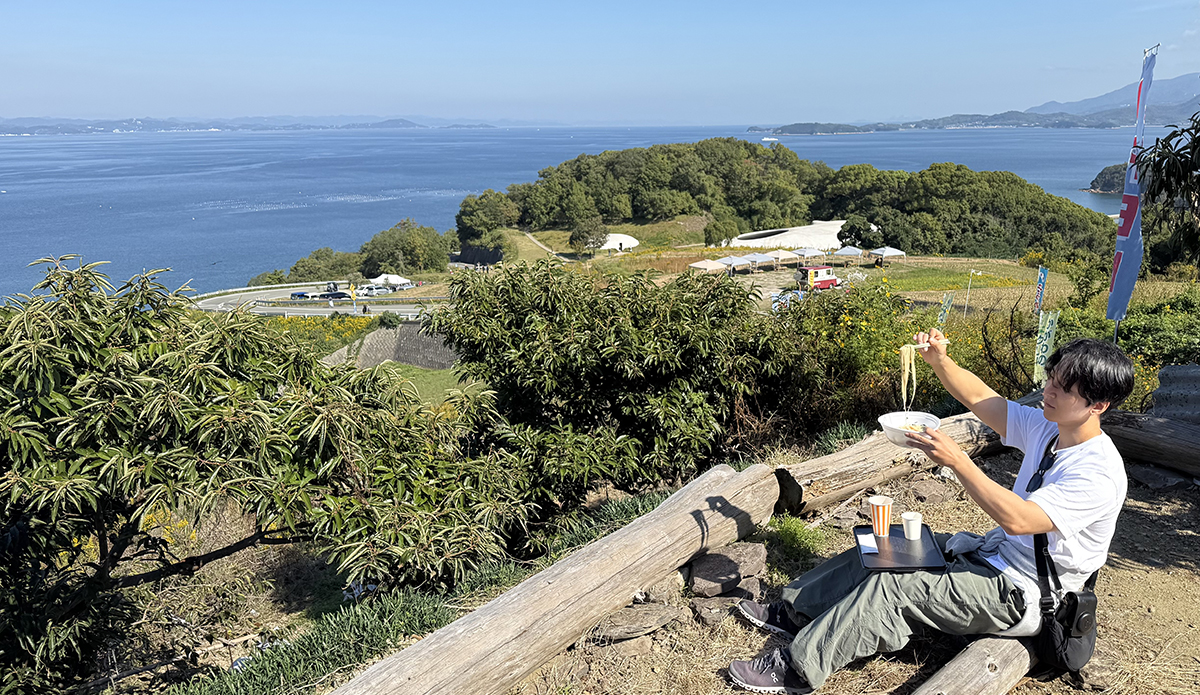
Photo 1: Daniels students visit Toyo Ito’s Tokyo office, where they presented their work and held a discussion with Mr. Ito (pictured third from far left / supplied photo); Photo 2: During their trip to Japan, Daniels students participated in an ongoing workshop on dry-stacked stone wall construction in Ōmishima (supplied photo); Photos 3-5: Daniels students visit Japan and Ōmishima Island (supplied photos); Photos 6-7: Gehry Chair Yusuke Obuchi attends Superstudio at Princeton University School of Architecture (photos by Princeton MArch student Keith Zhang).

Reviving Omishima Together Again opens January 31 at the Toyo Ito Museum of Architecture, showcasing Option Studio work produced by 11 University of Toronto master of architecture (MArch) students. 

The exhibition is produced in part by Professor Yusuke Obuchi of the University of Tokyo and current Frank Gehry International Visiting Chair in Architectural Design at U of T’s John H. Daniels Faculty of Architecture, Landscape, and Design.

Toyo Ito Museum of Architecture, Imabari (photo by Japanexperterna CCBYSA)

Last semester, the 11 students who participated in Obuchi’s Option Studio, "Radical Maintenance" attended a workshop with Toyo Ito that included a field trip to Ōmishima Island, where they built a dry-stacked stone wall. 

Located in Ehime Prefecture, Japan, the island is also home to the Toyo Ito Museum, named after the Pritzker Prize–winning architect.

The exhibition features proposals developed by universities that would potentially revitalize Ōmishima island, an area popular with city residents who wish to connect with nature, but has seen decline, as young people leave and the current population ages. Proposals include revitalization of a former middle school and as U of T explored, small housing and community developments for new farmers.  

The exhibition seeks to explore how these proposals might be realized. It is organized by Imabari City and Imabari City Board of Education under the direction of Toyo Ito, the private architectural school, Ito Juku, with Toyo Ito & Associates, Architects and participating universities including, Kanagawa University (Studio Sogabe), Kanto-gakuin University (Studio Yanagisawa), University of Tokyo (Studio Obuchi), University of Toronto (Gehry Chair), University of Texas at Austin, Princeton University and the University of Hong Kong.

The Daniels MArch exhibitors are: 

  • Denise Akman
  • Leah Button
  • Junfei Chen
  • Caitlin Chornous
  • Jialiang Kang
  • Seung Min Kim
  • Scott McCallum
  • Asha Mudie
  • Oliver Parsons
  • Tian Qu
  • Ernest Wong

MArch student project examples from Radical Maintenance Option Studio Review, December 2025 (photos by Valarie Haddad) 

13.01.26 - Profs, alumni publish On the Courtyard: Learning from European Blocks, the first in the Impossible Toronto series

Why can’t we build this in Toronto? 

This is the question that animates On the Courtyard: Learning from European Blocks, a new architectural study by Francesco Valente-Gorjup (HBA 2007 Victoria) and Aleris Rodgers of Studio VAARO and Gabriel Fain (HBA 2007 UC, MArch 2011) of Gabriel Fain Architects, commissioned by the Neptis Foundation for the inaugural volume in its Impossible Toronto series.

The publication's contributors include alumni and Studio VAARO interns Caleigh MacDonald (MArch 2025), Julia Miclaus (MArch 2025), Negar Mashoof (BAAS 2022, MArch 2025) and current MArch student Nathan Shakura

The series explores the various constraints that stand in the way of realizing certain types of architecture and construction in Toronto and how we can benefit from policy and regulatory changes that would unlock new ideas, approaches, and solutions to the city’s perennial design and construction woes.

The culmination of a year-long research project, the book examines why the courtyard block — a time-honoured residential typology found across cities in Europe — has proven so successful. The authors spotlight the regulatory barriers and policy frameworks that currently prevent us from being able to build this elegant and practical architectural form in our city and ultimately propose a new answer, grounded in an old typology, to Toronto’s enduring missing middle quandary. 

The collaboration between Studio VAARO and Gabriel Fain Architects goes further than critique, however, to offer pragmatic suggestions for where review and reform could begin.  The team identifies opportunities for how the courtyard block could be integrated into Toronto’s urban landscape and also addresses the attendant challenges. Detailed, design-driven drawings and renderings ultimately show what could be possible in the city, were the regulatory and planning conditions different than they are today. 

“On the Courtyard is a detailed and technical analysis of how to transform the housing patterns of Toronto,” says Professor Robert Levit, acting dean of the John H. Daniels Faculty of Architecture, Landscape, and Design. “It is also a work of great imagination. The authors do not lift ‘whole cloth’ the models that have inspired them. Instead, they have developed a future history of Toronto that demonstrates what steps can be taken, how change can continue to unfold at the neighbourhood level, and what that final destination looks like. They have a uniquely Toronto strategy that could usher in an entirely new future for the city.” 

Studio VAARO is a multidisciplinary architecture practice engaged in local and international research that reimagines urban conditions and advances the quality of the built environment in Toronto and beyond. Aleris Rodgers and Francesco Valente-Gorjup cofounded Studio VAARO in 2021 after a decade working abroad in Los Angeles, Switzerland, and Hong Kong. Their award-winning work has been featured in a range of international publications, including Dwell, Dezeen and Azure, among other publications. 

Valente-Gorjup has contributed to a range of international residential and cultural projects, including Hong Kong's M+ Museum, with a focus on innovative façade design and complex building envelopes. Francesco graduated from the University of Toronto with a Bachelor of Arts in Architecture and English Literature and earned a Master of Architecture at the University of California, Los Angeles (UCLA). He is also a sessional lecturer at the Daniels Faculty.  

An Assistant Professor in the Teaching Stream at Daniels, Rodgers earned her undergraduate degree from Harvard University, majoring in Psychology, and her Master of Architecture from UCLA, where she studied alongside Valente-Gorjup. Prior to settling in Toronto, she worked for a number of international architecture practices including, most recently, Herzog & de Meuron. Her work and teaching focus on housing and contemporary urban form. 

Gabriel Fain Architects is a Toronto-based multidisciplinary design studio that operates at the intersection of architecture and urbanism, with a focus on reimagining urban living through innovative approaches to mid- and high-rise residential design. Principal Architect Gabriel Fain graduated with a Master of Architecture from the Daniels Faculty, where he was awarded the prestigious Heather M. Reisman Gold Medal in Design. He is a frequent guest critic and a regular contributor to Canadian Architect Magazine.

To ensure broad public access, all Impossible Toronto publications are available as a free PDF download. Print editions can be purchased at impossibletoronto.ca, the Canadian Centre for Architecture bookstore and at TYPE Books (883 Queen St W), where the On the Courtyard team will be mounting a storefront exhibition as part of the DesignTO Festival, January 23 – February 1, 2026.

Images for public program Winter 2026

08.01.26 - The Daniels Faculty's Winter 2026 Public Program

The John H. Daniels Faculty of Architecture, Landscape, and Design at the University of Toronto presents its Winter 2026 Public Program.

This semester’s program of lectures, exhibitions and screenings features leading global thinkers and practitioners working across the built and natural environments, contemporary visual art and curatorial practice. 

The program explores themes such as innovative material use and the changing relationships among designers, builders, craftspeople, interactive technologies and AI. It also highlights regional ecologies and decolonizing practices in landscape, urban design, and housing—from Inuit Nunangat to the Middle East—and considers how messiness, imagination and cultural generosity can shape art and design in the public realm.

All events in the series are free and open to the public. Register in advance and consult this listing for up-to-date details. Many events will be livestreamed or recorded and made available on the Daniels Faculty YouTube channel.


Thursday evening lecture series

All times ET (Eastern Time) 

January 22, 6:30 p.m.  |  Exhibition opens, 5:30 p.m.
Jeffrey Cook Memorial Lecture: A Measure of Architecture
Featuring Pierre Bidaud (The Stonemasonry Company), Amin Taha (GROUPWORK) and Steve Webb (Webb Yates Engineers)

January 29,  6:30 p.m.
The Annual George Baird Lecture
Building a Planetary Solution: Regenerative Design and Construction for the Future of Human Settlement
Featuring Alan Organschi (GOA, Yale School of Architecture)

February 12, 6:30 p.m.
Undisciplined: Conversations across Architectural Knowledge Domains
Symposium keynote lecture by Theodora Vardouli (McGill University) and Daniel Cardoso Llach (Carnegie Mellon University)

February 26, 6:30 p.m.  |  Exhibition opens, 5:00 p.m.
Unruly Intelligences: Body, Tools, AI
Featuring Humbi Song (University of Toronto, Daniels Faculty)

March 5, 6:30 p.m.
2026 Michael Hough/OALA Visiting Critic in Landscape Architecture Lecture
Unravelling a colonial Legacy: Grounding landscape architecture 
Featuring Dr. Jala Makhzoumi, (International Federation of Landscape Architects, Middle East)

March 12, 6:30 p.m. 
The Social Life of Small Urban Spaces
Screening and Panel Discussion

March 19, 6:30 p.m. 
Land Narratives & Protopian Futures: From Fictions to the Just City
Featuring Toni L. Griffin (urban american city)

March 26, 6:30 p.m. 
The Harold Solomon Kaplan Lecture: Public Act
Featuring Peter Sampson and Liz Wreford (Public City)


Symposia

January 16, 9:00 a.m. to 5:00 p.m.
Sikumit Aisimajugut
At Home on Ice - ᓯᑯᒥᑦ ᐊᐃᓯᒪᔪᒍᑦ Roundtable
Organized by Mason White (Daniels Faculty, University of Toronto) and Lola Sheppard (University of Waterloo)

February 11-12, All Day
Undisciplined: Conversations across Architectural Knowledge Domains
Organized by Ameen Ahmed, Mono Mo, Brian Slocum, and the Daniels Faculty ALD PhD Program

  • Keynote lecture by Theodora Vardouli (McGill University) and Daniel Cardoso Llach (Carnegie Mellon University): February 12, 6:30 p.m. 

Visual Studies public lectures

January 20, 6:30 p.m. 
Allison Glenn
Curator, 2026 Toronto Biennial of Art

January 27, 6:30 p.m. 
Liam Gillick
Artist

February 25, 6:30 p.m. 
Aimée Zito Lema
Artist

March 3, 6:30 p.m. 
CANCELLED Defne Ayas
Curator, Director of the Van Abbemuseum

March 10, 6:30 p.m.
Lucy Raven
Artist
In partnership with the Vega Foundation and the Power Plant Contemporary Art Gallery

March 24, 6:30pm ET
Juliet Kothe
Curator
In partnership with OCAD University

March 31, 6:30 p.m. 
Alexandre Singh
Artist and Filmmaker


Exhibitions at 1 Spadina Crescent

December 9, 2025—February 16
Sikumit Aisimajugut
At Home on Ice - ᓯᑯᒥᑦ ᐊᐃᓯᒪᔪᒍᑦ
Larry Wayne Richards Gallery (DA196)

  • Roundtable event: January 16, 9:00 a.m. to 5:00 p.m. 

January 23—April 3
The New Stone Age: Towards an Ethical Architecture
Architecture + Design Gallery (DA095)

  • Opening event: January 22, 5:00 p.m. / Lecture at 6:30 p.m. 

February 26—March 27
Unruly Intelligences: Body, Tools, AI
Larry Wayne Richards Gallery (DA196)

  • Opening event: February 26, 5:00 p.m. / Lecture at 6:30 p.m. 

Gallery Hours of Operation
Monday to Friday: 9:00 a.m. to 7:00 p.m.
Saturday and Sunday: Closed