Ian Jones
Sessional Lecturer


Sessional Lecturer

Assistant Professor
Director, Forests + Animal Behavioural Ecology (FABE) Lab
Dr. Laura M. Bolt is an Assistant Professor (research tenure-stream) of Forest Conservation Biology. Dr. Bolt is a broadly-trained conservation biologist who holds degrees from the University of Cambridge (U.K.), University of Toronto, and Queen’s University (Canada). Her research interests include animal behavioural ecology, primatology, forest fragmentation, edge effects, animal communication, One Health, and sexual selection. Dr. Bolt’s publications have been named editor’s choice in the American Journal of Biological Anthropology and most-cited in Primates and the American Journal of Primatology. Her research is of broad interest to the general public and has received international media attention, with coverage by news agencies including National Geographic and the U.K.’s Daily Mail.
As director of University of Toronto’s Forests + Animal Behavioural Ecology (FABE) lab, Dr. Bolt’s research program investigates the behavioural ecology of animals and their habitats in order to better understand forest health. Current projects focus on non-human primates, squirrels, and predators living in human-impacted tropical forests in Costa Rica. This research is important given the ongoing deforestation in Central America and other tropical regions globally, with mammals acting as important indicator species to signal habitat change.
As a conservation biologist, Dr. Bolt is a member of the board of directors for Maderas Rainforest Conservancy, a conservation non-profit organization that protects tropical forests in Central America. She is also an associate editor in organismal and evolutionary biology for the journal Royal Society Open Science, and a member of the International Union of the Conservation of Nature (IUCN) Species Survival Commission Primate Specialist Groups for Africa and Central America.
Research Opportunities
Dr. Bolt is currently recruiting high-achieving and highly-motivated students to join the Forests + Animal Behavioural Ecology Lab, and is especially interested in potential graduate students with external funding. Please visit the FABE Lab website for more information.
2025/26 Courses
Assistant Professor, Teaching Stream
amory.ngan@daniels.utoronto.ca
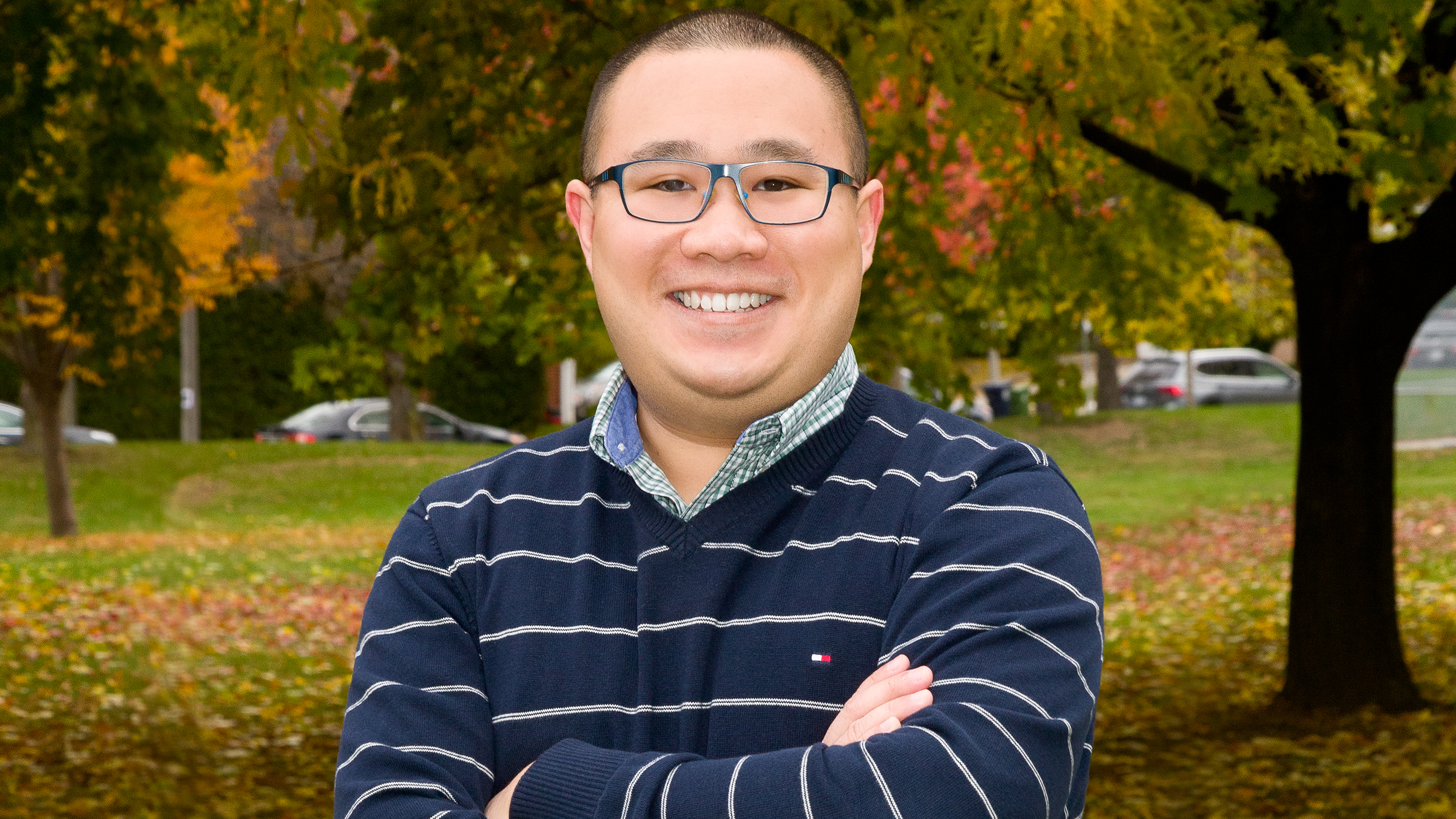
Amory Ngan is an urban forester whose passion for trees and cities has taken him to some of the largest and fastest growing municipalities in North America. He has held progressively senior roles at the City of New York, York Region, the City of Toronto, and is currently the Manager, Forestry at the City of Mississauga. Amory has worked across a range of urban forestry roles including development reviews, tree protection, capital projects, street tree planting, tree maintenance, contract management, granting, stewardship, and strategic planning and policy development.
Amory's teaching and professional practice is centred on the role of the urban forester in managing trees and green spaces in the face of the contemporary challenges in the built and natural environments. His teaching approach is rooted in experiential learning and real-world application that integrates insights from practitioners with current scientific knowledge. His interests include governance, policy, management, and leadership, especially as it relates to municipal forestry and arboriculture.
Amory graduated from the University of Toronto with a Master of Forest Conservation and an Honours Bachelor of Arts. He is an ISA Board Certified Master Arborist, a Registered Professional Forester, and holds a Certificate in Advanced Urban Tree Care from the New York Botanical Garden and an Urban Park Management Certificate from the City University of New York and Central Park Conservancy. He has been recognized as a True Professional of Arboriculture by the International Society of Arboriculture and is a recipient of the Award of Achievement from the Society of Municipal Arborists, the Fernow Award from the Ontario Professional Foresters Association, and is a Fellow of the Royal Geographical Society.
Associate Professor
r.yousefpour@daniels.utoronto.ca
T 4169785004

Rasoul Yousefpour is an Associate Professor in Forestry at the John H. Daniels Faculty of Architecture, Landscape, and Design, and director of the Mass Timber Institute.
Rasoul Yousefpour studies forest decision processes to find the most desirable adaptation and mitigation strategies. He includes economics of ecosystem goods and services as well as the risks and uncertainties associated with forecasting the future provision of ecosystem production system under global change and social demand dynamics. The ultimate goal of his studies is linking forest ecosystem processes and functions to management oriented and economy-based solutions. Most of the research applies ecological economic approaches which are data-driven and process-based to optimize the forest decision outcomes.
Current research includes:
Professor
Associate Dean, Research
sc.thomas@utoronto.ca
T 416-978-1044
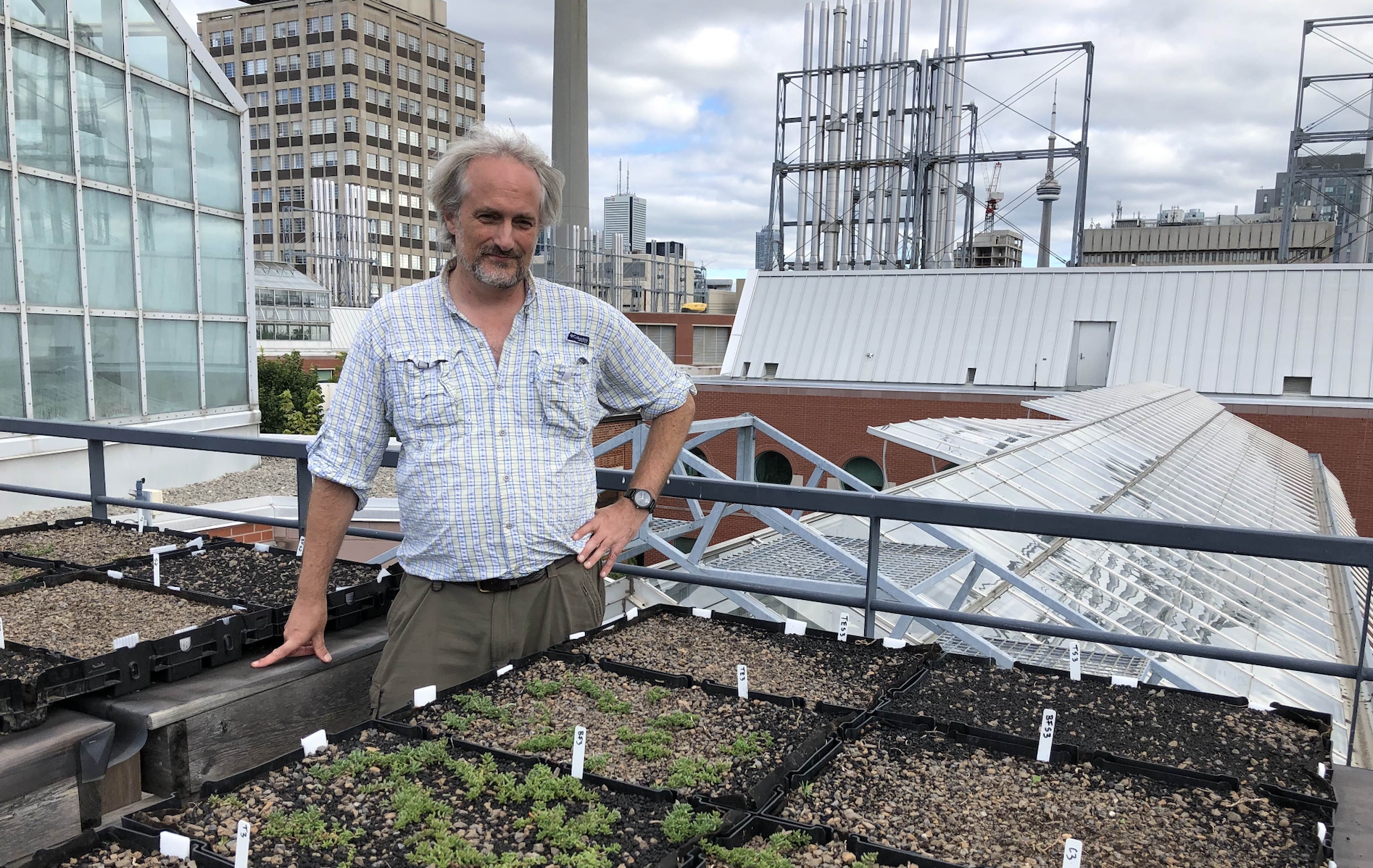
Dr. Thomas has been preoccupied with the comparative biology of trees and forest responses to the intentional and accidental impacts of humans for some 25 years. He has been at the University of Toronto since 1999, and is currently appointed as an NSERC Industrial Research Chair in Biochar and Ecosystem Restoration. Dr. Thomas’ research focuses on how trees and forests respond to human impacts — intentional impacts through forest management, and unintentional impacts via local, regional, and global changes in the environment. In this effort, he tries to link an understanding of functional ecology and ecophysiology of trees (“how trees work”) to patterns of growth, mortality, recruitment, and reproduction at the population scale, to patterns of community composition, and to ecoysystem processes, in particular carbon flux (“how forests work”). Sean Thomas’ lab is currently involved in projects in temperate and boreal forests in Canada, and tropical forests at a variety of sites.
Professor
s.smith.a@utoronto.ca
T 416-978-5482
Sandy M. Smith is an internationally recognized expert in the ecology and biological management of invasive forest insects in urban forest restoration and conservation. She has published over 150 journal articles and book chapters, supervised 65+ graduate theses, and served as a reviewer for international journals, national NSERC committees, and scientific panels, as well as on several not-for-profit boards. She holds a PhD in Forestry from the University of Toronto, a BScAgr and MSc in Entomology from the University of Guelph, and a BFA with a minor in Indigenous Visual Culture from OCADU. She is a Full Professor of Forest Health in the Daniels Faculty of Architecture, Landscape and Design (Forestry), and was the Director of Forestry Programs in Daniels and the Institute of Forestry & Conservation at the University of Toronto from 2019-2025.
Assistant Professor, Teaching Stream
d.puric@daniels.utoronto.ca
T 416-978-4299
Danijela’s research and professional work focus on forests in settled and urban landscapes. Her work and research are aimed at providing real-world solutions and tools that support strategic conservation, restoration and integrated spatial planning of green systems, vegetation, and forests in urban, peri-urban, ex-urban, and rural/agricultural landscapes and their interfaces. Some of her research themes are:
Danijela collaborates with partners from different levels of governments, NGOs, academia, community groups, and other groups engaged in forest conservation and restoration across urban and settled landscapes.
Professor Emeritus
david.martell@utoronto.ca
T 416-978-6960
I completed my BASc, MASc, and PhD in the Department of Industrial Engineering at the University of Toronto, where I studied management science and operational research (MS/OR) and their application to forest fire management. My current research interests include the application of operational research and information technology to fire and forest management and the development of decision support systems for fire and forest managers. I, along with Mike Wotton, am a co-leader of the Fire Managements Systems Laboratory at the Daniels Faculty.
My long term research objectives are to 1) further our understanding of fire and forest management under uncertainty and 2) to develop decision support systems (DSS) that can be used by fire and forest managers. My graduate students, research assistants and I are currently focussing our efforts on furthering our understanding of detection, initial attack, and large fire management processes and developing DSS that fire managers can use to enhance their detection, initial attack, and large fire management operations.
Professor Emeritus
jay.malcolm@utoronto.ca
T 416-978-0142
Dr. Malcolm received his BSc and MSc from the University of Guelph and his PhD from the University of Florida. After a postdoctoral fellowship at Queen’s University, he joined the University of Toronto's former Faculty of Forestry in 1997. His areas of specialty include conservation biology, tropical ecology, landscape ecology, and ecological impacts of climate change. Research interests include mammalian ecology and biogeography; the diversity and abundance of tropical organisms; impacts of human induced landscape changes on biological diversity and ecological processes; the impacts of global warming on natural ecosystems; relationships between landscape structure and biological diversity; and mammalian adaptations to arboreality and seasonality. Dr. Malcolm has conducted extensive fieldwork in boreal and temperate forests of Canada, the Brazilian Amazon, and Central African Republic.
Assistant Professor, Teaching Stream

Dr. Benjamin Kuttner holds a B.Sc.F. degree in Forest Resource Management from the University of New Brunswick (1999), and a Master of Science in Forestry (1999) and Ph.D. (2010) in Forestry from the University of Toronto. Ben became a Registered Professional Forester in Ontario in 2001 and established Kuttner Forestry Consulting in 2003. He has over 20 years professional experience as a forestry consultant on a wide array of projects for government, industry, and ENGO clients, including FSC and SFI forest certification audits, urban canopy cover assessments, urban forest management planning, environmental audits, wood supply analyses, program reviews, jurisdictional scans, policy development, market analysis and authoring forest management plans and reports.
Dr. Kuttner is currently an Assistant Professor in the Graduate Department of Forestry and Institute of Forestry and Conservation within the Daniels Faculty of Architecture, Landscape and Design at the University of Toronto where he teaches graduate courses in forest management planning and forest sustainability certification, and undergraduate courses in bioenergy from sustainable forest management, sustainable forest products, and an undergraduate field course (FOR300 Field Methods in Forest Conservation) at the Koffler Scientific Reserve.