
old_tid
8
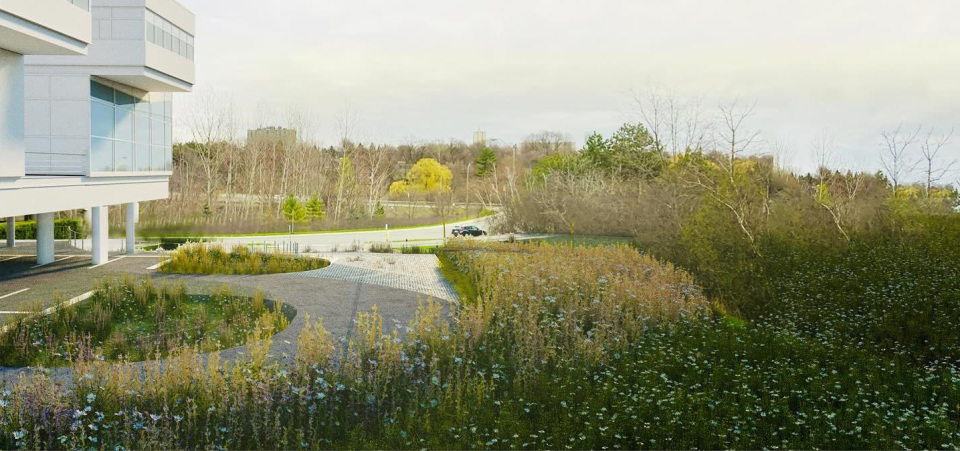
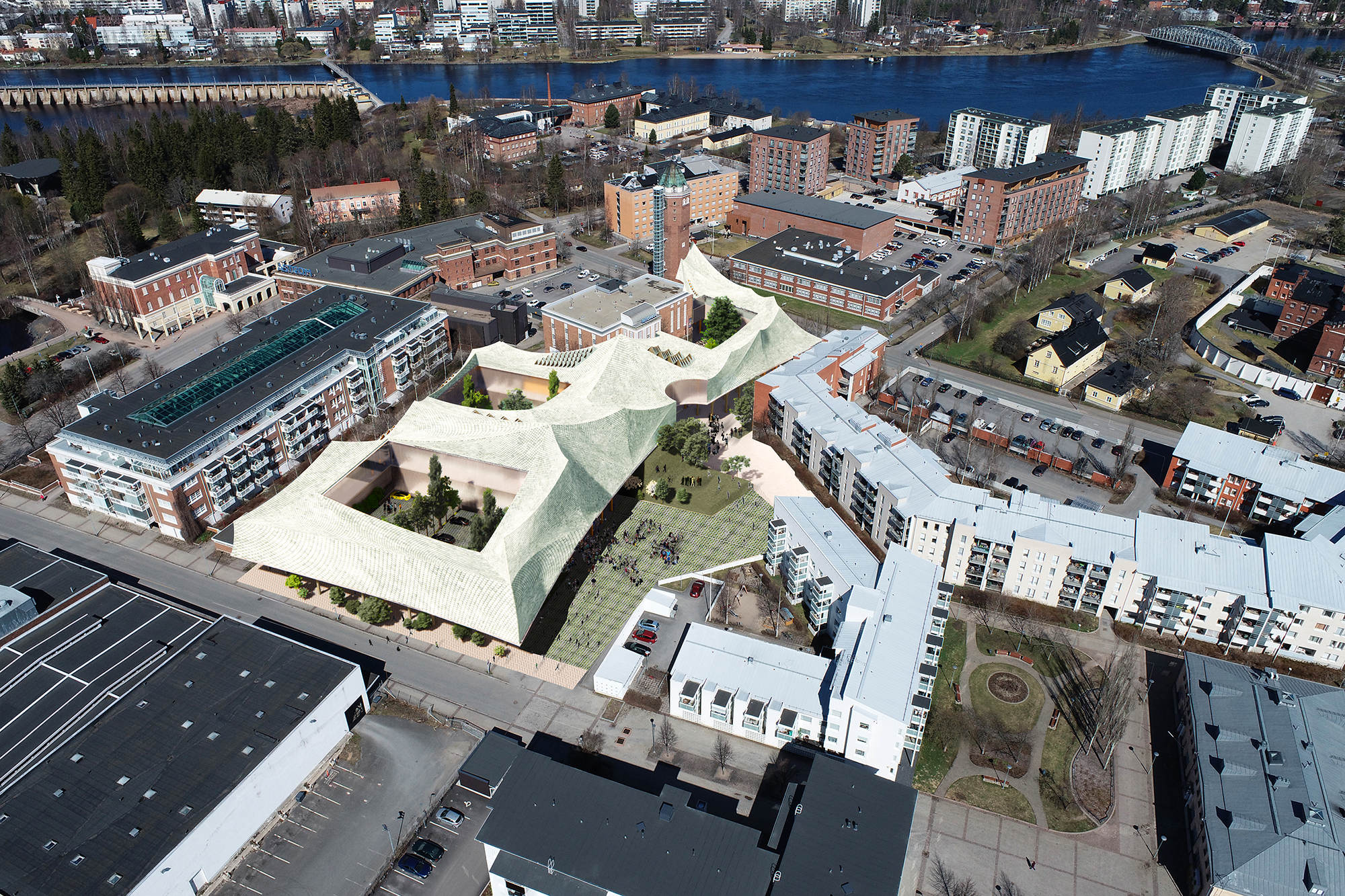
OAA Headquarters landscape design

Behnaz Assadi

Assistant Professor

Behnaz.Assadi@daniels.utoronto.ca

Behnaz Assadi is a landscape designer and a founding partner at Ja Architecture Studio. She began teaching at the University of Toronto’s John H. Daniels Faculty of Architecture, Landscape, and Design in 2017. In addition to her position at Daniels, Assadi has taught studios at Cornell University and the Cooper Union in New York. 

In her practice and teaching, she explores landscape architecture’s agency beyond disciplinary confines with a particular interest in landscape processes and how they relate to the built environment. She uses a multi-scalar frame of investigation, modelling, drawing and mapping ecological systems with the formal and tectonic precision of architectural construction drawings to combine ecological literacy with design specificity across disciplines.

Her current multidisciplinary practice, professional experience at offices such as OMA and educational background provide her with versatility and comfort in crossing traditional disciplinary boundaries to teach and practice in both landscape architecture and architecture.

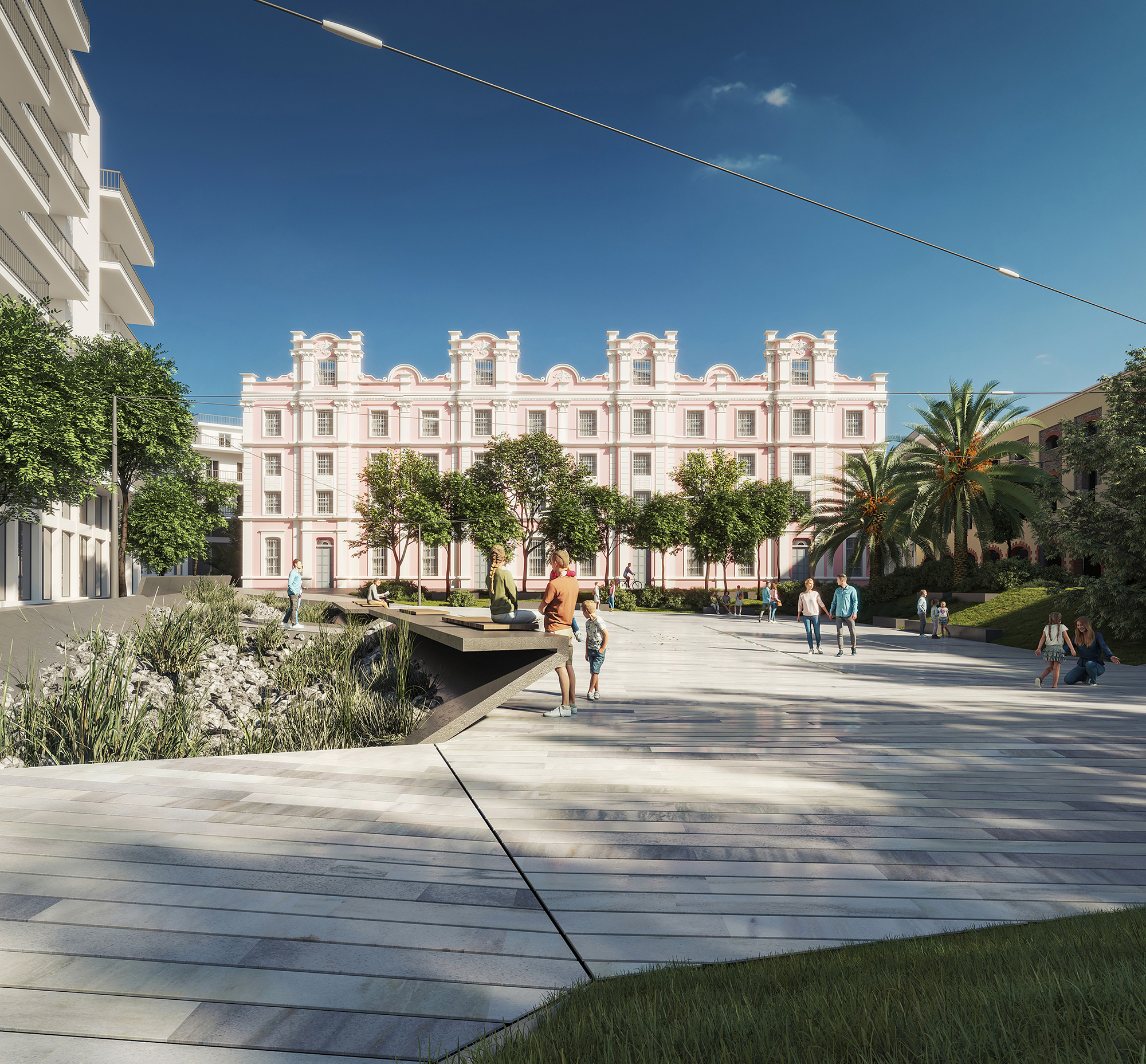
At JA, Assadi positions the studio’s architectural interest in iconography, geometry, form and tectonic pursuits within the broader context of landscape, ecology and climate change. The studio has produced a dynamic repertoire of built works, research projects and award-winning competition entries. The latter includes the Bauhaus Museum in Dessau (2015), the Guggenheim in Helsinki (2015), the Kaunas Concert Center (2017), five Canadian Architect Awards (2015, 2018, 2020, 2021 and 2023) and three Progressive Architecture Awards (2021, 2022 and 2023). In 2022, JA was named an Emerging Voice by The Architectural League of New York and a Design Vanguard winner by Architectural Record. In 2024, the practice also won the OAA Headquarters Landscape Design Competition (pictured).

JA’s work has been published widely and exhibited both nationally and internationally. 

Assadi holds a Master of Landscape Architecture degree from the University of Toronto and a bachelor’s degree in fine arts from the University of Tehran.
Petros Babasikas

Assistant Professor, Teaching Stream

petros.babasikas@daniels.utoronto.ca
T 416-946-0642

Petros Babasikas is an architect and educator. His design work and research build architecture and public space against the climate crisis. His teaching and curricular projects explore the intersection of design with the liberal arts, global leadership and community engagement. He is Director of the Honours Bachelor of Arts in Architectural Studies program at the John H. Daniels Faculty of Architecture, Landscape, and Design. He is also the founder of Babasikas Office, based in Athens and Toronto.

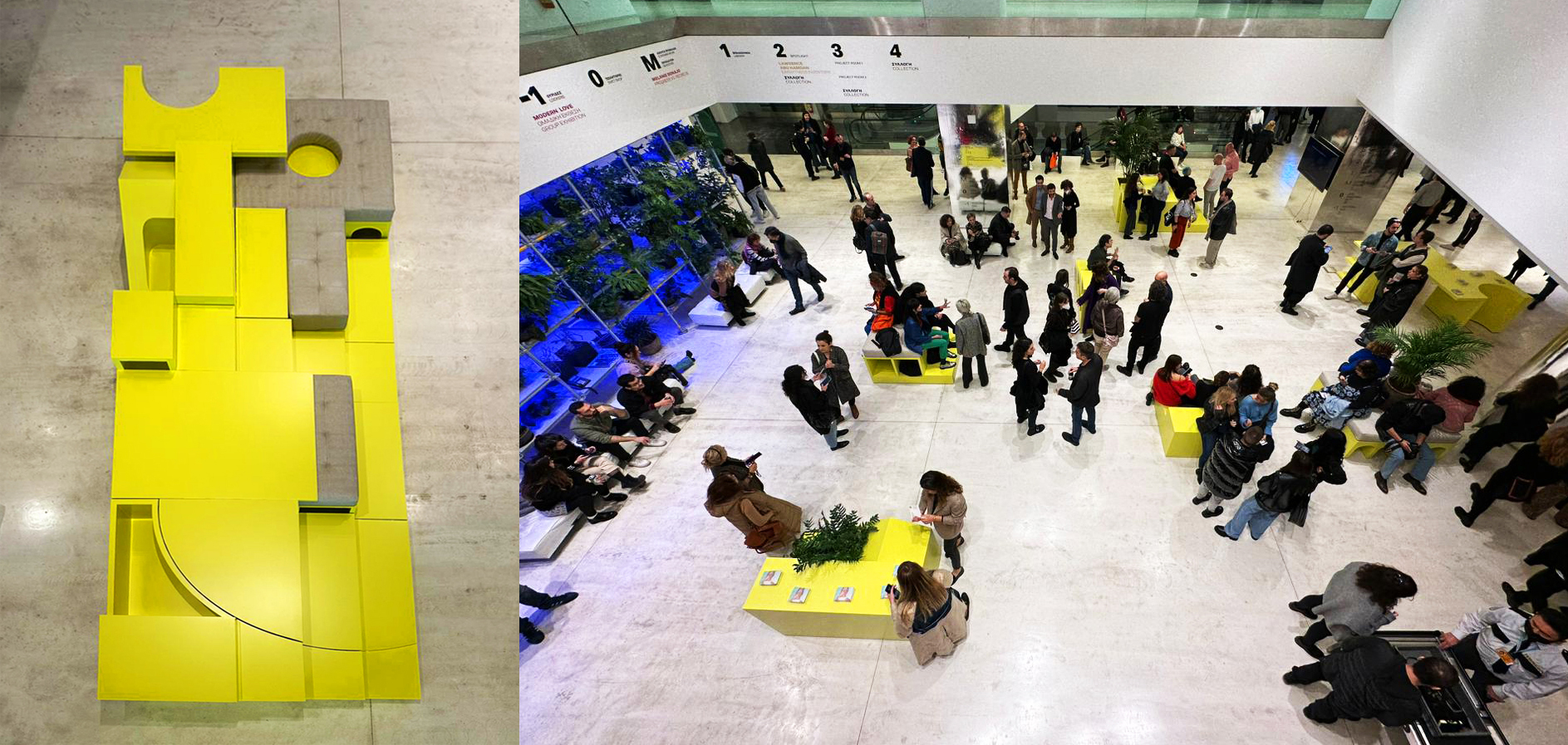
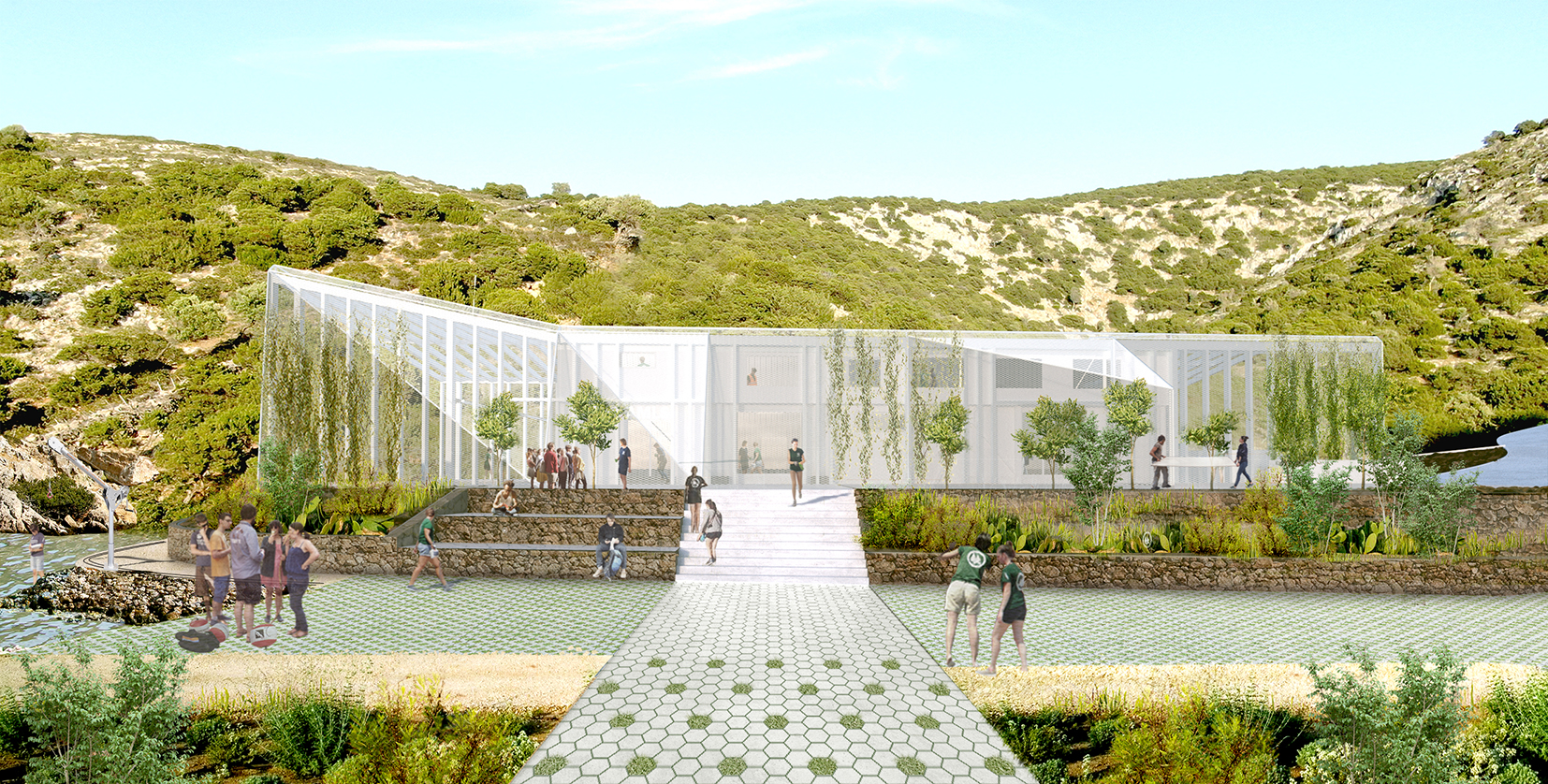
Some of his recent projects include the Archipelago Thesis Studio, exploring emergency architectures, activism, resilience and shelter in global peripheries; ATHENS 2030, centred around blue/green infrastructures and DIY urbanisms for the historic centre of Athens; and the Aegean Marine Life Sanctuary on the island of Leipsoi. Additionally, he has worked on the Kapnergati Square Area & Park in Kavala, Greece. developed the multimedia installations Rock, Drip and Oneiroi, participated in the collective storytelling project Depression Era, and organized the public space and infrastructure walks/talks 6Place Toronto.  He is currently designing low-footprint houses in Greece and Canada and a series of adaptive reuse interventions for EMST, the National Museum of Contemporary Art in Athens.

Babasikas has taught architecture and urbanism at the University of Patras in Greece. He is an associate member of IADAS and vice-chair of UWC Greece. He holds a Bachelor of Arts in Architecture and Comparative Literature from Columbia University and a Master of Architecture from Princeton University.

Petros Babasikas


Mauricio Quirós Pacheco

Associate Professor, Teaching Stream

mauricio.quiros@daniels.utoronto.ca
T 416-821-0112

Mauricio Quirós Pacheco, born in Costa Rica, is an Associate Professor at the University of Toronto’s John H. Daniels Faculty of Architecture, Landscape, and Design, and the founding partner of MIAU Studio, an architecture firm practicing in Costa Rica and Canada. He holds a Master of Architecture in Urban Design, with distinction, from Harvard University, and a Bachelor of Architecture (Best Thesis Award) from Universidad del Diseño.

From 2010 to 2014, Mauricio worked with then-director Mirko Zardini at the Canadian Centre for Architecture (CCA). He has practiced architecture and urban design in the Americas and Europe with offices including Stanley Saitowitz Office and the Renzo Piano Building Workshop. He has served as a guest critic at various universities, including Yale University and the Sam Fox School of Architecture, and as a guest juror for international competitions such as Architecture for Humanity’s Crossing Borders competition and the International Open Competition for FUNDECOR Headquarters.

Mauricio sits on the Editorial Board of Manifest: A Journal of American Architecture and Urbanism, and his writings have appeared in publications such as Domus, San Rocco, and the Architectural Observer. In 2016, he co-curated the symposium Modern Architectures in Central America with Hans Ibelings, and in 2024, both—together with the collaboration of Andrés Fernández—published Modern Architectures in Central America, an overview of 20th-century modern architecture in the region.

Fiona Lim Tung

Assistant Professor, Teaching Stream

Fiona.LimTung@daniels.utoronto.ca

Fiona Lim Tung is a designer and educator. She received her Master of Architecture from the the John H. Daniels Faculty of Architecture, Landscape, and Design at the University of Toronto, and was named to the Royal Architectural Institute of Canada Honour Roll upon graduation.

Fiona has taught and coordinated courses at the John H. Daniels Faculty of Architecture, Landscape, the University of Waterloo, and in the interdisciplinary post-graduate program at the Institute Without Boundaries, at George Brown College.

Fiona’s research practice deals with issues of representation and feminism. Her design practice focuses on the potentials that exist in the overlap between high and low-tech fabrication methods in contemporary craft. Her work has been widely published in magazines, in books, and exhibited in galleries nationwide.

Fiona Lim Tung

Jean-Paul Kelly

Assistant Professor, Teaching Stream

Jean-Paul.Kelly@daniels.utoronto.ca

Jean-Paul Kelly is an artist whose activities across various media, presented in exhibition and screening contexts, pose questions about the limits of representation by examining complex associations in the production, reception, and circulation of nonfiction material. His work has been presented in solo exhibitions at VOX Centre de l’image contemporaine (Montréal, 2019), Plug In ICA (Winnipeg, 2019), Delfina Foundation (London, 2016), Wexner Center for the Arts (Columbus, 2014), Scrap Metal Gallery (Toronto, 2013), and Gallery TPW (Toronto, 2008). 

Kelly’s work has been included in group exhibitions at the Museum of Contemporary Art (MOCA) Toronto (GTA24: The Greater Toronto Art Triennial, 2024), Badischer Kunstverein (Karlsruhe, 2021), Musée d’art contemporain des Laurentides (Saint-Jérôme, 2016), Southwark Park Galleries (London, 2016), Oakville Galleries (2015), Mercer Union (Toronto, 2010 and 2014) and The Power Plant (Toronto, 2011). His videos have screened at Anthology Film Archives, The Brakhage Center Symposium, Canada House (London), Courtisane Festival, The Flaherty Film Seminar, Film at Lincoln Center, International Film Festival Rotterdam, New York Film Festival, Toronto International Film Festival, and TIFF Cinematheque. Kelly received the 2014 Kazuko Trust Award from Film at Lincoln Center and the 2015 Images Festival Award. 

He is an Assistant Professor and previous Program Director of Visual Studies, the Daniels Faculty of Architecture, Landscape, and Design at the University of Toronto. A graduate of the Master of Visual Studies program at the Daniels Faculty (MVS, Studio Art, 2005), he has taught studio and seminar courses in the Visual Studies program as well as at the School of Image Arts, Toronto Metropolitan University and OCAD University. 

From 2009 to 2012, Kelly was Artistic Director of Trinity Square Video (Toronto) where he curated exhibitions including artists Abbas Akhavan, Jennifer Chan, Harry Dodge, Alison Kobayashi, Alex Morrison, Lisa Oppenheim, Andrew James Paterson, Paulette Phillips, Steve Reinke, James Richards, Ming Wong, and Jin-Me Yoon.

Shannon Hilchie

Assistant Professor, Teaching Stream

Shannon.Hilchie@daniels.utoronto.ca

Shannon studied Structural Engineering at Dalhousie University before spending ten years as a consultant at Blackwell Engineering. She then experienced engineering from a manufacturer's perspective at Cast Connex, working with cast steel connections, before starting her own consulting engineering firm, fætlab, which specializes in feature elements and component design.

Shannon has worked on many exciting projects, such as York University Lassonde Engineering Building, Canadian Peace Bridge Plaza, University of Toronto Varsity Centre for High Performance Sports and the 30 College NCFS Longhouse. The common theme across all projects is the opportunity to interact with a selection of Canada’s best architects, fabricators, and general contractors.

John Harwood

Associate Professor

John.Harwood@daniels.utoronto.ca

A.B. Architectural Studies (Honors), Brown University, 1999
M.A. Architectural History, Columbia University, 2000
Ph.D. Architectural History, Columbia University, 2006

John Harwood is an architectural historian working on the intersections between architecture, design, science, technology, and business.  He is the author of The Interface: IBM and the Transformation of Corporate Design, 1945-1976 (University of Minnesota Press, 2011), which received the 2014 Alice Davis Hitchcock Award from the Society of Architectural Historians as "the most distinguished work of scholarship in the history of architecture published by a North American scholar."  He is also the author, with Janet Parks, of The Troubled Search: The Work of Max Abramovitz (Wallach Art Gallery, Columbia University / The Studley Press, 2004); and with Jesse LeCavalier and Guillaume Mojon, of This Will - This (Standpunkte, 2009).

Harwood's articles and reviews have appeared in JSAH, Grey Room, AA Files, Perspecta, Design Issues, Design and Culture, media-N, do.co.mo.mo, Artforum, Art in America, Art Papers, SOM Journal, The Sixties: A Journal of History, Politics and Culture, and PIN-UP, and in edited volumes and exhibition catalogues. He is an editor of Grey Room, a peer-reviewed journal of art, architecture, media, and politics published by MIT Press (www.greyroom.org), and a founding member of the architectural history collaborative Aggregate (www.we-aggregate.org). He is currently at work on two book-length studies: Architectures of Mass Media: Telephony, Radio, Television; and Corporate Architecture, 17th-20th Centuries.

Harwood has taught architectural history and theory at Oberlin College, Columbia University, and Princeton University; has held fellowships at the National Gallery of Art (Washington, DC) and University of Queensland, and regularly serves as a juror at reviews at architectural schools and the Yale University School of Art. That said, he is proudest of the fact that he is part of a family that includes Jessica Green, Hannah Harwood-Green, and Milo Harwood-Green.

Stephen Verderber

Professor

Sverder@daniels.utoronto.ca

Stephen Verderber is the director of the Centre for Design + Health Innovation, as well as a scholar, researcher, practitioner, and registered architect whose specialization is architecture, design therapeutics, and health. He is a professor at both the John H. Daniels Faculty of Architecture, Landscape, and Design and the Dalla Lana School of Public Health at the University of Toronto, a rare interdisciplinary appointment.

Stephen is a co-founder of R-2ARCH/Los Angeles and New Orleans, and was engaged in pro bono community service work in post-Hurricane Katrina New Orleans. He has received numerous design and research awards and has lectured internationally. He holds a doctorate in architecture from the University of Michigan.

Stephen has previously taught at Tulane University and Clemson University, and has been a guest design critic at numerous other universities. The American Institute of Architects AIA Education Honor Award program has recognized him for his interdisciplinary seminar courses. In 2005, he was the sole recipient of the Distinguished Professor Medal, bestowed by the Association of Collegiate Schools of Architecture (ACSA). Prior to assuming the role of the Centre’s founding director, he served the Daniels Faculty as associate dean for research (2014-2017).

Richard M. Sommer

Professor

rsommer@daniels.utoronto.ca

Richard Sommer is Professor of Architecture and Urbanism and Director of the Global Cities Institute at the Daniels Faculty. From 2009 to 2020, he was the Dean of the Daniels Faculty. Under his leadership, the Daniels Faculty grew from a school exclusively focused on professional, masters’ education in architecture, landscape and urban design to a full-fledged division, incorporating an innovative foundation in undergraduate education, a Ph.D. in Architecture, Landscape and Design Studies, and new disciplines, including Art/Visual Studies and Forestry. In the process, the Daniels Faculty quadrupled in size and scope, making it one of the most broad-based schools of its kind in North America. To accommodate the Daniels Faculty’s newfound breadth and prominence, Sommer led the transformation of 1 Spadina Crescent, remaking a landmark heritage site into an award-winning NADAAA-designed project that now serves as the school’s home and public platform. 

Prior to his appointment at the Daniels Faculty, Sommer was a member of the faculty at the Harvard Graduate School of Design for 11 years, where he served as director of the school’s urban design programs. He has held several other academic appointments, including the O’Hare Chair/Visiting American Scholar at the University of Ulster and Scholar-in-Residence at the California College of the Arts, as well as visiting professorships at the Cooper Union, Katholieke Universiteit Leuven, Washington University, Columbia University and Iowa State University. 

Sommer received a Bachelor of Architecture and a Bachelor of Fine Arts from Rhode Island School of Design and a Master of Architecture at Harvard University’s Graduate School of Design. He cofounded a design practice, borfax/B.L.U., in 1994. He has lectured and served as a visiting critic internationally.

Research and Design Foci

Sommer’s research, design work and teaching focus on the nexus of politics and architecture along two overlapping lines. The first examines monument-making as an exemplar of architecture’s political function, tracing the transformation of the monument’s form as it intertwines and incorporates landscape, infrastructure, urbanization and new media. He has concentrated on how historical forms of monument were dislocated within various colonial topographies in the United States, especially looking at how claims of American exceptionalism affected conceptions of history and heritage, changed concepts of nationhood and citizenship, and presaged the development of new, more representative, democratic and prospective modes of monument-making.

Sommer’s second line of inquiry explores the changing role of architecture, planning and urban design in socio-political contexts where, on the one hand, capital markets and real-estate forces hold sway and create an increasingly stratified and private city, and on the other, increasing expectations of diverse community representation and grassroots activism create demands for new forms of engagement and more fair access to resources. He argues how the political contention and democratic struggles that these two poles put into play must change how we plan and design the environment, especially if we want to better address interrelated epiphenomena such as climate change and socioeconomic inequity.

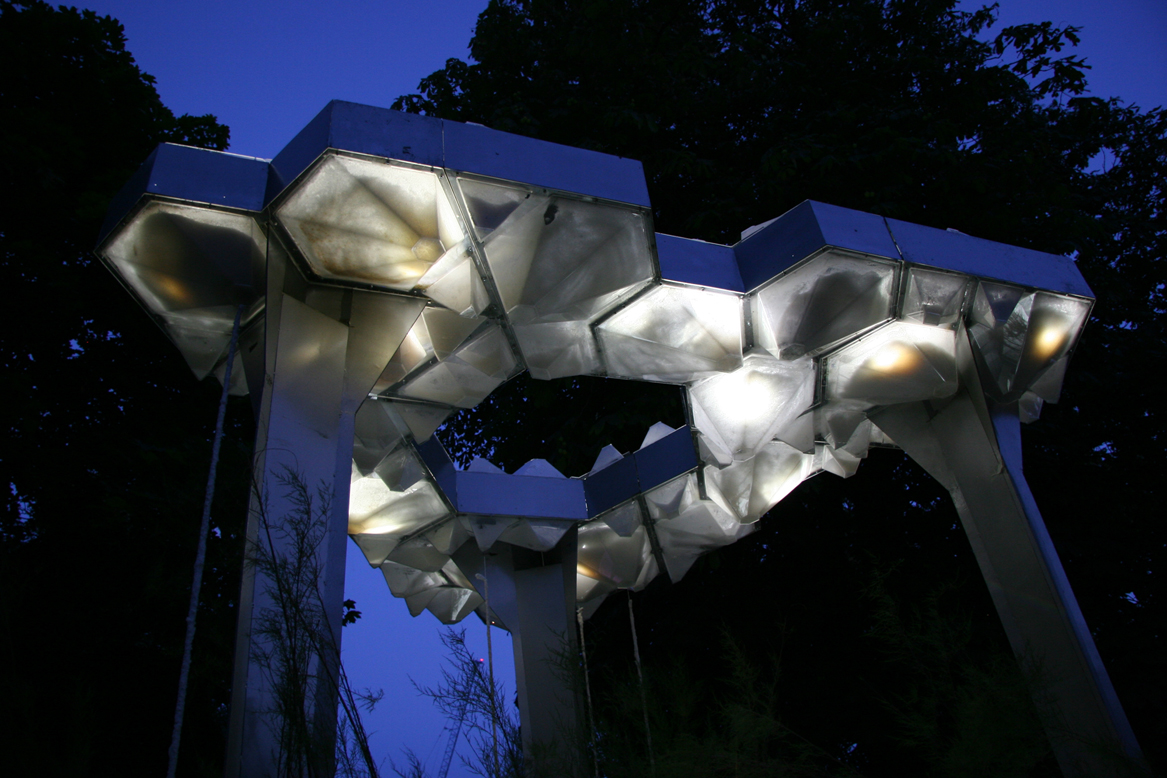
Recent research and exhibitions/installations such as New Circadia and Housing Multitudes: Reimagining the Landscapes of Suburbia build on these themes. New Circadia—a “soft utopia”—fulfills certain functions of the monument by marking time in an experimental space for shared public idling and repose. Housing Multitudes addresses the future of the contested, democratic city by creating a complex set of pictures, animations, maps, models and texts, specifically addressing how to better leverage existing investments and infrastructures within North America’s vast array of single-family home, suburban-style districts to greater social and ecological ends. These projects demonstrate that to imagine, plan and build more livable, democratic cities, we must go beyond identifying problems and deficiencies—or what is “missing”—and construct more and better pictures of the world we are hoping for.

Publications

Sommer’s writings and projects have been published in Perspecta, Cabinet Magazine, JAE, The Harvard Design Magazine and Canadian Architect, as well as the books Shaping the City, Urban Design, Fast-Forward Urbanism, The Democratic Monument in America: A Twentieth Century Topography, Supernatural Urbanism: The Los Angeles River Studio, The Blackwell Companion to Modern Architecture, Twentieth Century, and Commemoration and the American City: Monuments, Memorialization and Meaning, among others. He is an executive board leader of PLACES Journal.

Fellowships and Awards

Support for Sommer’s research has included grants from the U.S. National Endowment for the Arts, The LEF Foundation, The Tozier Fund, SSHRC Canada and The Graham Foundation for Advanced Studies in the Fine Arts. Sommer’s key academic awards and fellowships include the Distinguished Professor Award from the Association of Collegiate Schools of Architecture, O’Hare Chair/Visiting American Scholar at the University of Ulster, Harvard’s Arthur W. Wheelwright Traveling Fellowship (now called the Wheelwright Prize) and the Legislative Award for Teaching Excellence, Iowa State University.

Robert Levit

Professor
Acting Dean

Robert.Levit@daniels.utoronto.ca
T 416-978-4224

Currently Acting Dean of the John H. Daniels Faculty of Architecture, Landscape and Design, Professor Robert Levit joined the Faculty in January of 2002.

He was director of the Master of Urban Design program from 2003 to 2010, director of the Master of Architecture program from 2013 to 2017 and Associate Dean, Academic from 2015 to 2022.

Levit is a partner in the design firm Khoury Levit Fong, featured in the second Chicago Architecture Biennial. His work links the urban and architectural scales, and his design work and writing on architecture have appeared in numerous domestic and foreign publications.

Levit teaches in both the Urban Design and Architecture programs at the Daniels Faculty. He holds a Master's degree in Architecture from Harvard University and received his Bachelor of Arts degree from Columbia University. Prior to beginning his own practice, he worked for the architect Alvaro Siza in Portugal.

Robert Levit