old_tid
37
compilation of six undergrad thesis projects

21.11.23 - View 2023 Bachelor of Arts in Architectural Studies Thesis Projects

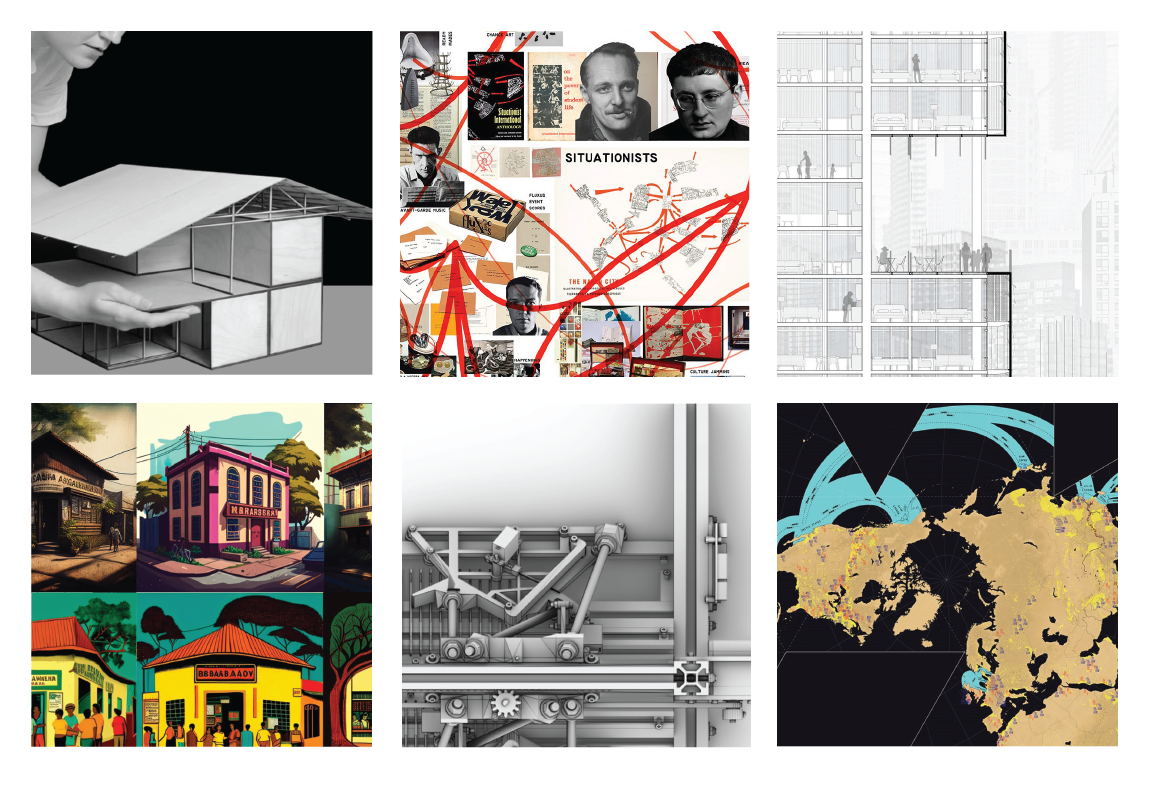
How can development, transition and growth in a city still accommodate urban memory and a connection to the past? How does the visual bias present in an image refer to the biases of the general public? How can closely reading the history of ownership, materiality and economic deployment of a site and its material history reveal the forces that have shaped the city?  

These are just a few of the questions posed by 2022-2023 thesis students in the Bachelor of Arts in Architectural Studies (BAAS) program. A new website serves as an online exhibition showcasing a sampling of the richly diverse creative work of students in the program’s three Specialist Streams: Design, Technology, and History and Theory.

View the 2022-2023 BAAS Thesis website here.

Thesis is a year-long endeavor at the Daniels Faculty. At the end of the third year in the undergraduate program, students in the Specialist Streams are eligible to apply for thesis, which takes place during the fourth and final year of the program. Once selected, all BAAS thesis students take a Senior Research Seminar led by one of three Daniels Faculty members who continue as advisors throughout the year.  

For the 2022-2023 academic year, the themes were: 

During the fall term, students work to develop individual thesis proposals—pursuing their research through reading, writing, design, fabrication and case study analysis as well as discussion and debate. Then in the winter term’s Senior Thesis Design Studio, students further develop their research, extending into design projects. Final Thesis Reviews, the culmination of a year’s work, are held at the end of April. 

View the thesis projects online and learn more about the BAAS program


Student work featured in banner image:

1) The Architecture of Impermanence: Rebuilding in Post-Disaster Japan
Student: Hanna Kamehiro, Design Stream
Advisor: Simon Rabyniuk

2) In Defense of Urban Play
Student: Adela Hua, Design Stream
Advisor: Laura Miller

3) Machine-Knitted Structures and Material Variability in Textile Construction Automation
Student: Habiba Elezaby, Technology Stream
Advisor: Nicholas Hoban

4) Unprompting: Text-to-Image Software’s ‘Understanding’ of Non-Western Contexts
Student: Raymelene Apil, Technology Stream
Advisor: Nicholas Hoban

5) Pulling and Pushing the Envelope: Reimagining Toronto’s Failing Glass Towers
Student: Massimo Giannone, Design Stream
Advisor: Laura Miller

6) Planetary Voids and Architectural Solids
Student: Marly Ibrahim, Design Stream
Advisor: Simon Rabyniuk

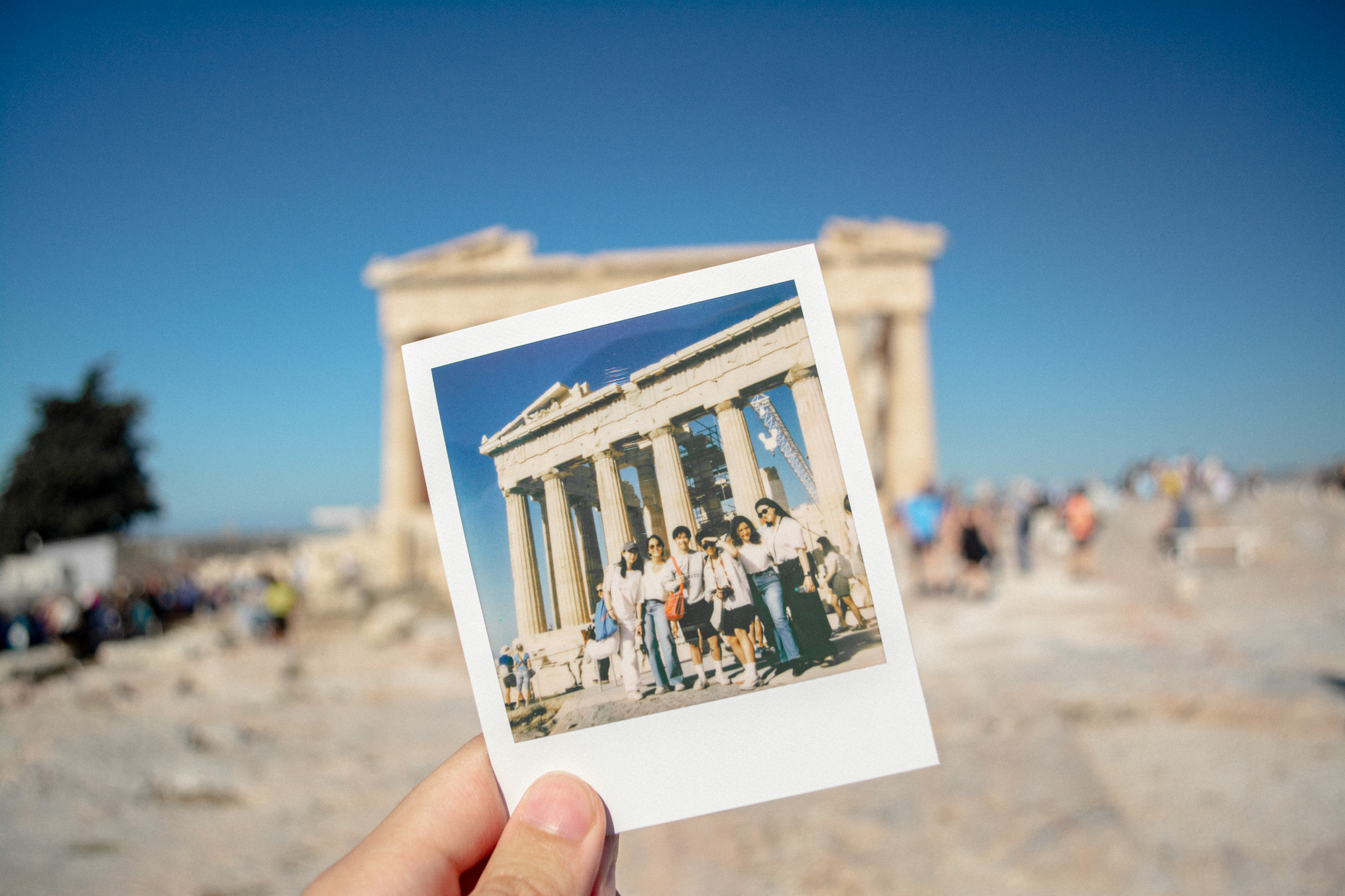
photo of a polaroid showing a group of students in athens greece

20.11.23 - Studies Abroad: Athens as a living laboratory

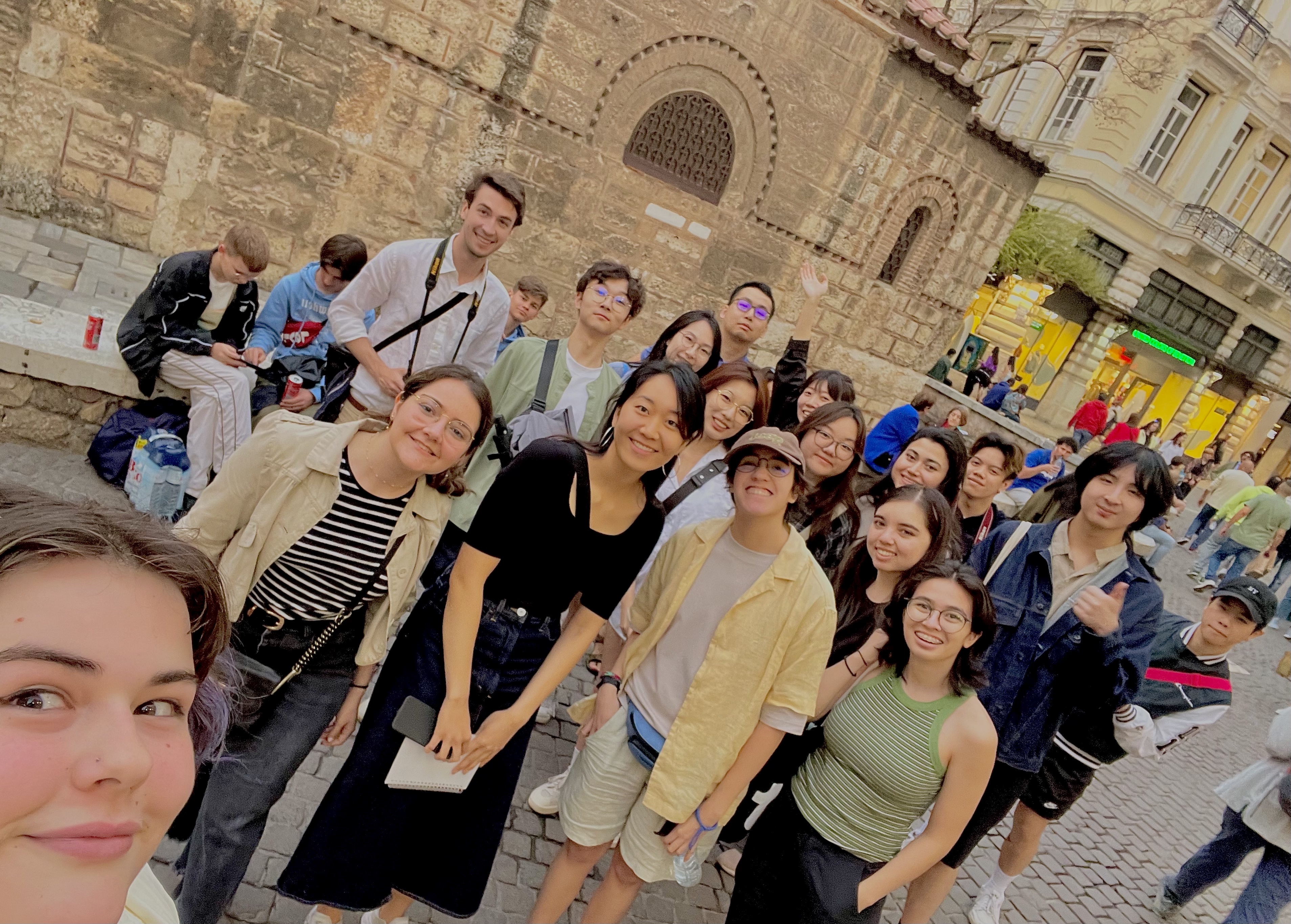
This past summer 14 undergraduate and three graduate students led by Assistant Professor Petros Babasikas investigated Athens as a living laboratory of urban change—testing contemporary theories of urbanism against different sites and itineraries. 

In constant transformation since its foundation as the capital of modern Greece in 1834, “the urban fabric, landscape and publics of Athens have been an unpredictable, diverse and complex laboratory of change,” says Babasikas.

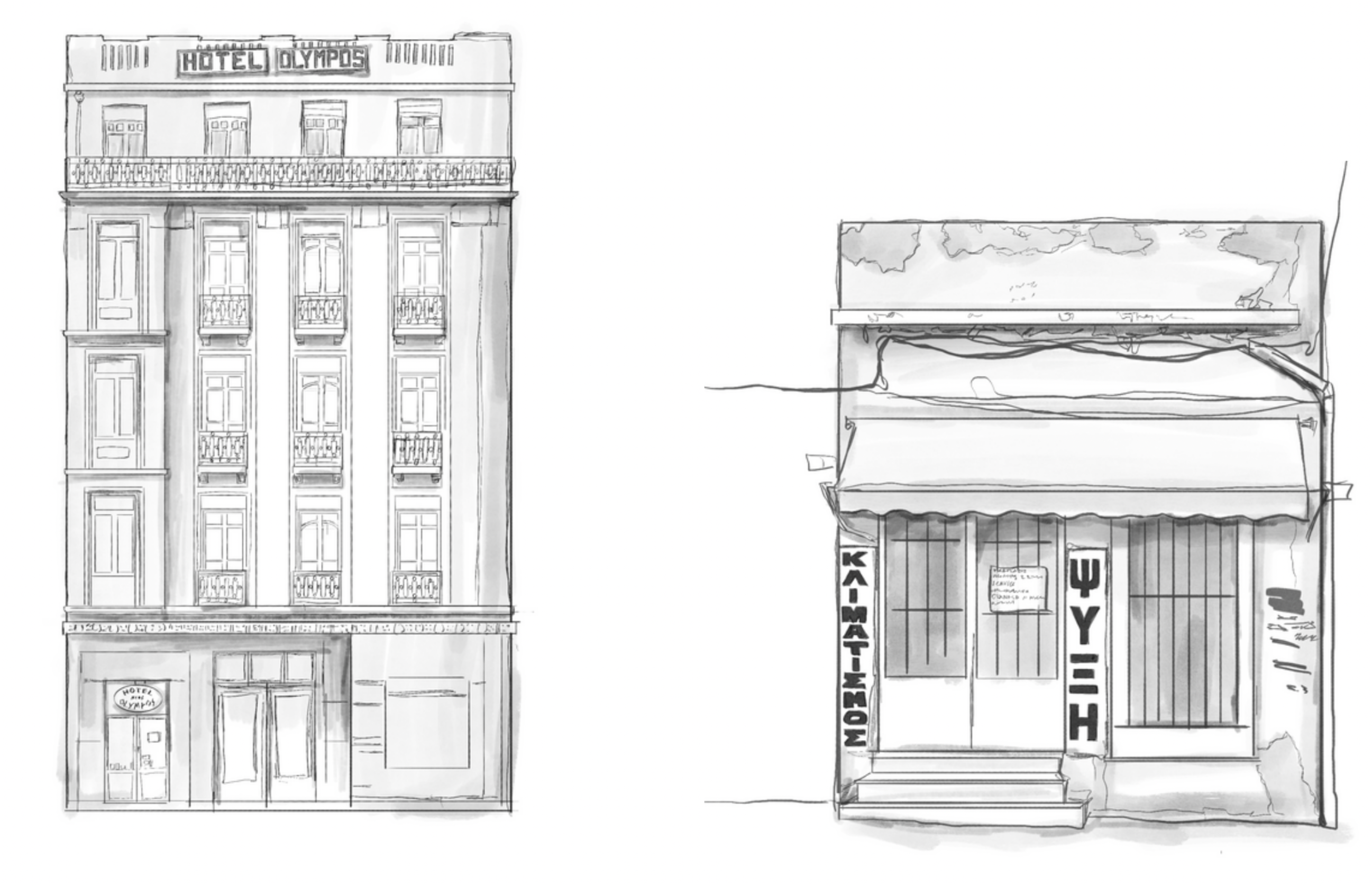
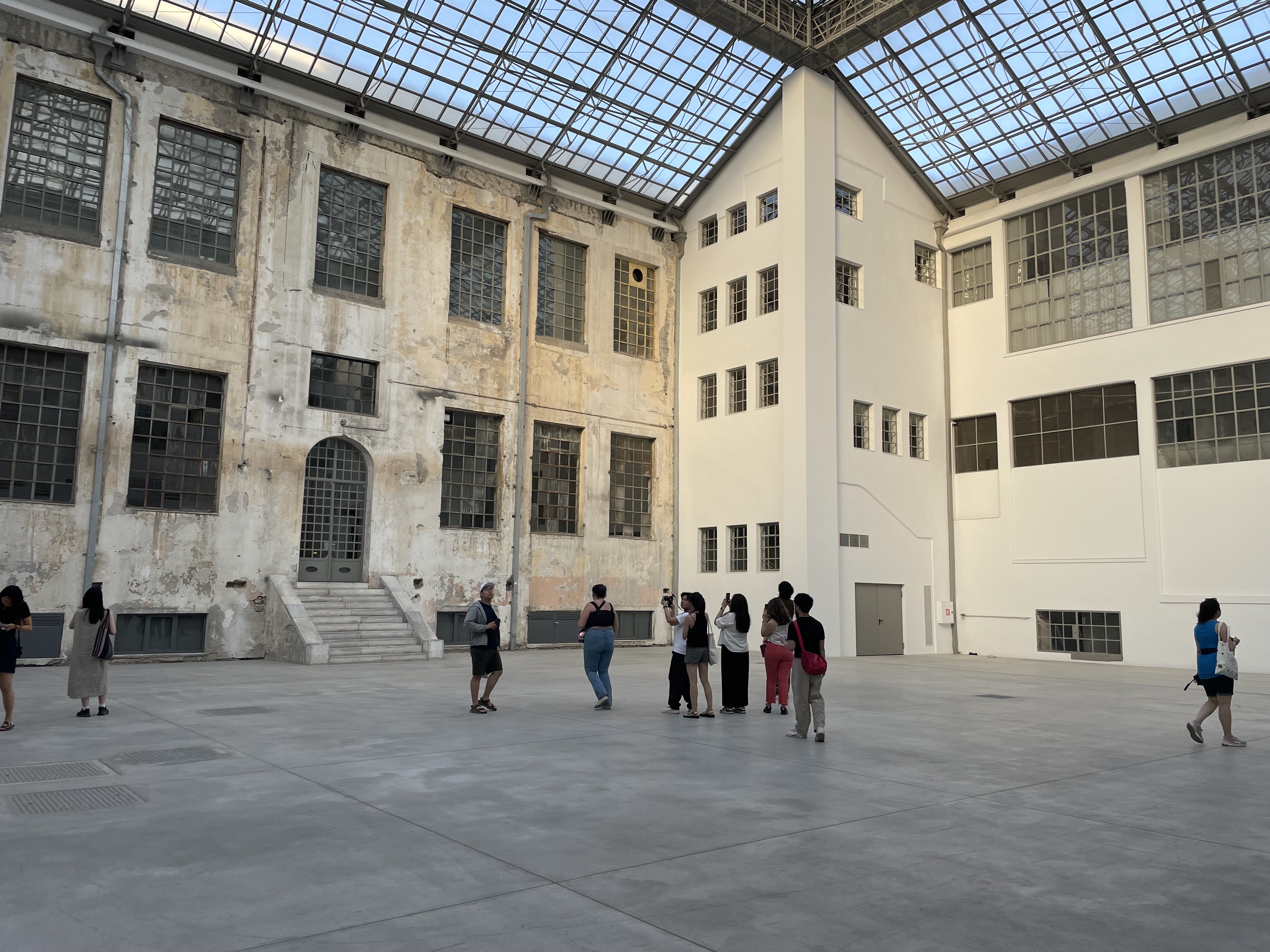
The course considered a genealogy of architectural projects against the ancient building typologies, walkscapes and water networks of Athens today. Over three weeks, students explored, documented and navigated the city via a series of seven routes or “walking seminars” that focused on specific Athenian commons—squares, gardens, walkways, buildings, monuments, waterscapes and ancient sites—to produce a set of composite drawings and images curated in a travel log.  

“Exploring public space, learning through observation and walking, became the essence of the experience,” says Haseena Doost, a fourth-year student in architectural studies, who participated in the studio abroad. 

The walking seminars immersed the students in Athenian history and modern life. The itinerary included:

  • Walk 01: Core, Erasures, Bricollage - moving through Neoclassical, Ottoman and Byzantine Athenian monuments and ruins in the Historic Center discussing histories that have been erased.
  • Walk 02: Walkscapes + Ideology - ascending from Kerameikos' archaeological excavation to the public parks and hills of Areopagos, Filoppappou, and the Muses, documenting a unique landscape reconstruction of routes, walls, gates, canopies, floorscapes and rocks.
  • Walk 03: Seven Versions of a Monument - discussing the different lives of the Acropolis, looking at the tectonics of three catastrophes, two reconstructions, a mythic path and one forgotten landfill.
  • Walk 04: Domino Urbanism - crossing the urban density, publics and migrant community spaces of Patisia and Kypseli within the Polykatoikia's incremental, flexible, mixed-use typology.
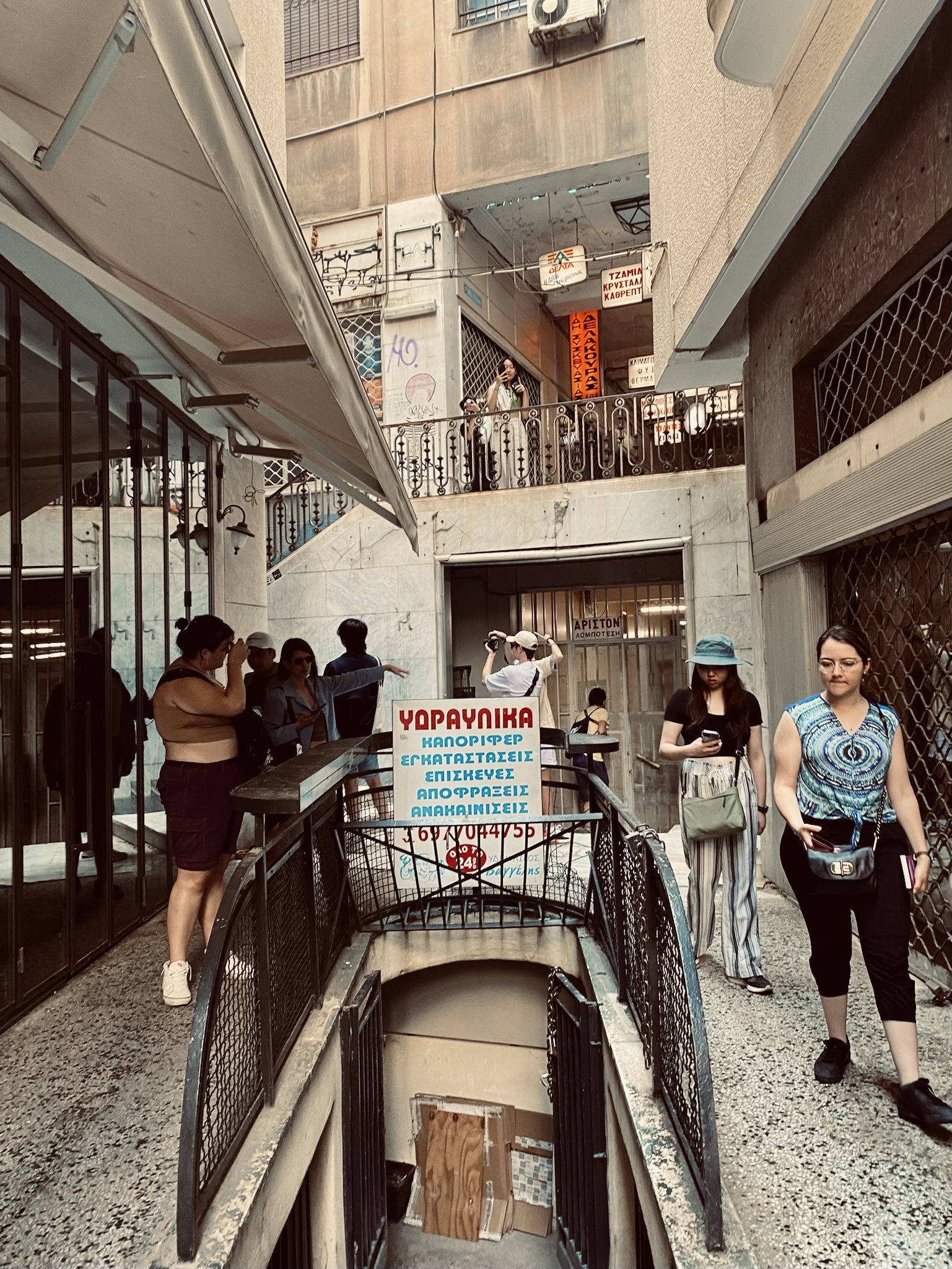
  • Walk 05: Civics, Basements, Arcades - cutting across the urban blocks of post-war Athens, through ground and basement, commercial passageways, hidden among the city's public landmarks.
  • Walk 06: Drosscapes, Pickup Ball, and Plato - wandering across the streets, post-industrial infrastructures and neighborhood politics of the Olive Grove, Kolonos, Sepolia, and Plato's Academy.
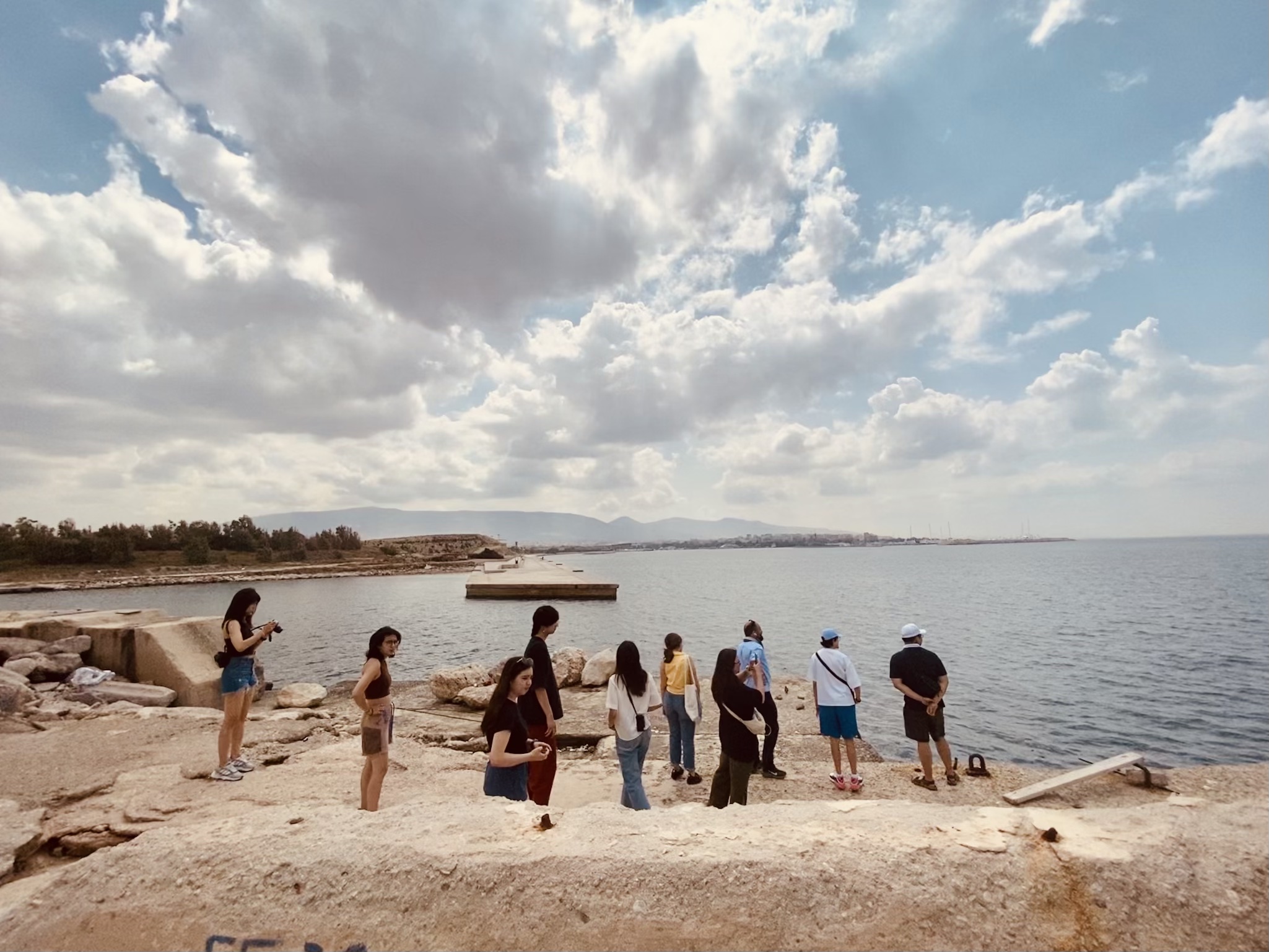
  • Walk 07: Waterscapes and the Non-Coast - following natural and channeled Athenian riverbeds, buried streams, and sewers ending on three expansive, coastal public spaces-under-transformation, revealing political, ecological, and climate emergencies.

“This immersive approach allowed us to directly observe and understand the intricate layers of Athens' urban fabric—both its physical structures and the intangible aspects that have continually shaped the city's evolution,” says Kenny Vo, a third-year student in architectural studies, for whom the trip marked a first visit to Europe.

“Through our studies, it became apparent that Athens serves as a representative case study for many other contemporary cities as well. By closely examining these elements, we gathered insights that were crucial for our travel documentation, focusing on specific facets of Athens' public spaces,” he says.

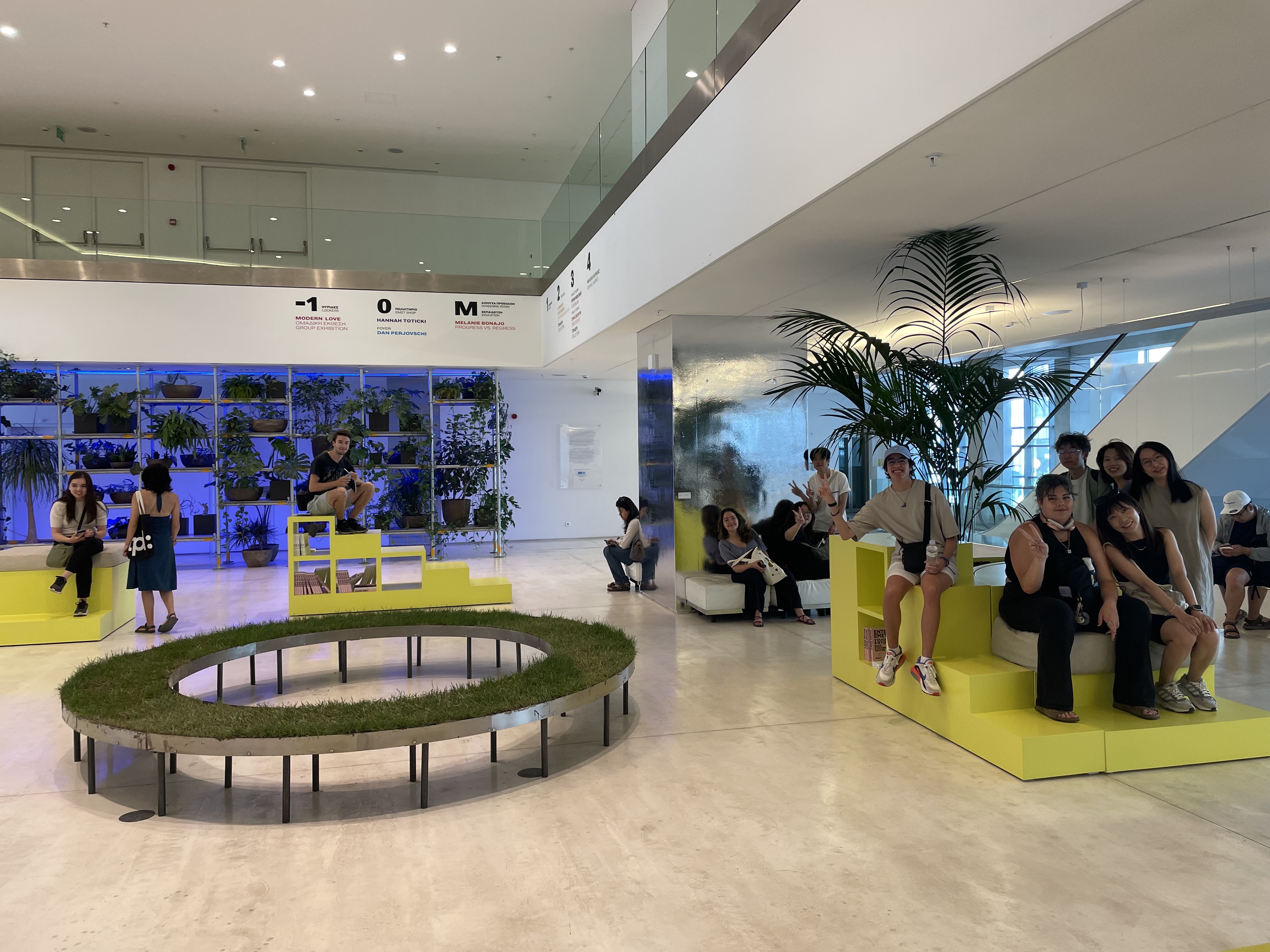
The X-Athenas: Public Space Stories in Contemporary Athens course, workshops and presentations were hosted by the National Museum of Contemporary Art in Athens (EMST)

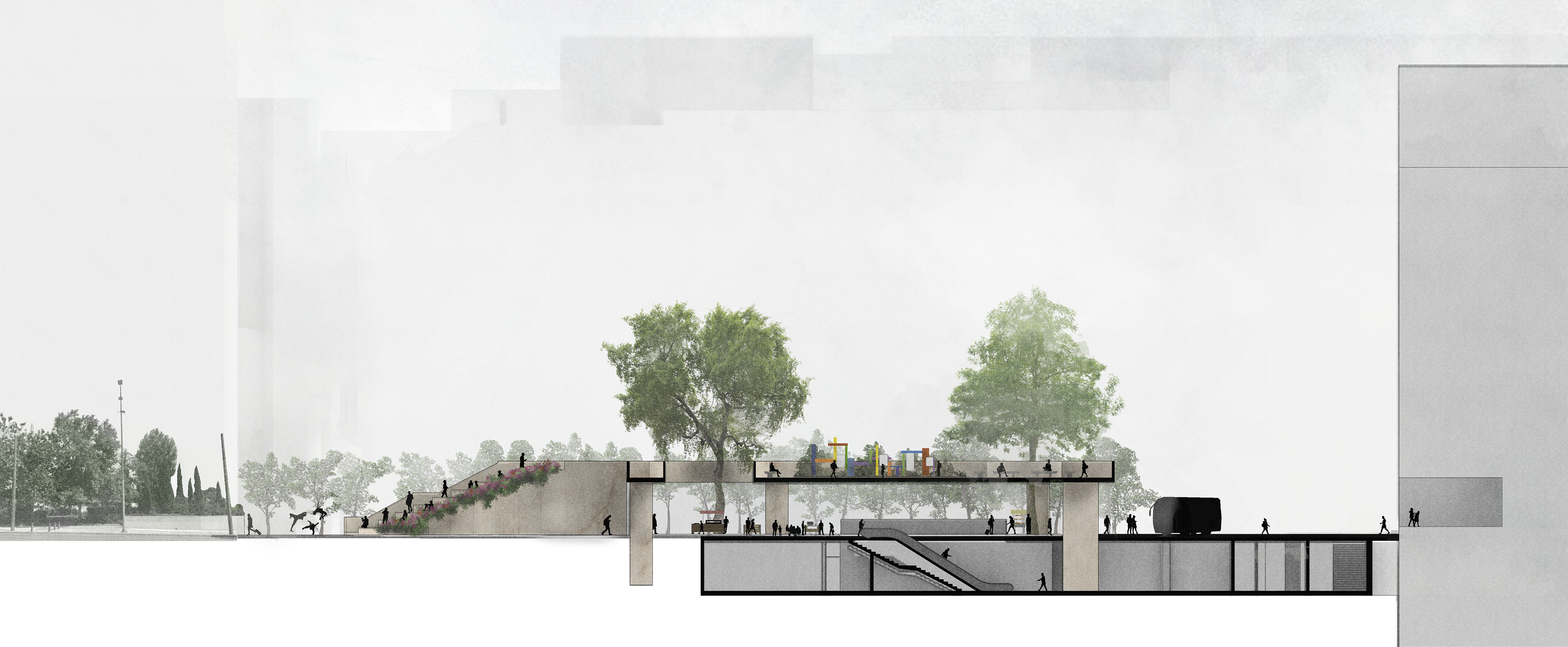
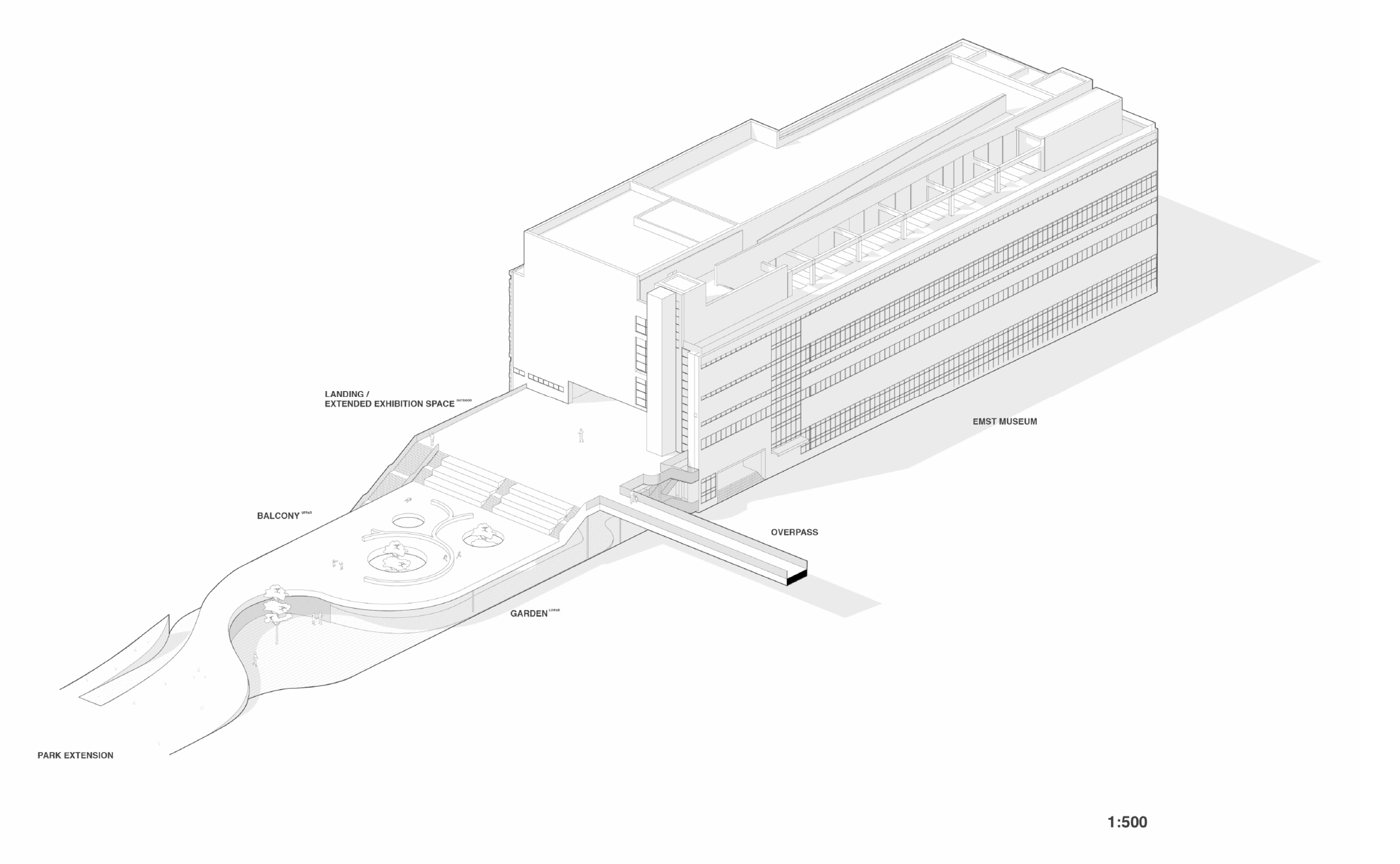
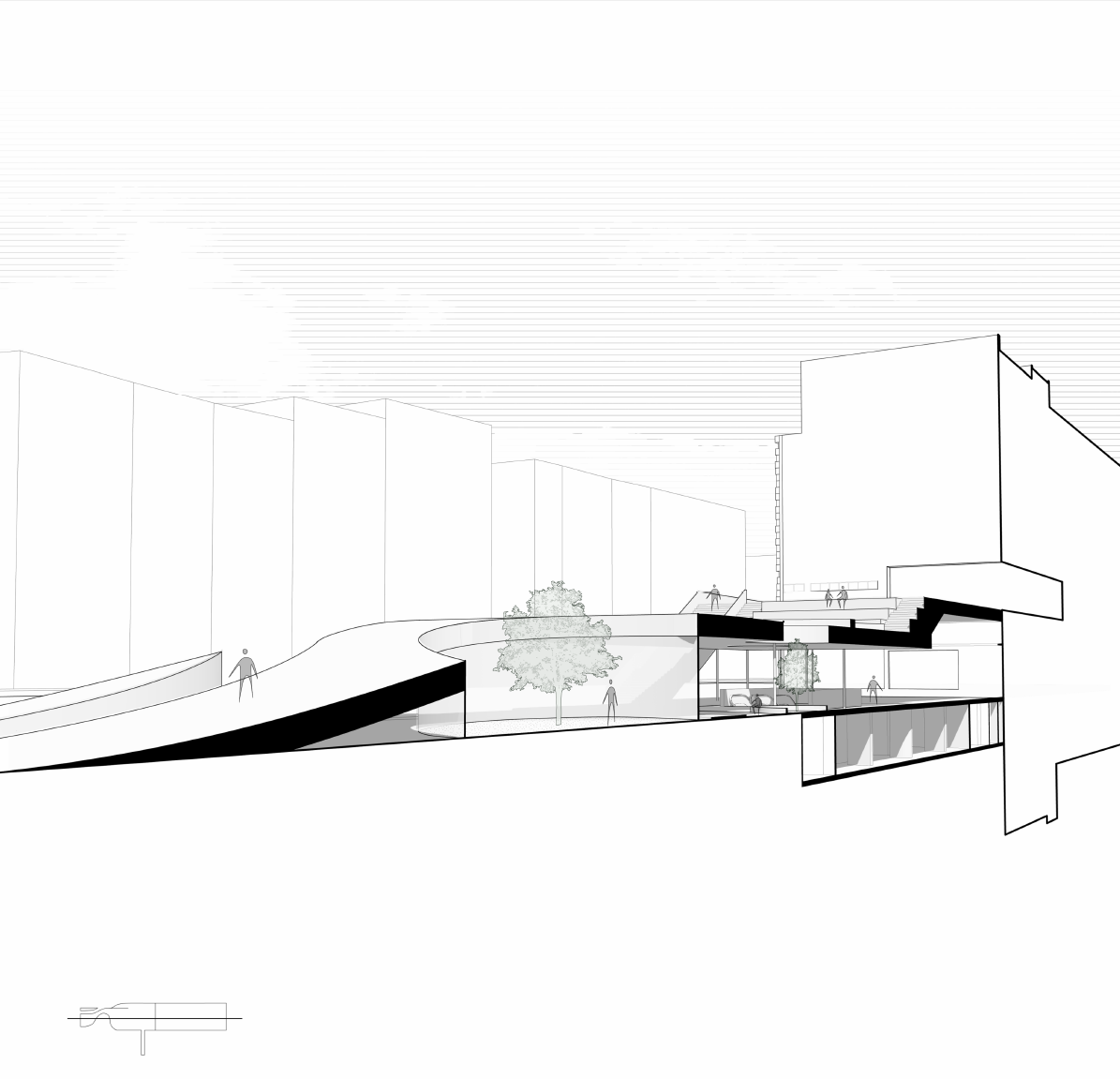
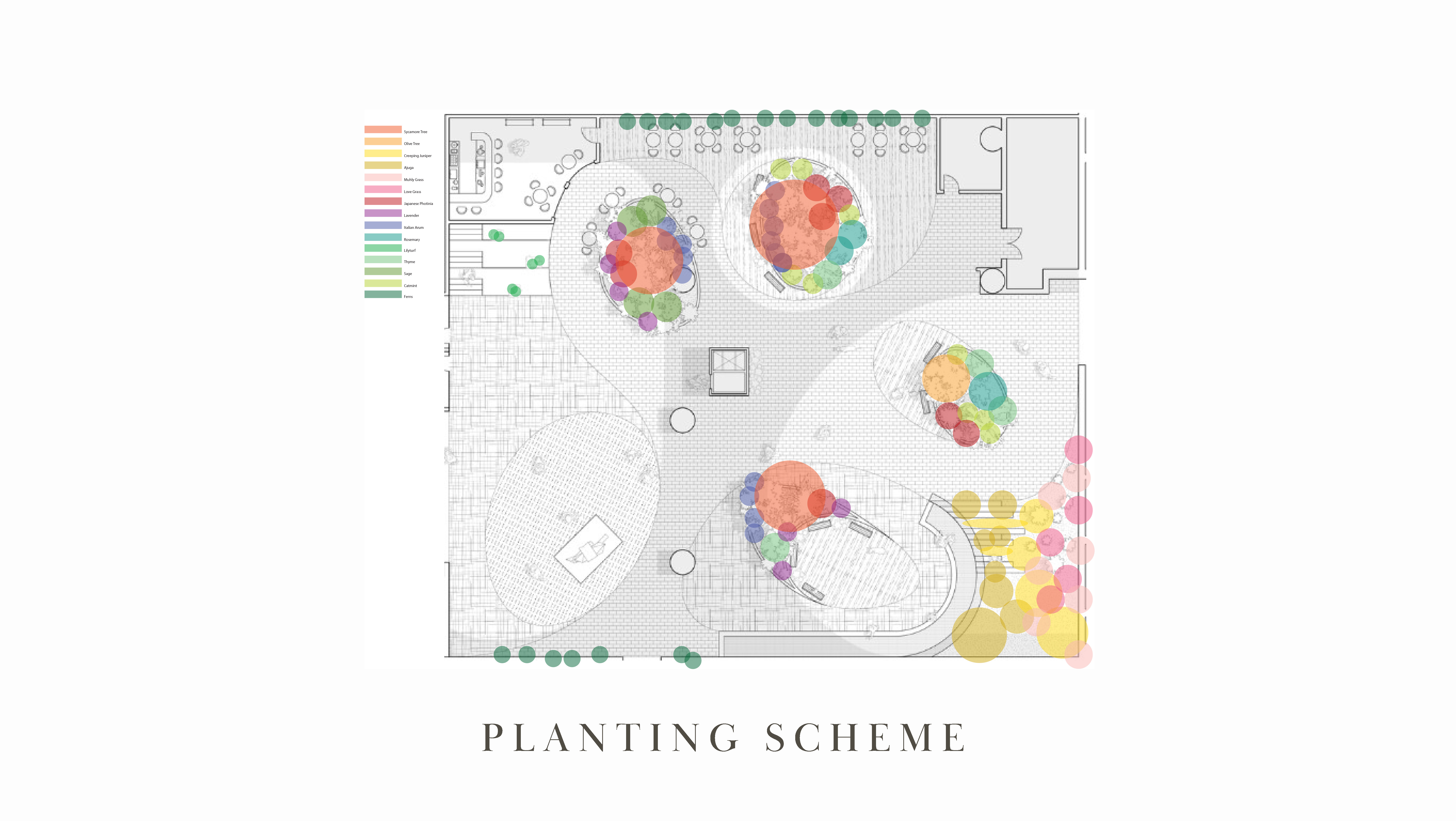
Following their on-site documentation, the students formed groups and focused on a single, dormant Athenian public space advised by interdisciplinary experts, including EMST curators. The group projects took the form of a one-week design charette where students produced design proposals for the reconstruction of a public space to the north of the museum, “transforming it into a public garden and civic extension of the building toward the center of Athens,” says Babasikas. 

“Something that surprised me about the course was how much I enjoyed working in a group on a design project,” says Grace McKibbon, a fourth-year student in architectural studies. “I found that because we all had different study focuses for our travel logs, we had different approaches to designing our public space project. I thought that the ability to bounce ideas off of each other and build off of our different perspectives led to a richer final product.” 

McKibbon and Doost, along with their fellow group members William Li and Sherry Zhu, identified an unused underground space that could be revitalized for public use. Their proposal aimed to uncover this space, creating a direct entrance to the museum with a bridge connecting it via stairs and an elevator. The envisioned urban park included a café and performance area, as well as a waterfall to mitigate noise from a busy intersection nearby.  

“My research concentrated on the memory of water in Athens, emphasizing its significance. Our design incorporated a waterfall flowing into a splash pad, symbolically connecting to the Illisos River beneath the EMST museum,” says Doost. “Despite Athens' distance from the coastline, water, facilitated by hydro infrastructure, remains a vital part of its history and contemporary challenges.” 

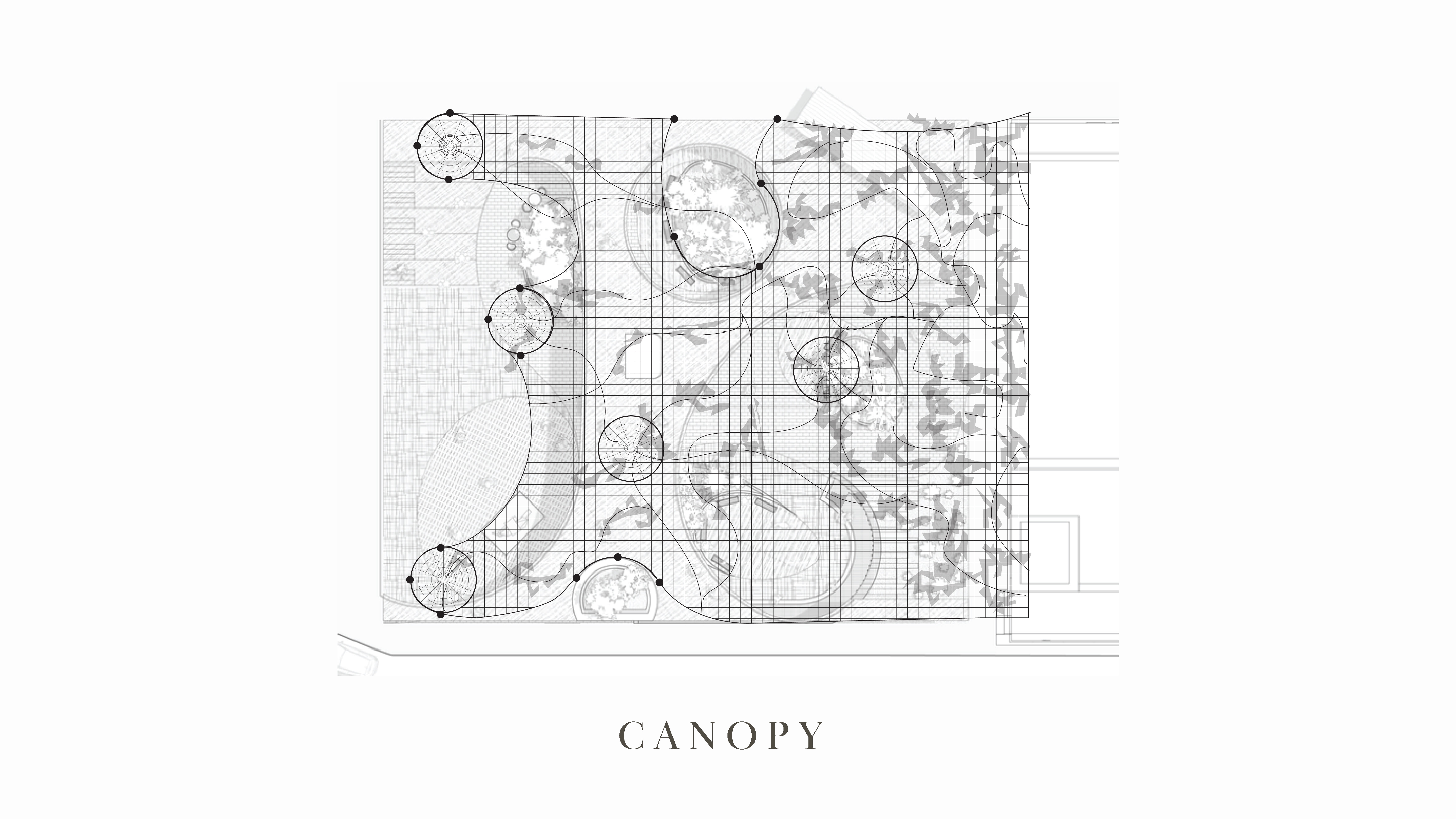
McKibbon's travel logs focused on how plans can create spaces in an urban environment, and she brought that approach to the design: “I found it really interesting to study plants in a different growing region than Toronto and how the types of plants that can grow in Athens affect how public space is used," she says. "In our site specifically, one of the features was a canopy that spanned most of the park with vines growing on top of it to provide shade, which is something that we saw on one of our walks through Dimitris Pikionis’ paths around the Acropolis.” 

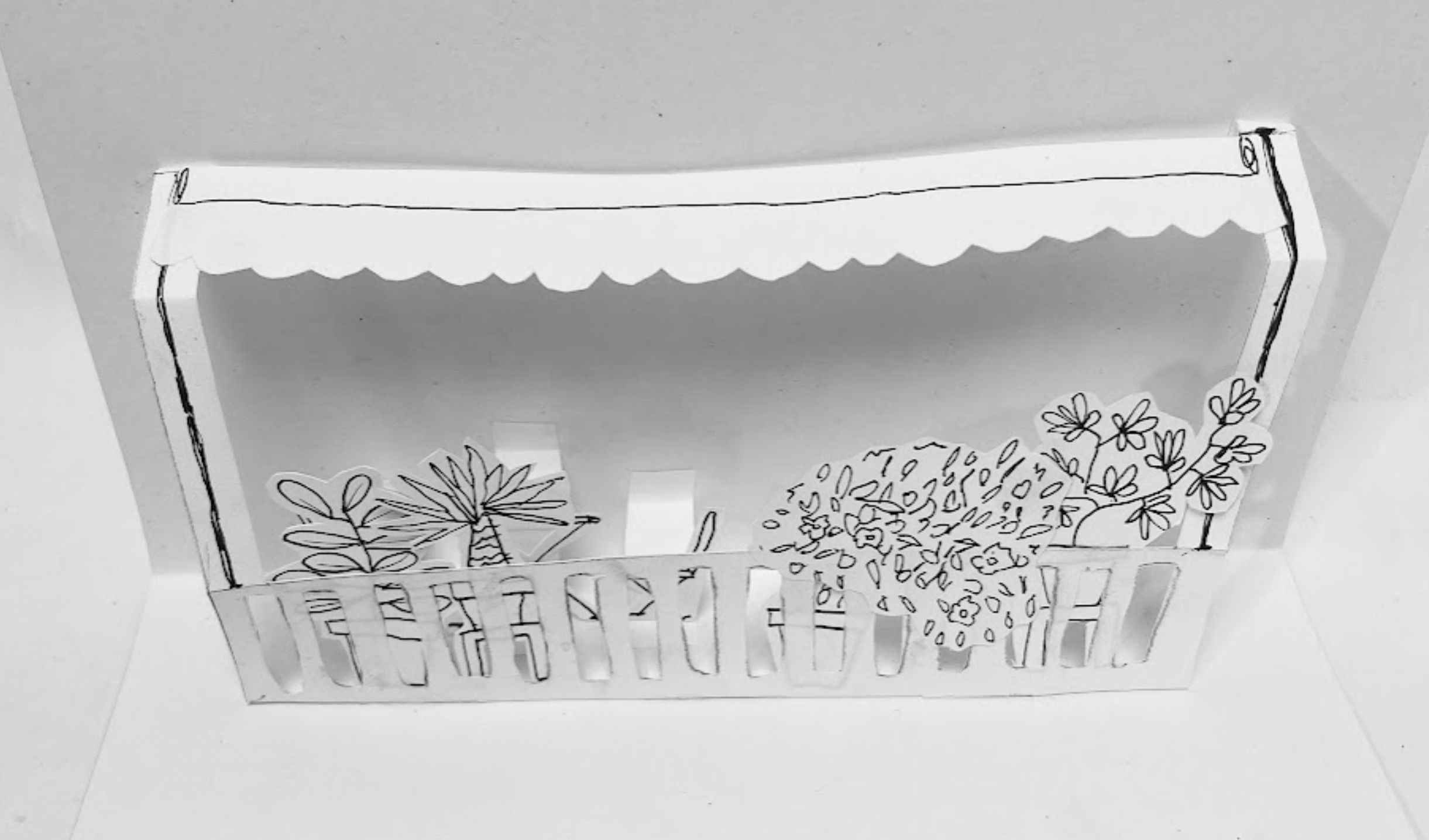
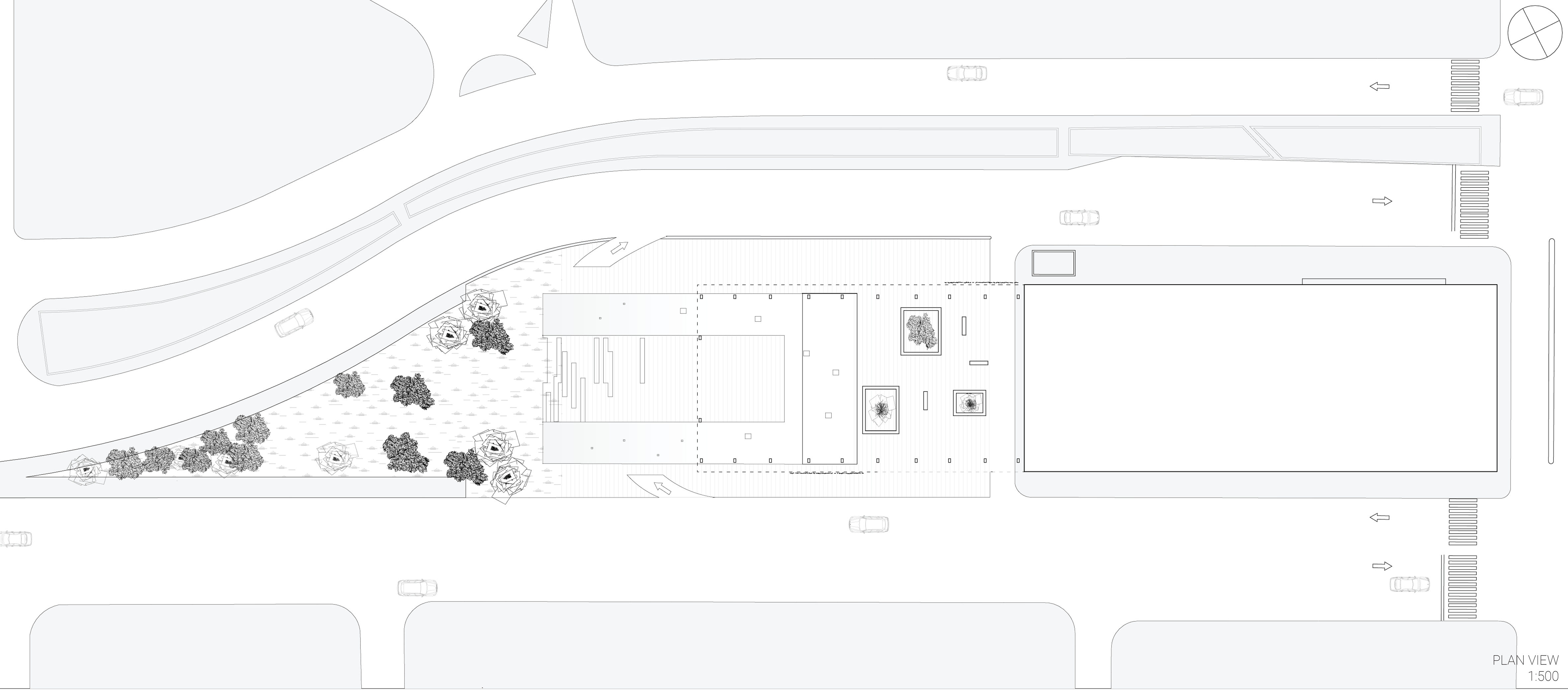
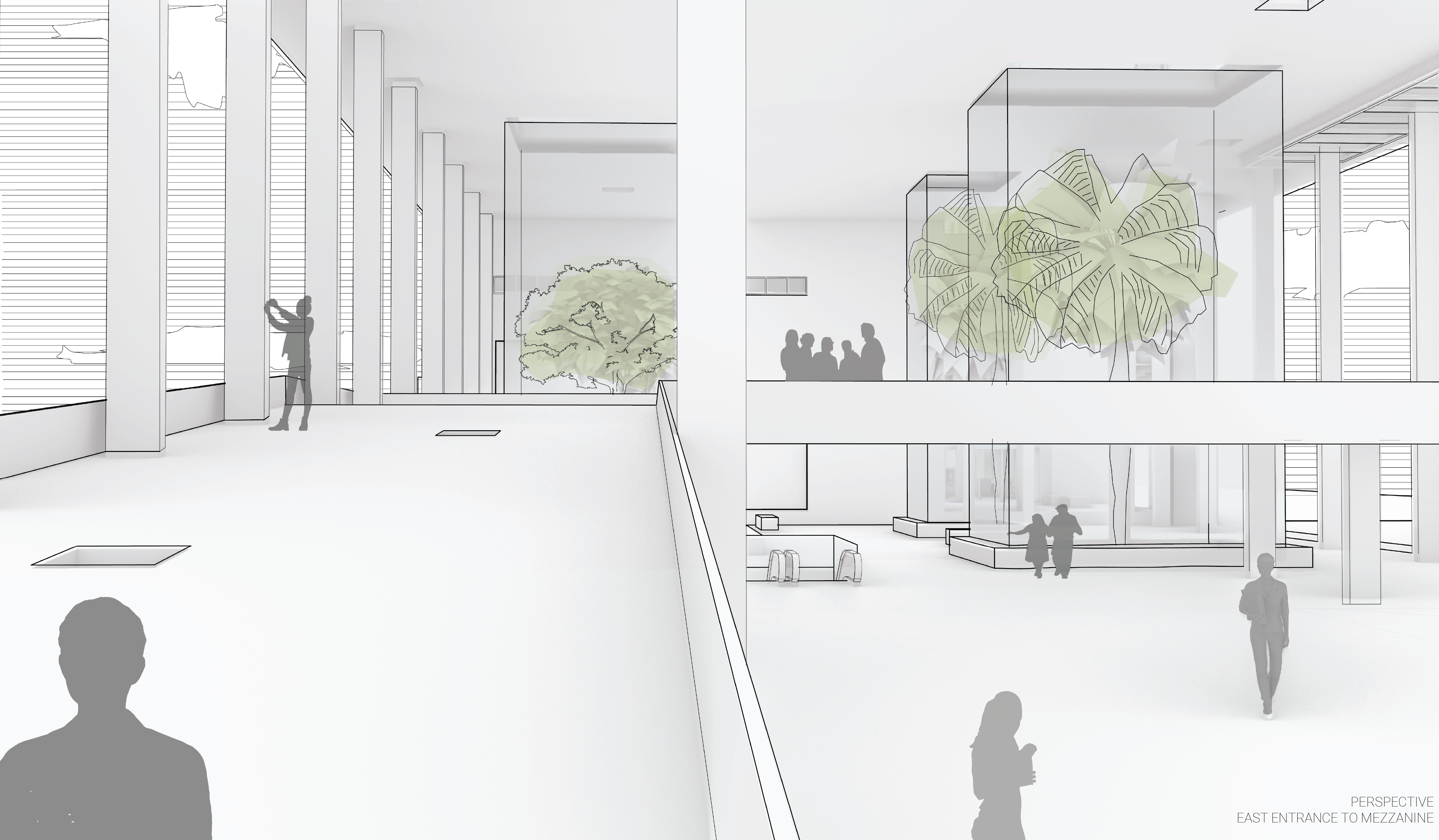
Other teams in the design charette envisioned the creation of large-scale canopies from the main volume of the museum—these structures extended the space of the museum to the north with outdoor cultural and play spaces accessible by the public. Students also designed covered areas accessing the nearby subway station and underground parking facilities and created direct connections with a public park. (See a selection of project images above.)

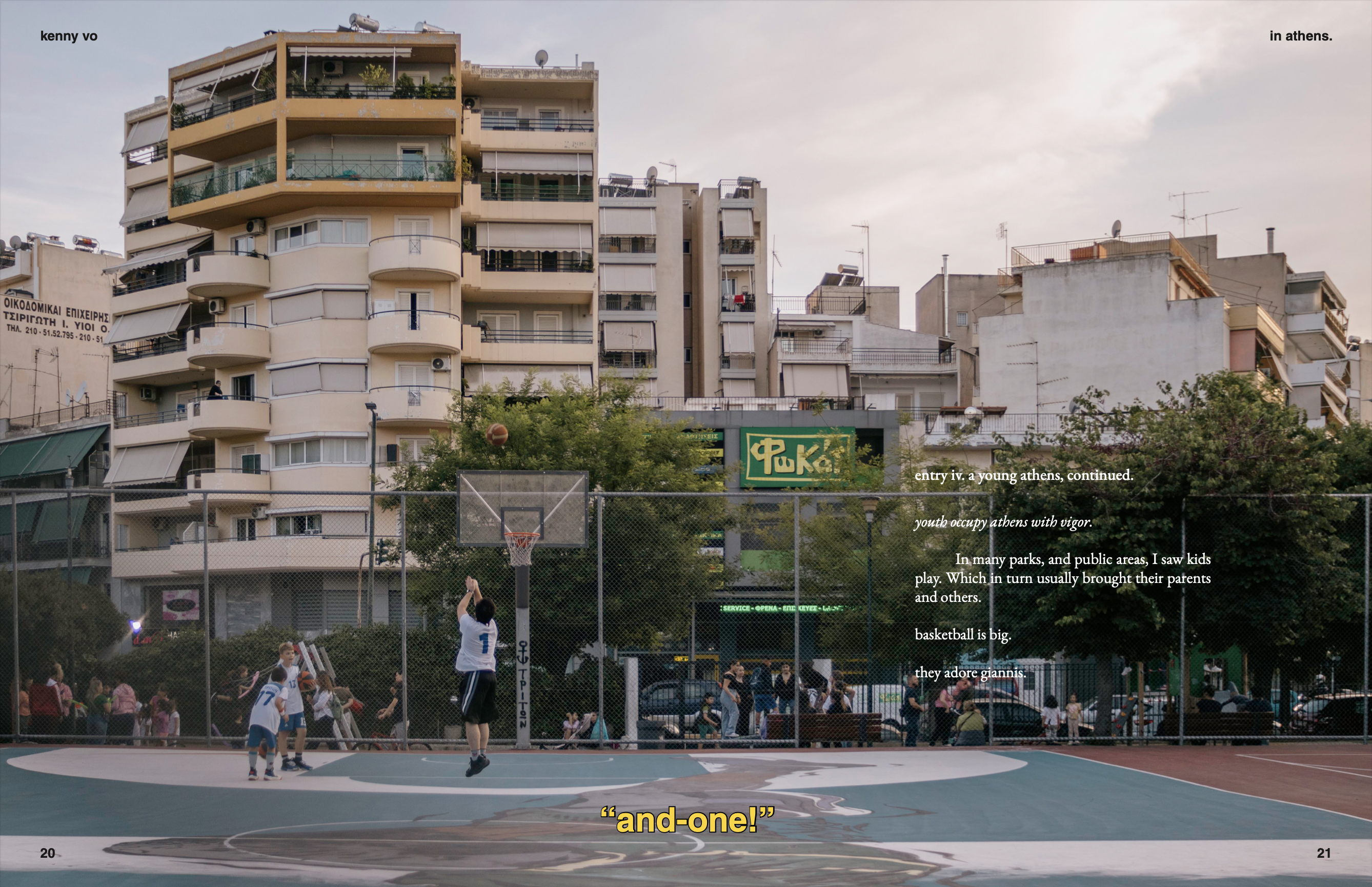
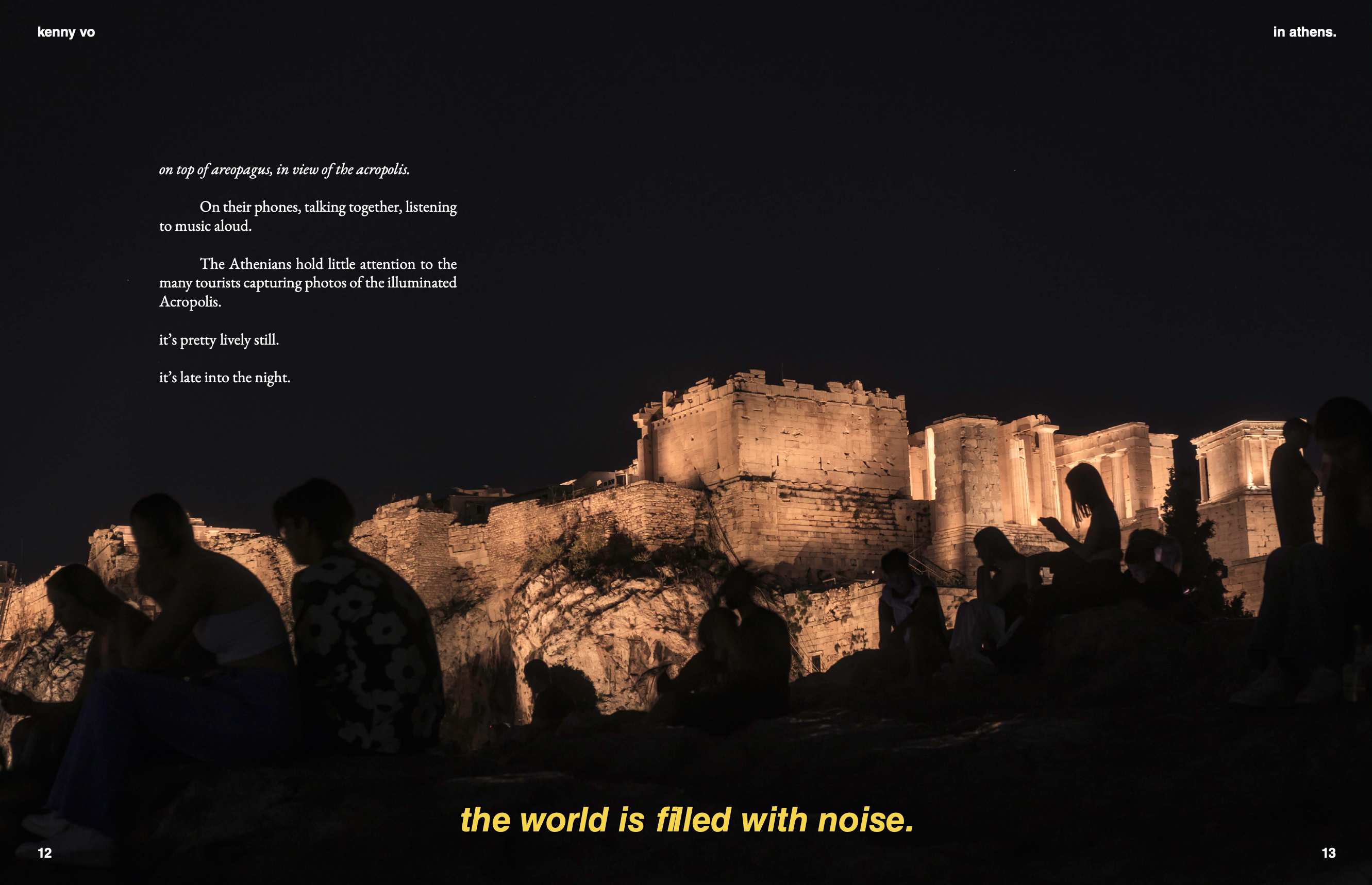
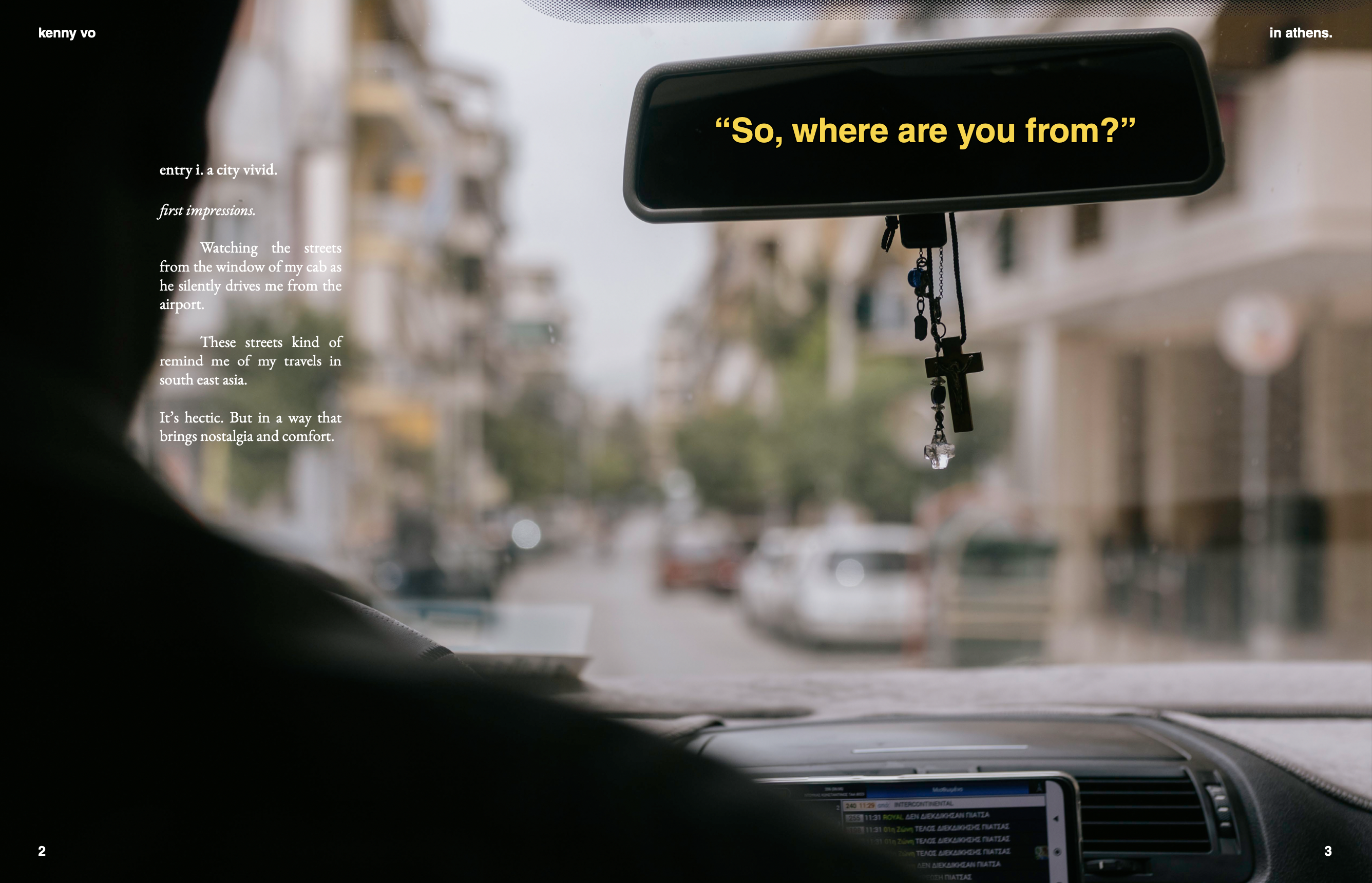
Vo’s final project (seen below) took a different approach and centered on capturing the essence of everyday life in Athens, primarily using film photography.

“The project represented a collection of memories from my brief time in the city, viewed from the perspective of a traveler seeking to understand the concept of familiarity in a foreign place,” Vo says.

“What initially seemed transient and fleeting revealed itself to be shared, cyclic experiences of everyday life. This exercise allowed me to gain deeper insights into the lives of ordinary people, set against the backdrop of Athens' coexisting spaces,” he says. “It was an exploration of the city's layered history, capturing moments that ranged from the intense and mundane to the informal and intimate.” 

While their experiences abroad and approach to the final project differed, Doost, McKibbon and Vo all agree that the trip is a highlight of their time at Daniels—and continues to have an impact on how they view public space today. 

“Being able to see all of the layers of the city, whether it be seeing a portion of the Athens city walls in the basement of a building or visiting a Byzantine chapel built from remnants of classical buildings, was what made the course the most engaging, and really displayed how it is a city that has a lot of history but is constantly moving forward and changing,” says McKibbon. 

“X-Athenas was unforgettable,” Vo adds. “Although it lasted only three weeks, it felt like a lifetime of experiences packed into a brief period.” 

The Summer Studio Abroad in Athens, Greece was one of four global studios offered by the Daniels Faculty in 2023. Other courses included studies in Kumasi, Ghana; Berlin, Germany; and Fez, Morocco. A domestic studio also took place on Fogo Island, Newfoundland and Labrador.

Image credits: 1) Banner image - Young-Mi Kim; 2-3) Petros Babasikas; 4-10) Slideshow of X-Athenas student work; 11) Group photo - Sofia Frick; 12-13) Petros Babasikas; 14-16) final project by Kenny Vo.

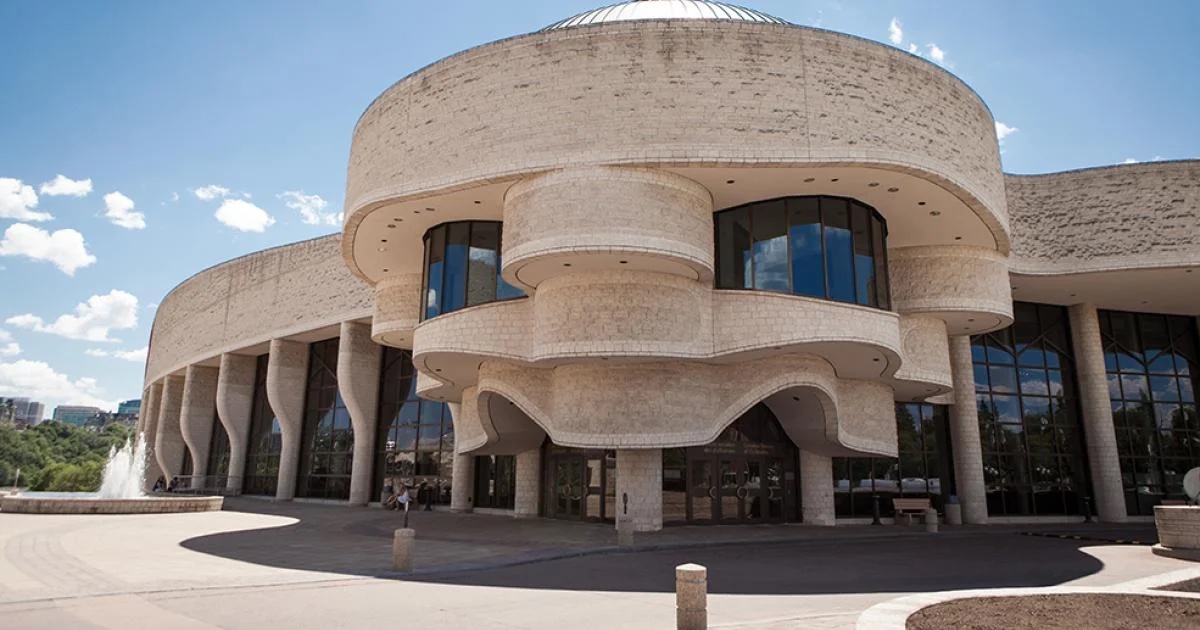
Canadian Museum of History

08.11.23 - Douglas Cardinal to deliver lunchtime lecture at 1 Spadina on November 16

Celebrated architect Douglas Cardinal will be giving a lunchtime lecture at the Daniels Faculty on Thursday, November 16.

Entitled “Indigenous Principles for Architecture,” the talk will take place from 12:30 to 1:30 p.m. in Room 200 of the Daniels Building at 1 Spadina Crescent.

To register for the lecture, at which lunch will be provided, click here. The talk is free and open to all Daniels Faculty students and instructors.

In addition to designing such iconic buildings as the Canadian Museum of History in Gatineau (pictured above) and the National Museum of the American Indian in Washington, D.C., Dr. Cardinal has been a long-time advocate for the dignity and advancement of Indigenous peoples and last year joined the Daniels Faculty as Decanal Advisor on Indigenous Knowledge.

In his talk on November 16, he will outline how adopting an Indigenous worldview can guide architects and planners in the creation of sustainable built environments that harmonize with nature for at least “seven generations,” the traditional Indigenous benchmark for decision-making and stewardship. Among his key focuses will be planning.

“The planning that cities and communities are conducting presently,” he says, “is not only not sustainable, but destructive to all life, including our own. Indigenous principles offer an innovative way [of building] that is rooted in their traditions [and] accounts for all life-givers that the land hosts, so plants, animals and humans may have a future together.”

One of the projects that Dr. Cardinal will cite in his talk is the 2017 planning work he conducted for the Ojibway community of Stony Point in Ontario. Previously, the land in question had been occupied by Canada’s Department of National Defense as a military training base. “I will show the multifaceted analysis and holistic integration necessary to reach a sustainable community,” he says of his work, which at Stony Point “integrated all my life experience” in terms of both process and result.

Prior to signing on as Decanal Advisor on Indigenous Knowledge, Dr. Cardinal was the Faculty’s 2020-2021 Frank Gehry International Visiting Chair in Architectural Design. He was also awarded an Honorary Doctor of Laws degree by the University of Toronto in June of 2022.

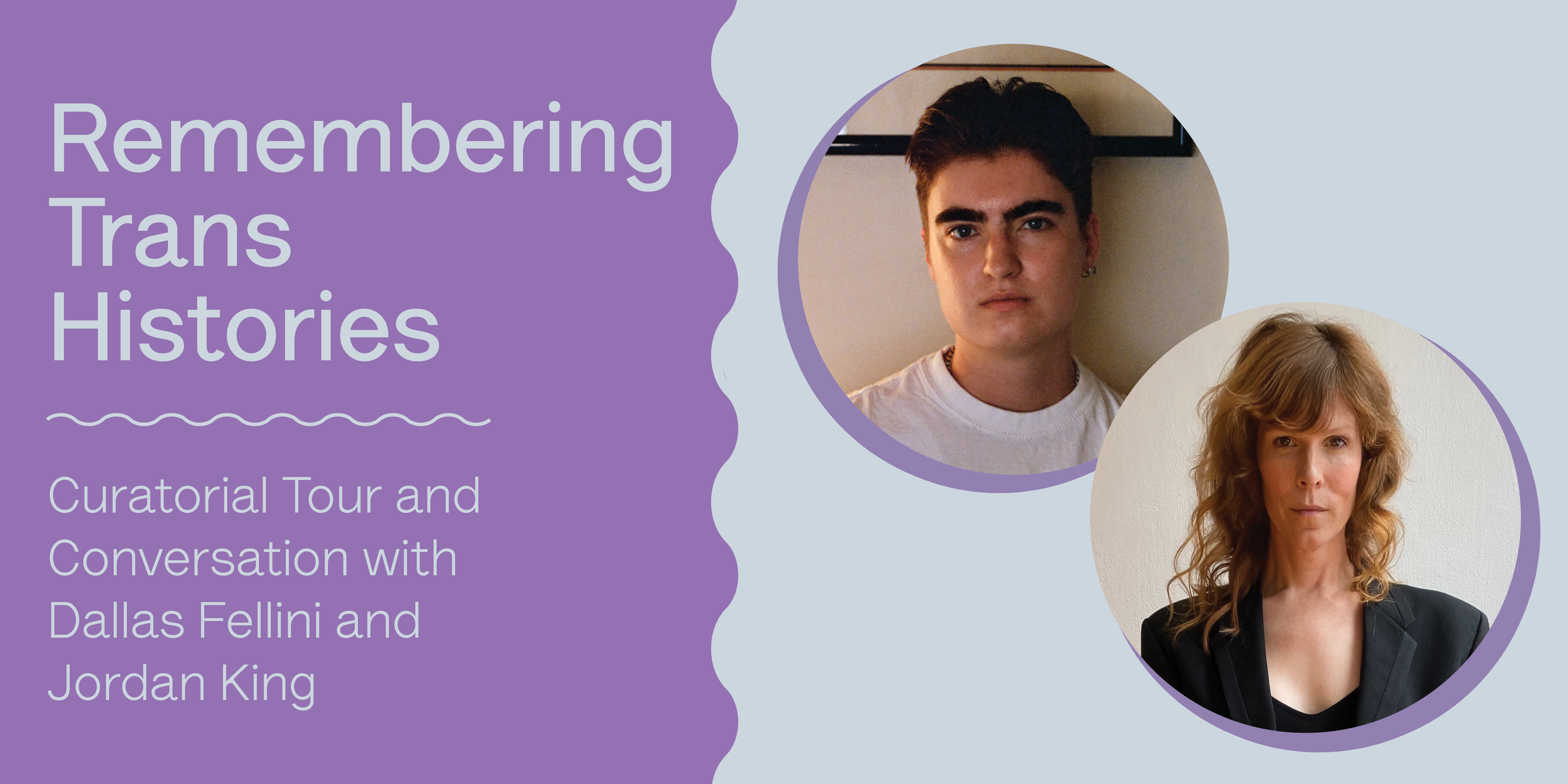
Remembering Trans Histories banner

01.11.23 - November 14 curator tour and artist talk to complement exhibition examining trans histories

On view at the Jackman Humanities Institute (JHI) until next June, the exhibition Mnemonic silences, disappearing acts grapples with the absences, erasures and censorships that pervade queer and trans histories, offering alternative forms of documentation, storytelling and memory-keeping that respond to archival gaps and propose strategies for future archiving.

On Tuesday, November 14, exhibition curator Dallas Fellini, who is currently pursuing a Master of Visual Studies in Curatorial Studies at the Daniels Faculty, will provide a guided tour of the show, which features works by artists Jordan King, Kasra Jalilipour, Hazel Meyer and Cait McKinney, Kama La Mackerel and Lan “Florence” Yee.

Following the tour, attendees will be invited to walk over to the Daniels Building at 1 Spadina Crescent, where curator Fellini and artist King will lead a discussion about their work and its role in trans memory-keeping and resistance.

All are welcome to join both the tour and the talk. The hour-long JHI tour will begin at noon on the 10th floor of 170 St. George Street. The talk, at which lunch will be provided, will commence at 1:30 p.m. in Room 230 of the Daniels Building. Attendees may register here.

Situated at the intersection of trans studies and archival studies, Fellini’s research interrogates the compromised conditions under which trans histories have been recorded and considers representational and archival alternatives to trans hyper-visibility. 

King is a multidisciplinary artist, curator and writer whose practice is rooted in performance, archival research and intergenerational dialogue. She is currently a Curatorial Practice MFA student at OCAD University, where her focus is on documentary film and multimedia documentation of underground queer performance. 

The JHI tour and Daniels Faculty talk will take place during Trans Awareness Week, established to encourage awareness of and advocacy around trans rights and inclusion and to affirm trans lives and experiences in all their complexity. Trans Awareness Week will be observed this year from November 13 to 17.

The week will be followed by Trans Day of Remembrance and Resilience (TDoRR) on November 20. TDoRR is observed annually to honour the memory of the trans people who have lost their lives as a result of transphobic violence.

U of T will mark both Trans Awareness Week and TDoRR with a range of events and gatherings. For the full programming list, click here.

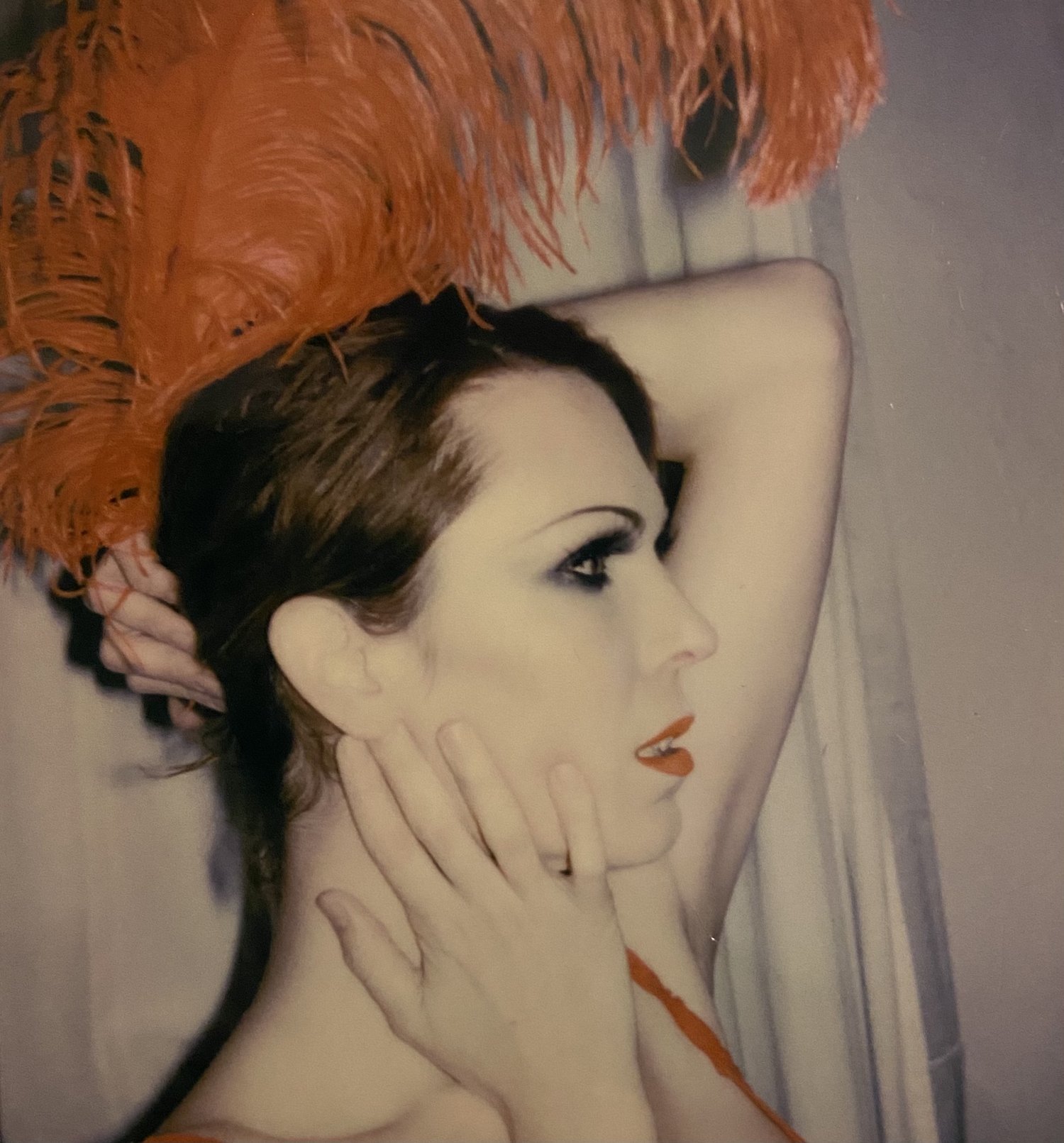
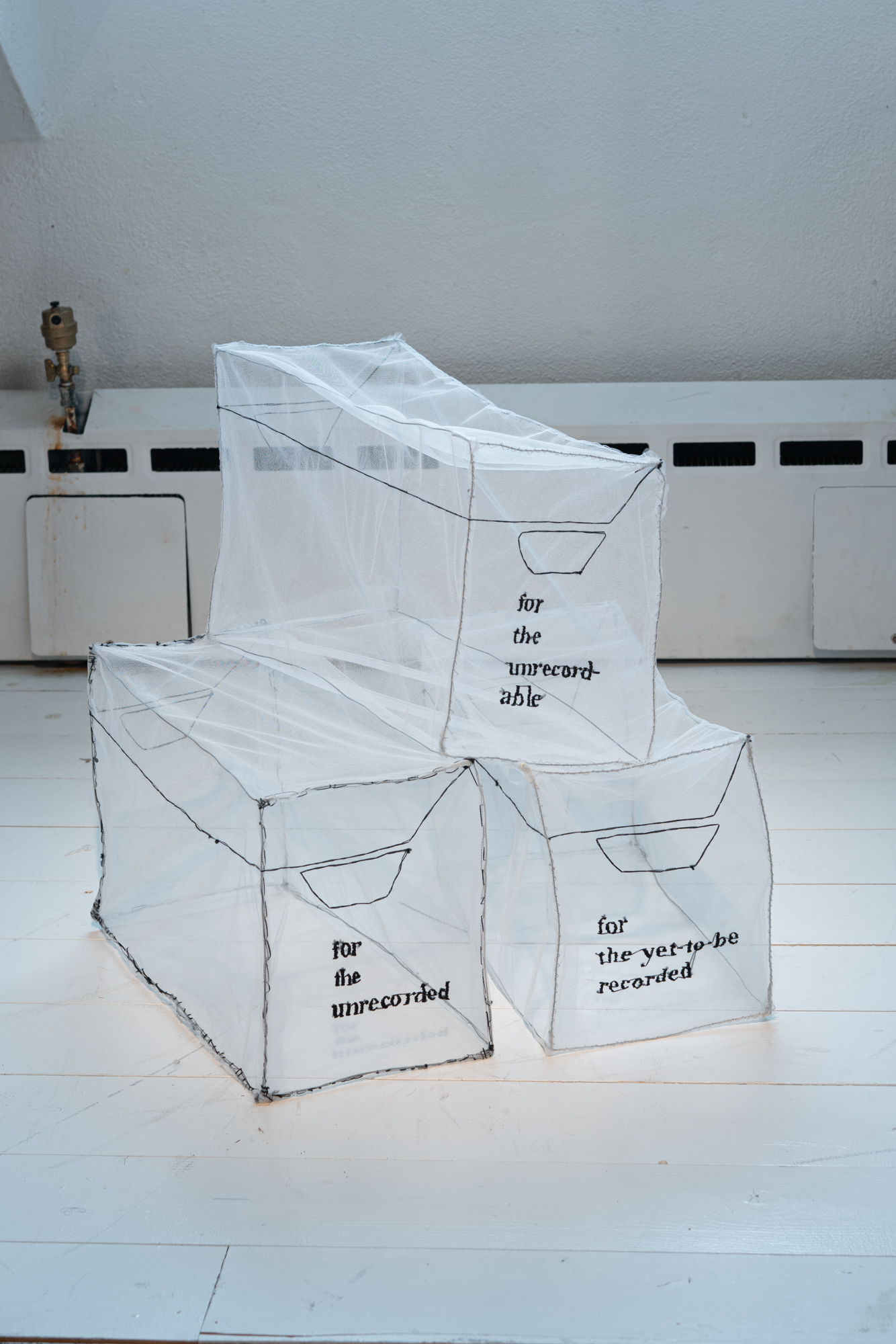
Exhibition images: Among the works on view in the exhibition Mnemonic silences, disappearing acts are Untitled by Jordan King (top) and Leaving Space by Lan “Florence” Yee (bottom). On Tuesday, November 14, curator Dallas Fellini will lead a tour of the show at the Jackman Humanities Institute before joining artist King for a discussion at the Daniels Faculty. Lunch will be provided. King photo courtesy of the artist, Yee photo by Alexis Bellavance.

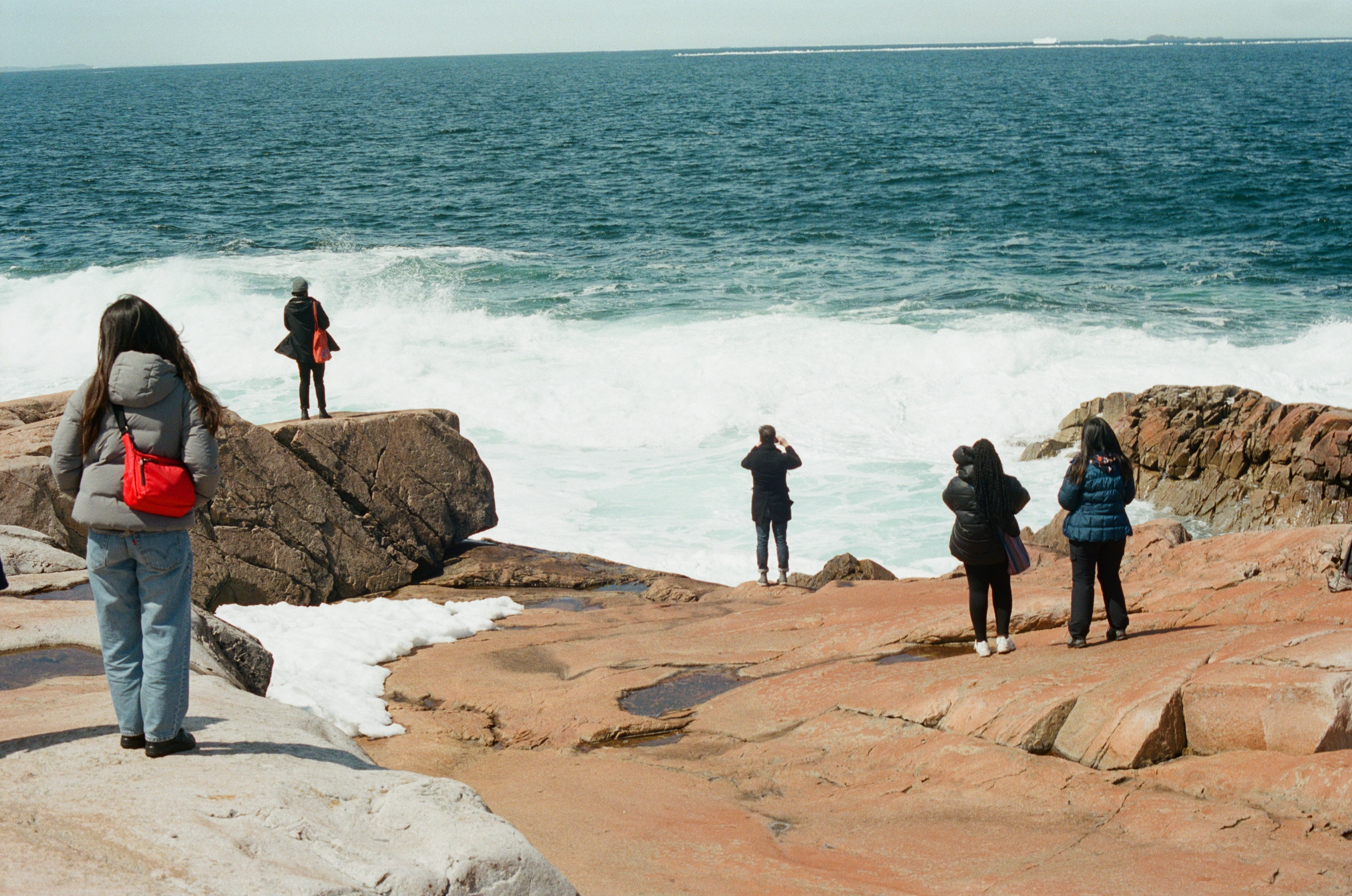
daniels students stand near the atlantic ocean

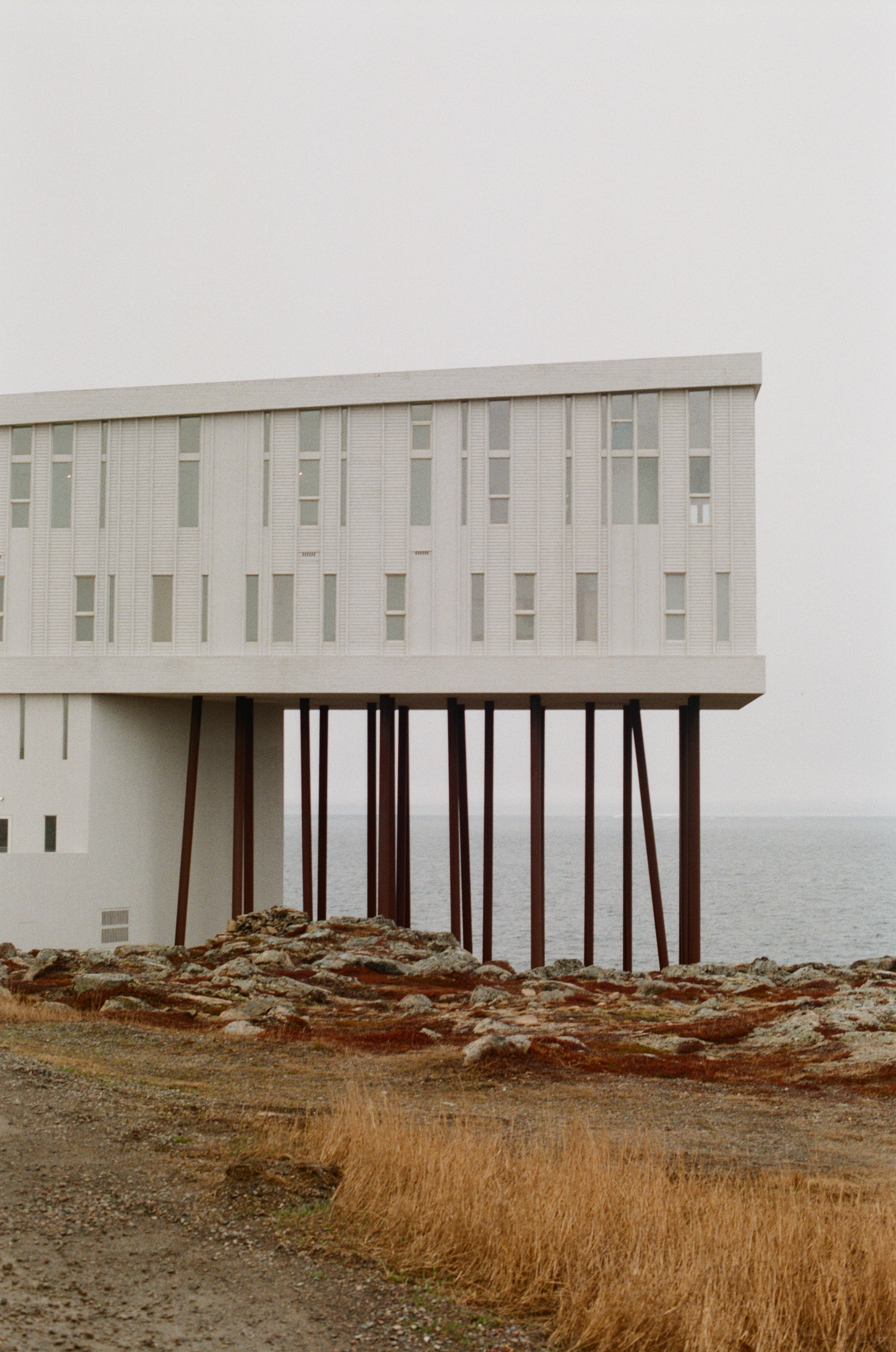
31.10.23 - Studies Abroad: Exploring art and community on Fogo Island

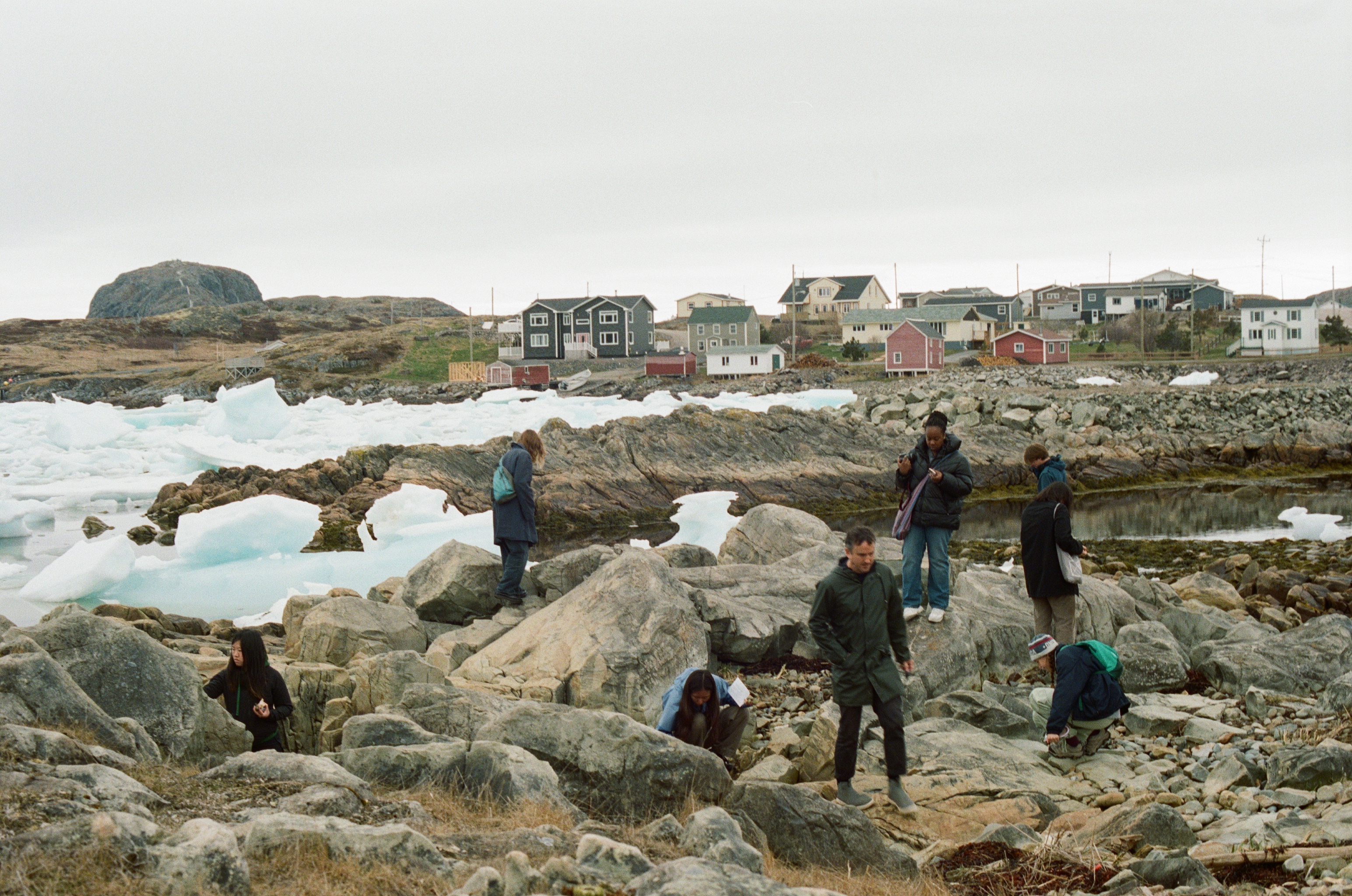
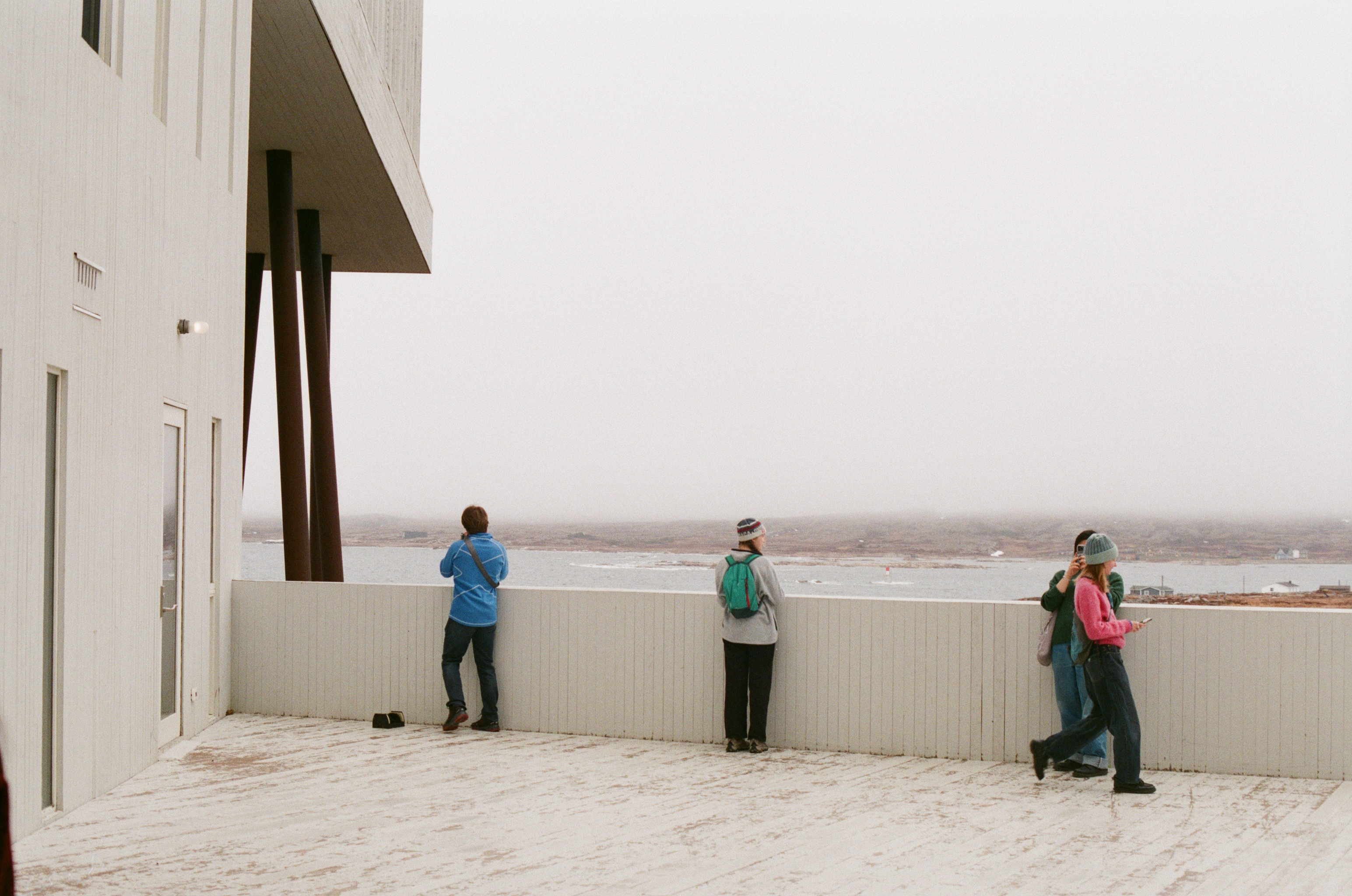
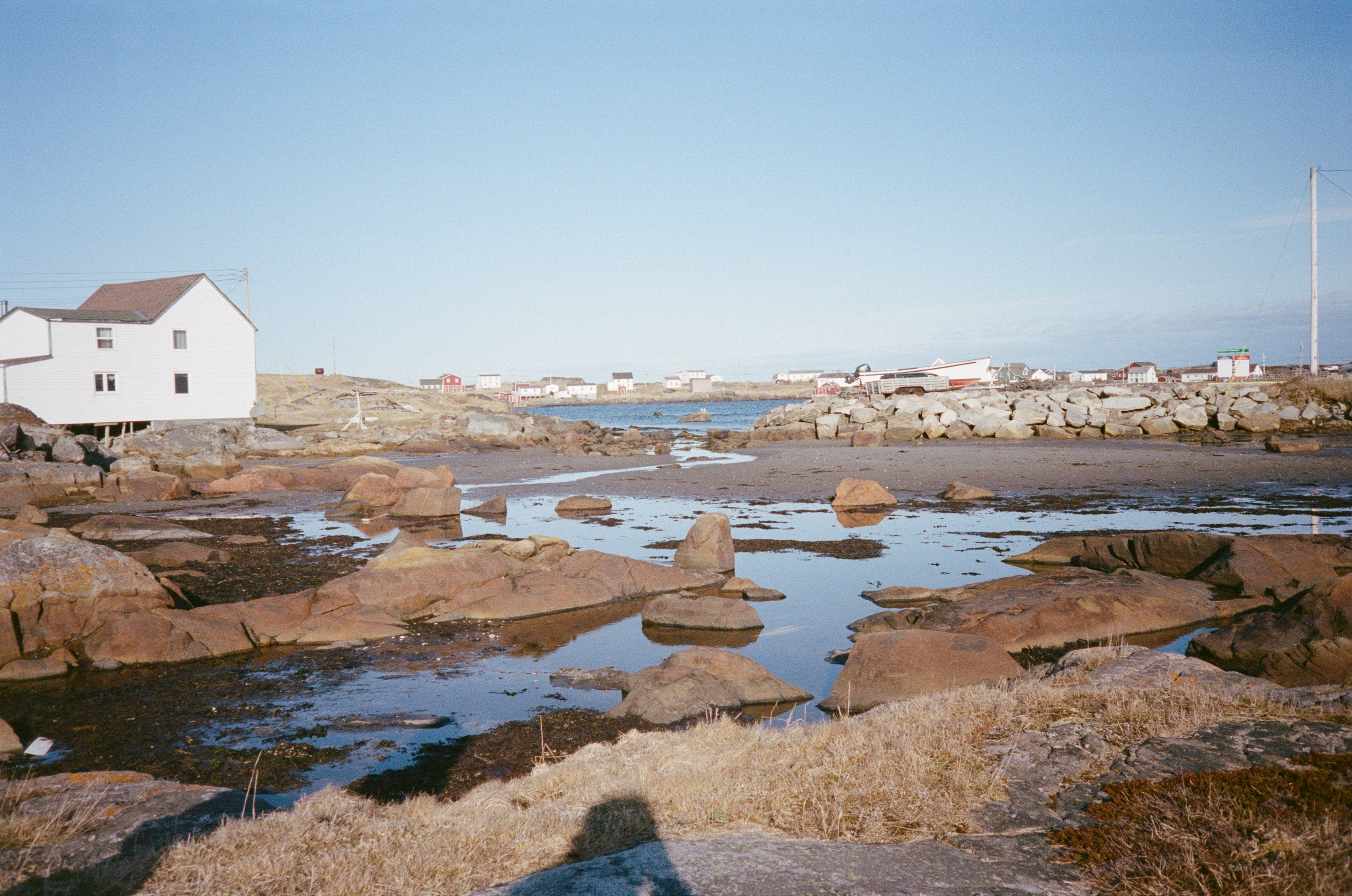
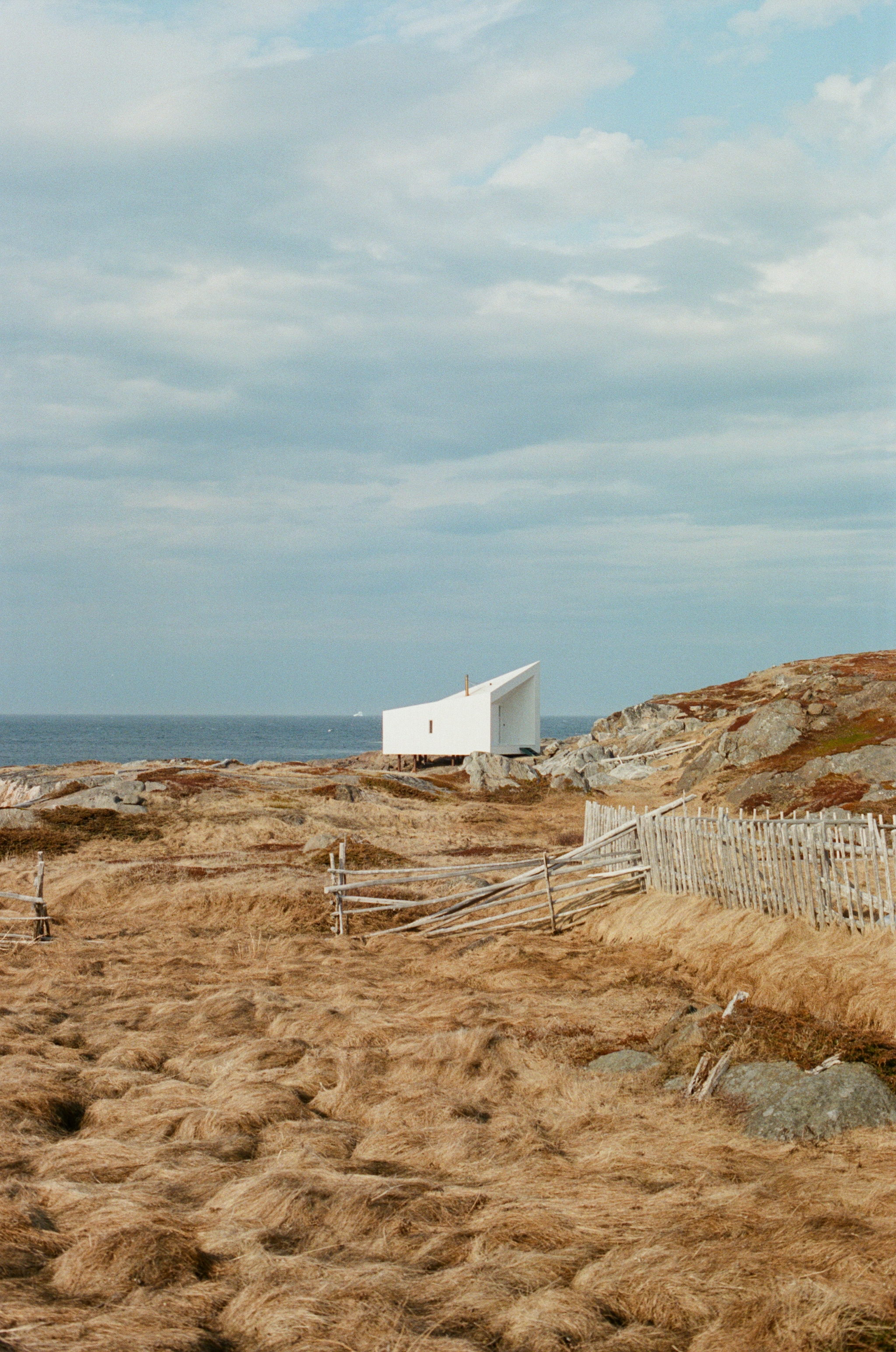
Last spring Assistant Professor Gareth Long and eight undergraduate Daniels Faculty students traveled by air, land and sea to Fogo Island. Known as an island off an island, Fogo Island is an outport community: a remote coastal settlement unique to the province of Newfoundland and Labrador.

“For many students this is a completely new and foreign landscape in which to find themselves,” says Long. “Though still in Canada, it couldn’t be more different to the experience of being in Toronto.”

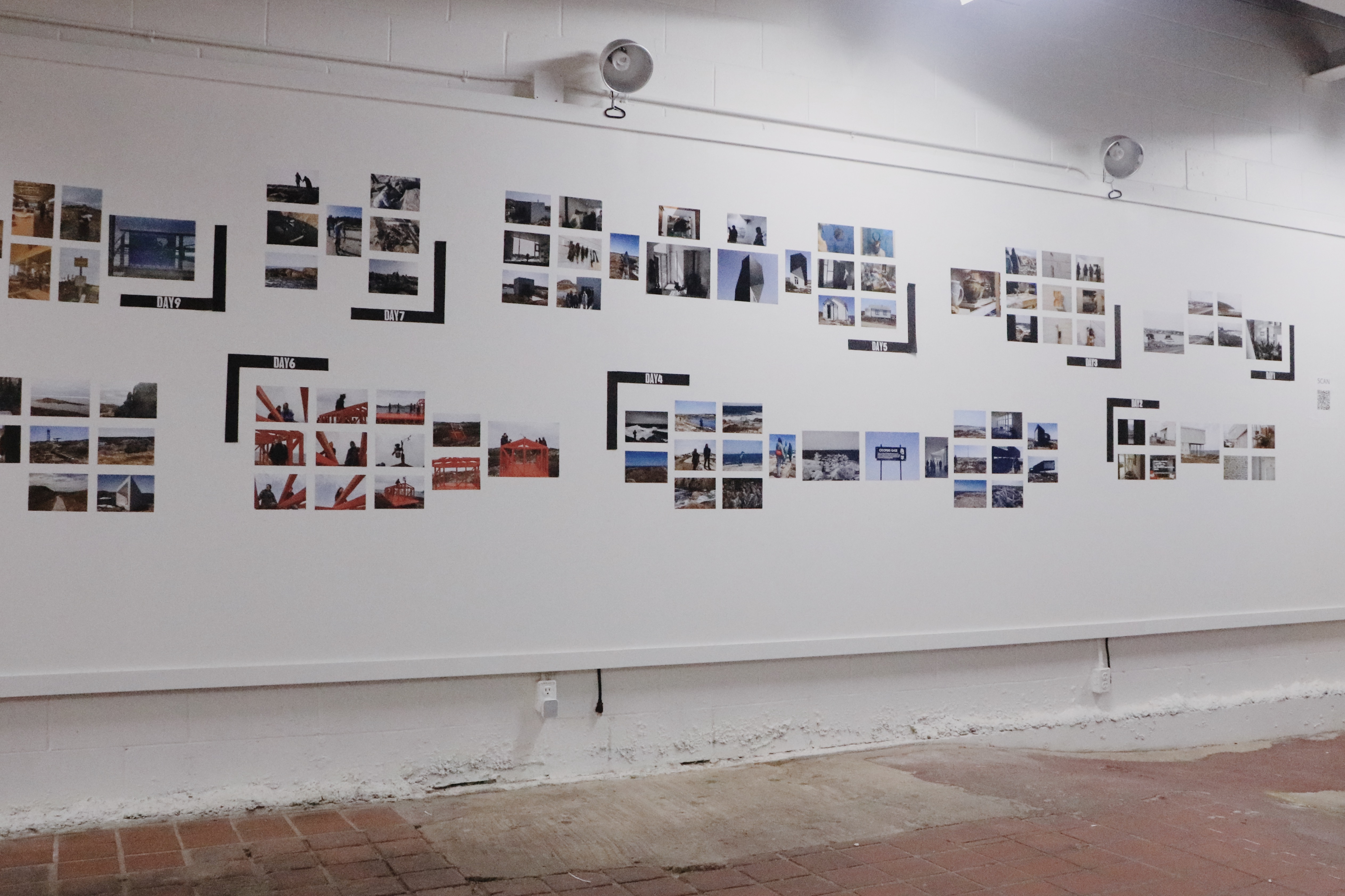
The trip was the first of its kind in the visual studies program at the Daniels Faculty, and one that Long hopes to recreate in the future. Over the course of 10 days, students experienced the island through a series of seminars, fieldwork and visits with both artists-in-residence and locals.

In partnership with Fogo Island Arts, the students were introduced to an institution created with the conviction that art and artists have the capacity to instigate social change and offer new perspectives on issues of contemporary concern. Founded as an artists’ residency program, Fogo Island Arts is part of Shorefast, a registered Canadian charity with the mission to build economic and cultural resilience on Fogo Island, making it possible for local communities to thrive in the global economy. The Fogo Island Inn, designed by architect Todd Saunders, is also a Shorefast initiative and has become a globally recognizable travel destination while helping to secure a resilient economic future for Fogo Island.

“The visual studies students were invited in to not just witness, but become a part of this larger story, this larger social enterprise that has, since its inception, had art at the centre of its mission,” says Long. “Though it is highly specific to Fogo Island, it resonates with countless other places in the world."

For Satyam Mistry, a fourth-year architecture and visual studies student, Fogo Island’s reputation as an international art hub, "encouraged me to pursue the chance to visit a place I otherwise could not imagine having the opportunity to do so on my own.”

Here’s a snapshot of the trip’s itinerary:

  • Visits with international artists like Liam Gillick, Cooking Sections, Maria Lisogoroskaya (of Assemble) and Armand Yervent Tufenkian
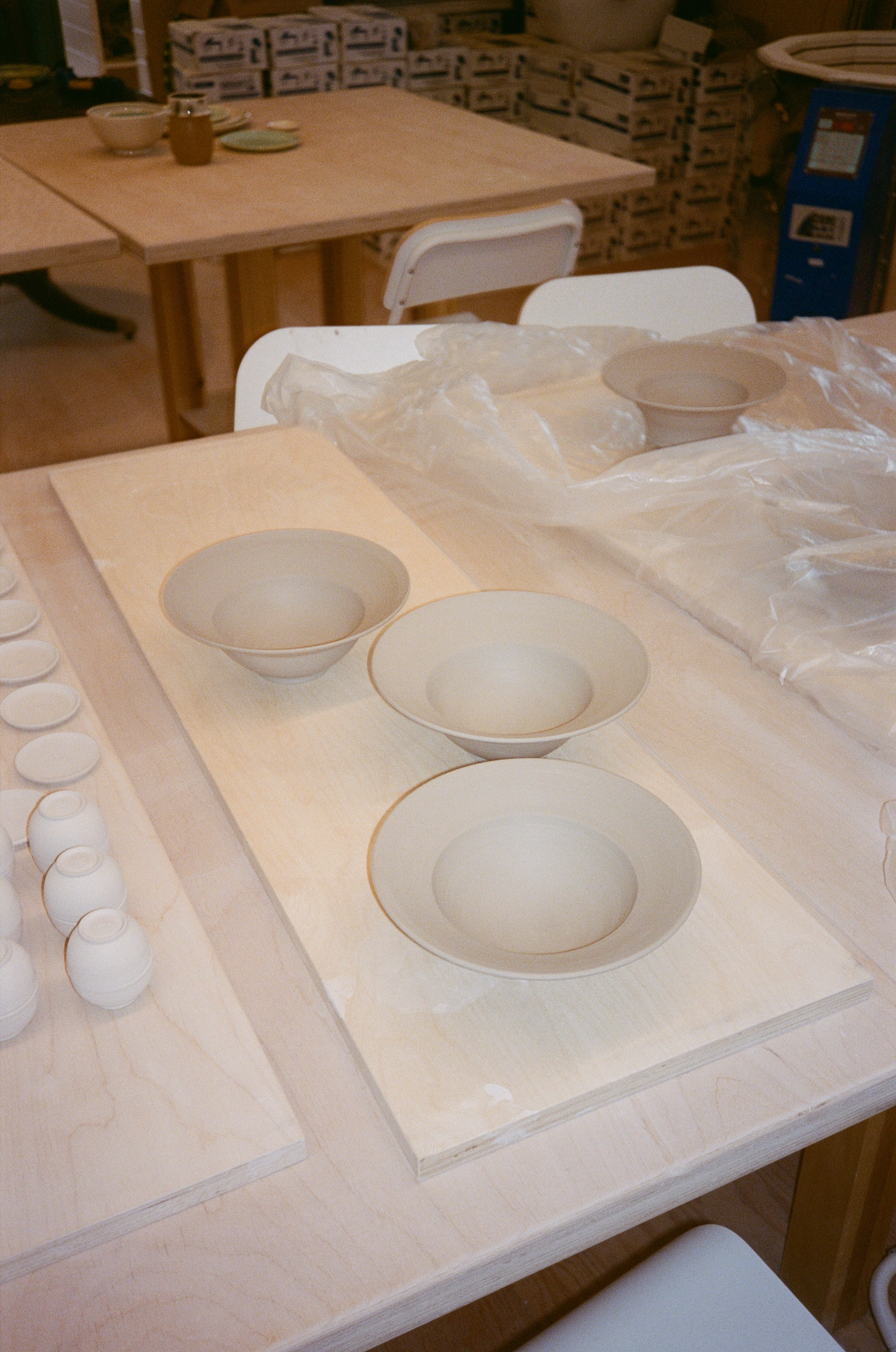
  • Tours of the Fogo Island Inn and the four artist studios, plus visits to the Fogo Island Workshops, the Fogo Island Clay Studios, SaltFire Pottery studio, Peggy White’s guitar studio and the JK Contemporary Art Gallery
  • Student presentations on the Fogo Island Arts’ monographs
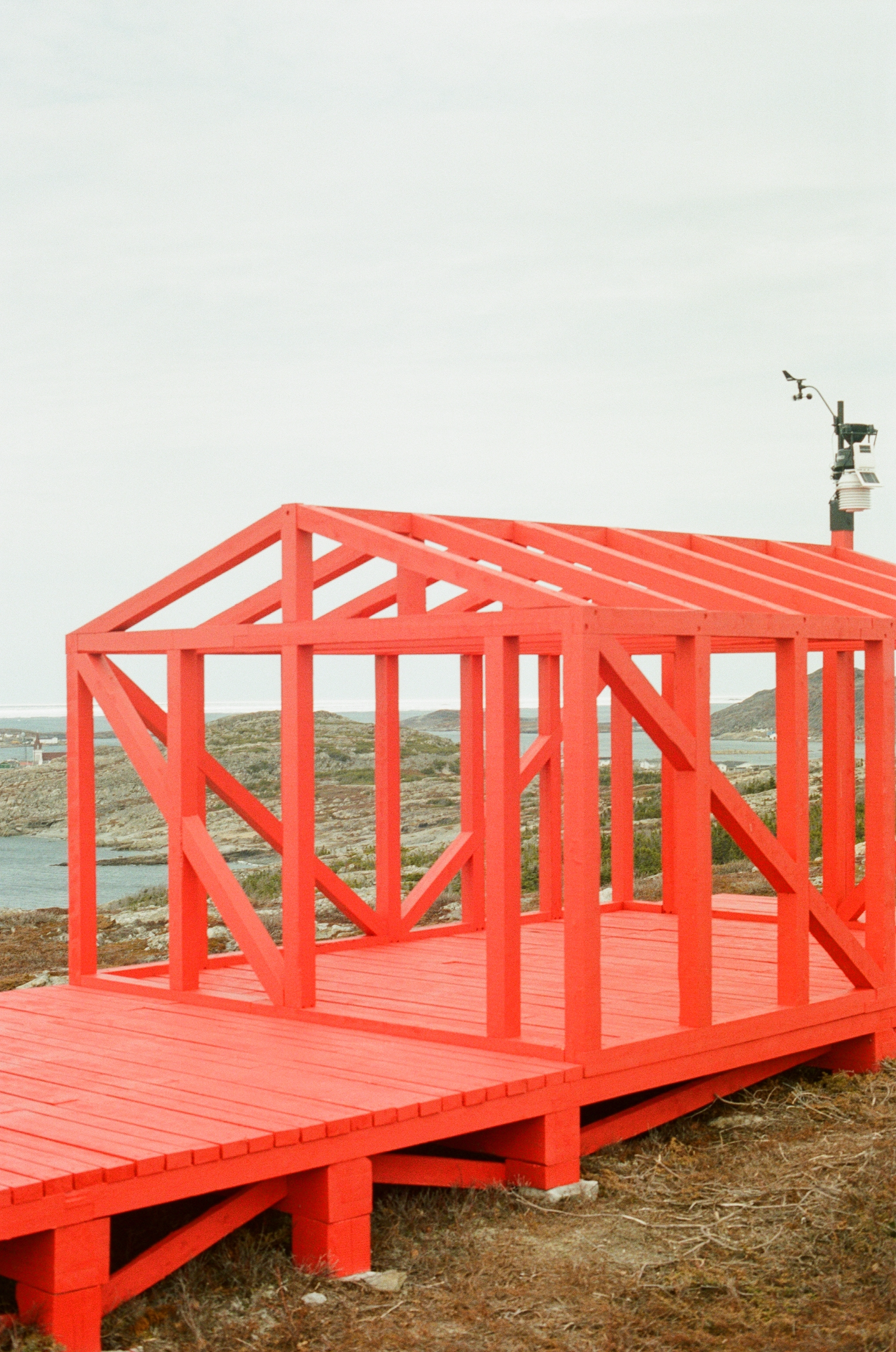
  • Discussions of public artworks on the island Liam Gillick’s “A Variability Quantifier: The Fogo Island Red Weather Station,” and “The Great Auk” by Todd McGrain
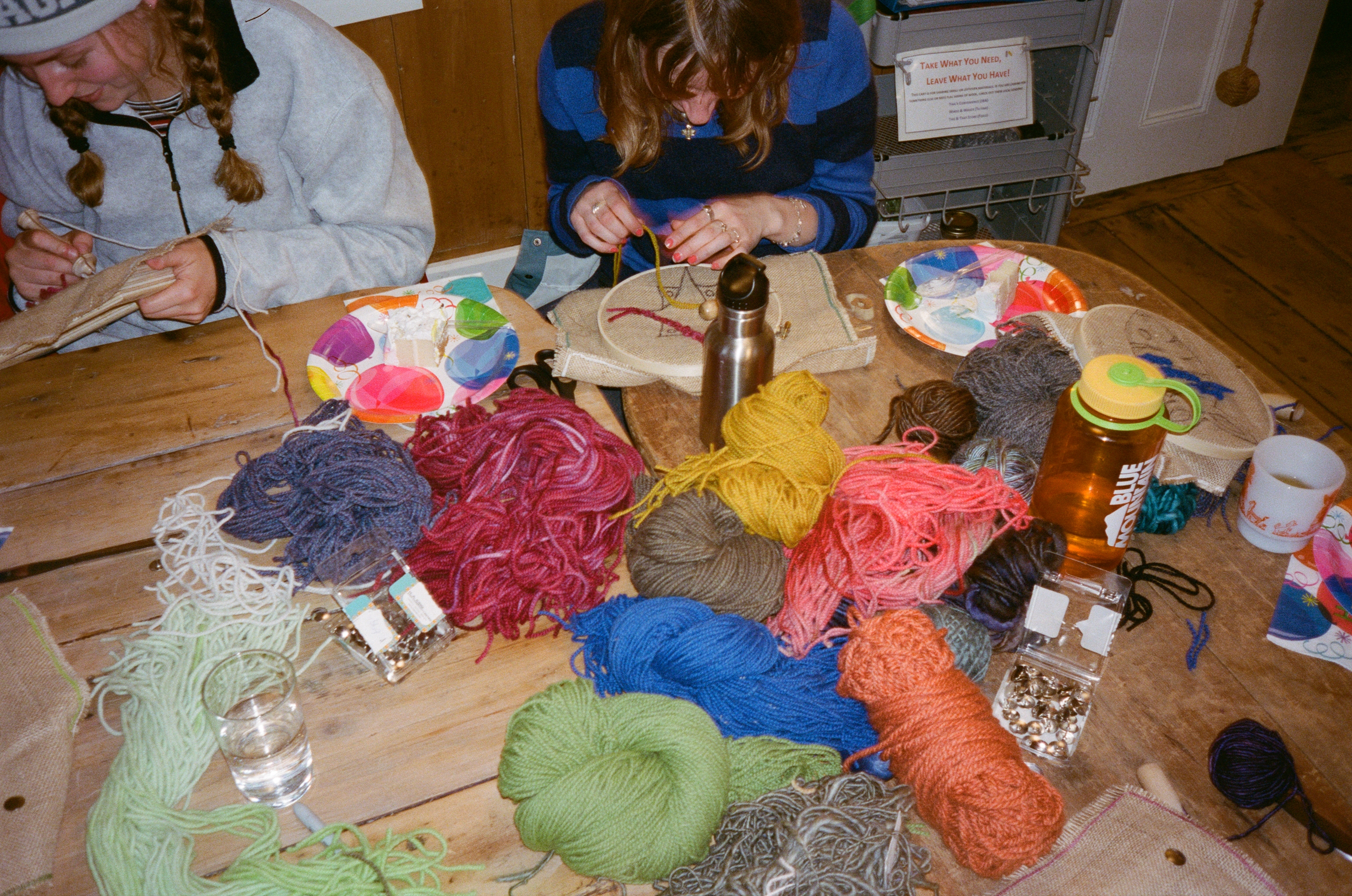
  • Shared meals with locals, hikes to sites such as Brimstone Head (one of the four corners of the "Flat Earth”) and participation in a rug hooking workshop (more than once)

“It was really shocking getting to the island and immediately being hit with so many things to do,” says Olive Wei, a fourth-year student in visual studies. “After the 10 days it felt as if we had left the island with our to-do list barely halfway done. Everything about the island, the landscape, people and history all invite you back to stay longer and longer,” added Wei, who did stay on after the course for a six-week summer internship on the island.

While the syllabus was full of opportunities to experience what Fogo Island is known for, Long says the emphasis in this course was on communal learning, collaboration and the shared testing of ideas. “I hope some found that being together, thinking together, experiencing this newness together, was the most enriching part and that this might lead to new ways of working and being together in the future. That hospitality takes many forms. That the remote doesn’t have to be remote."

These takeaways ring true in the experiences of the students. “As the trip progressed it became clear to me how much dialogue and learning could be generated simply from the act of being together as a cohort with both my peers and instructors,” says Mistry.

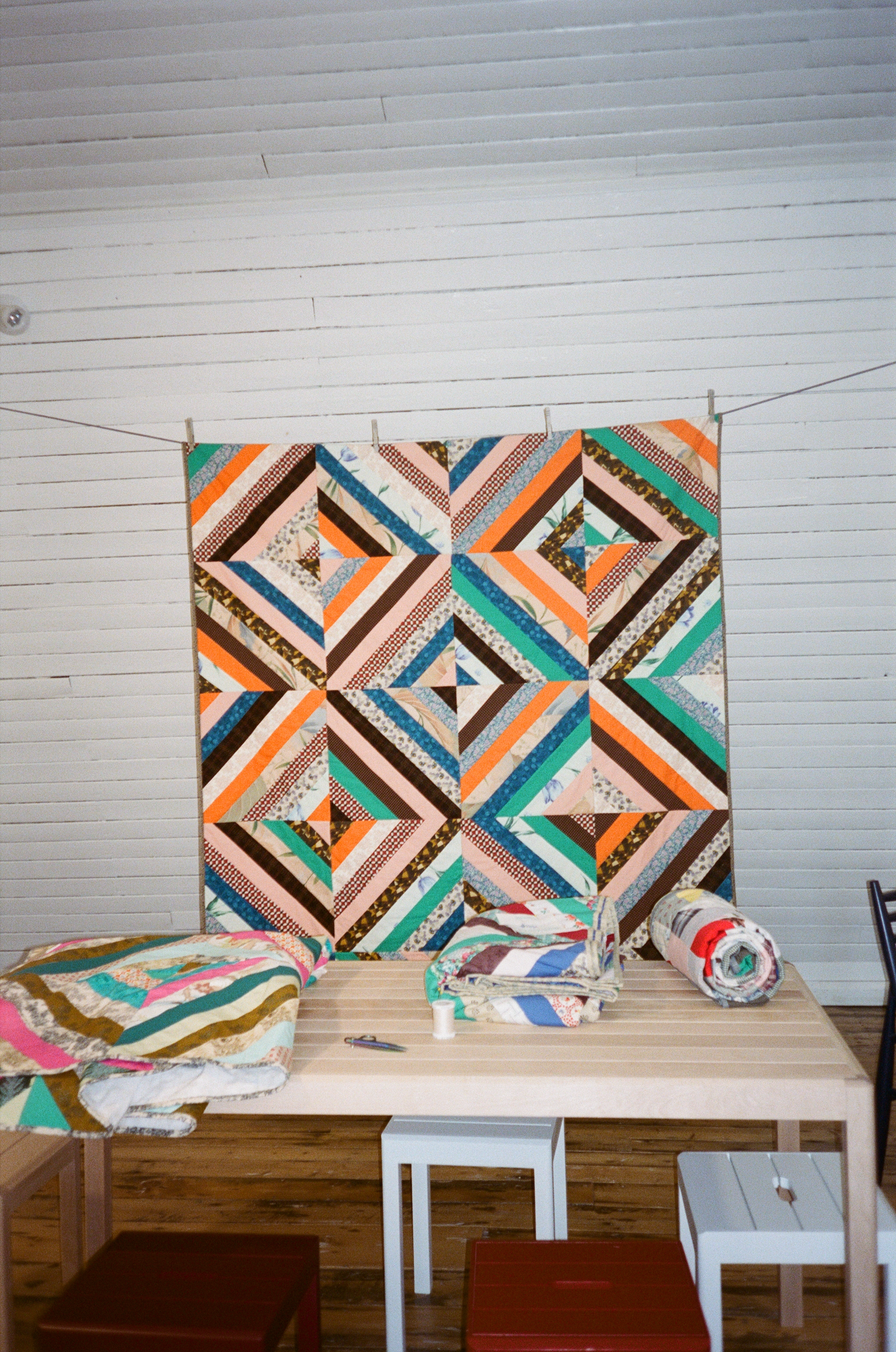
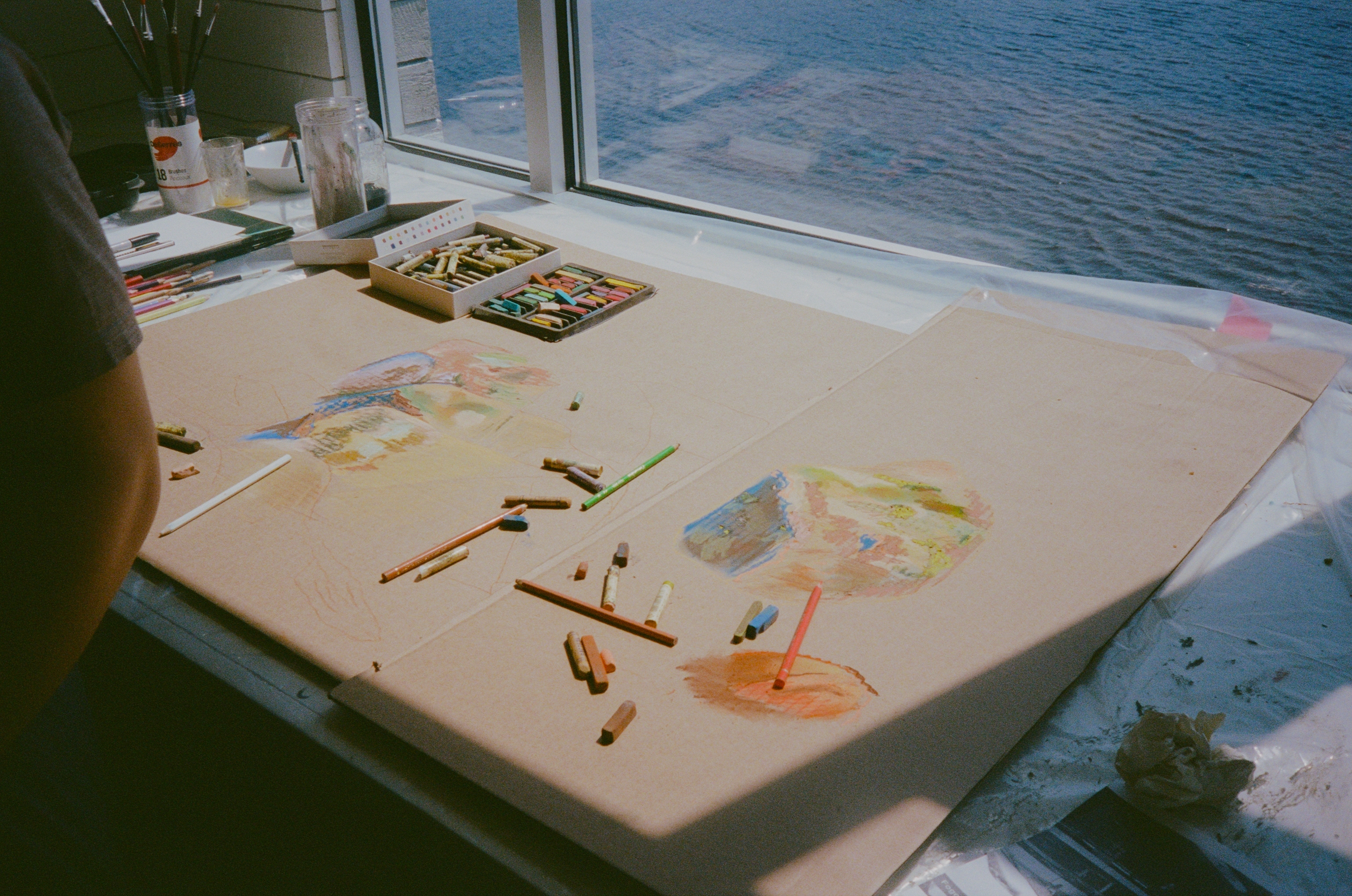
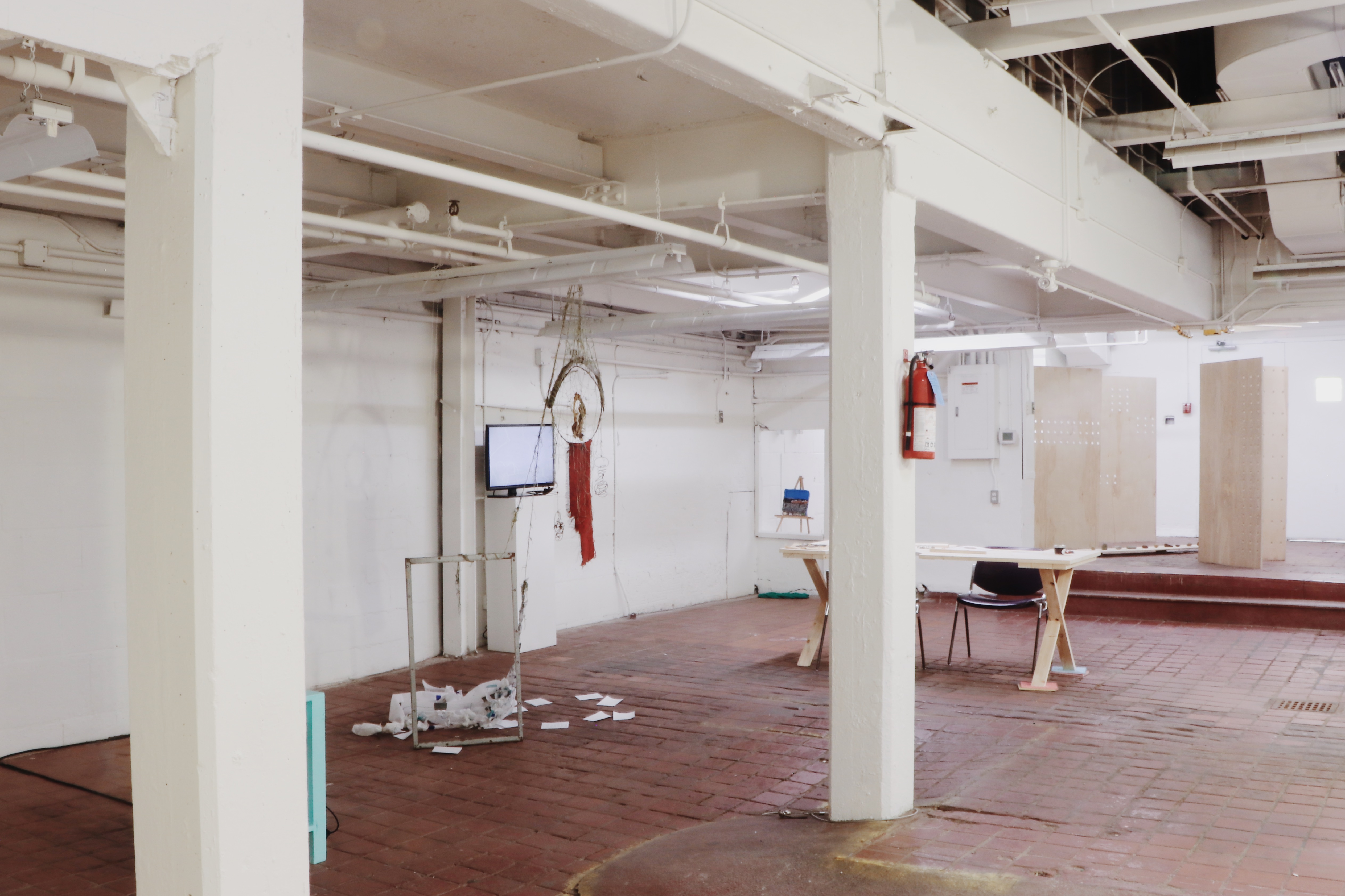
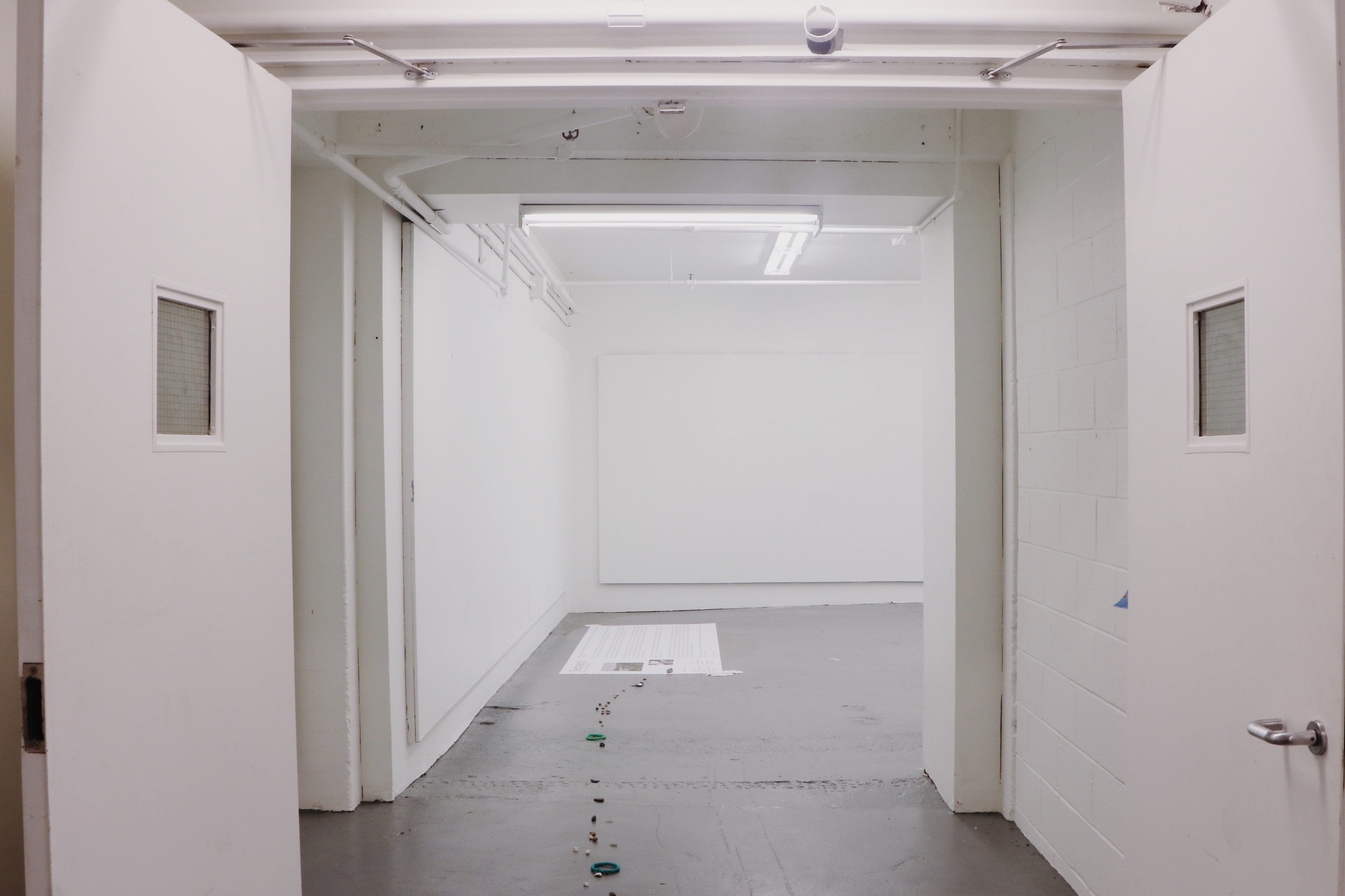
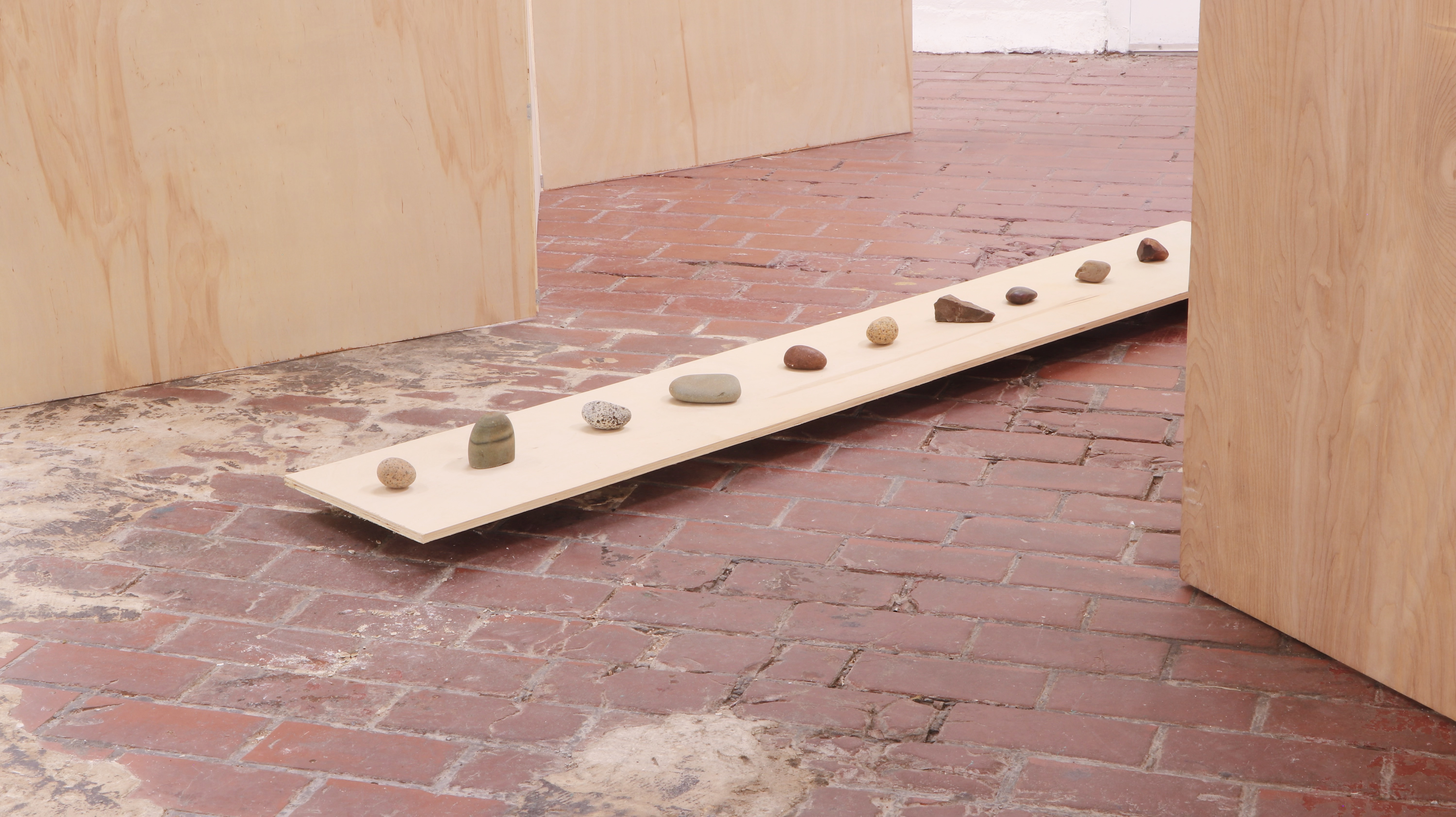
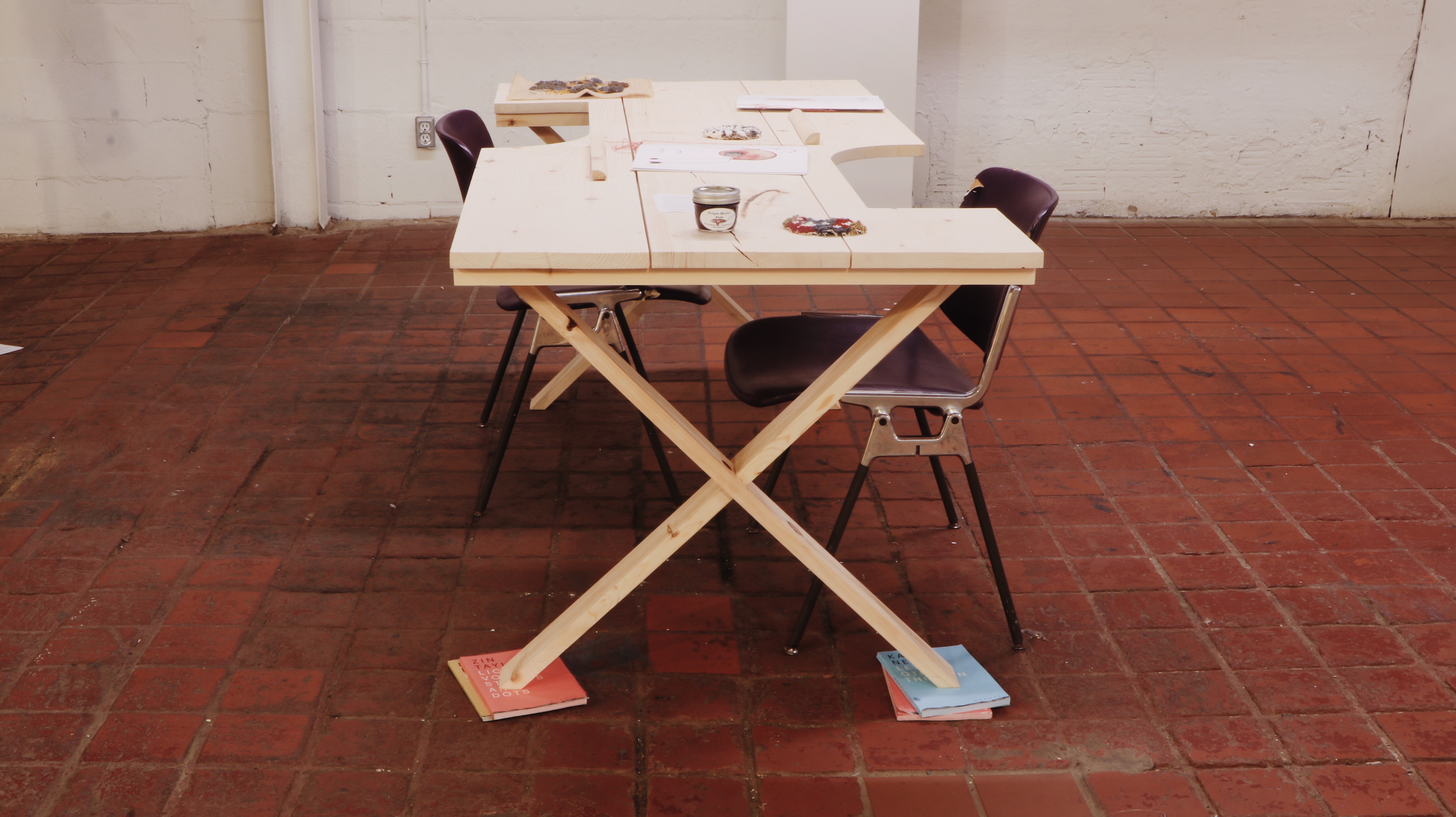
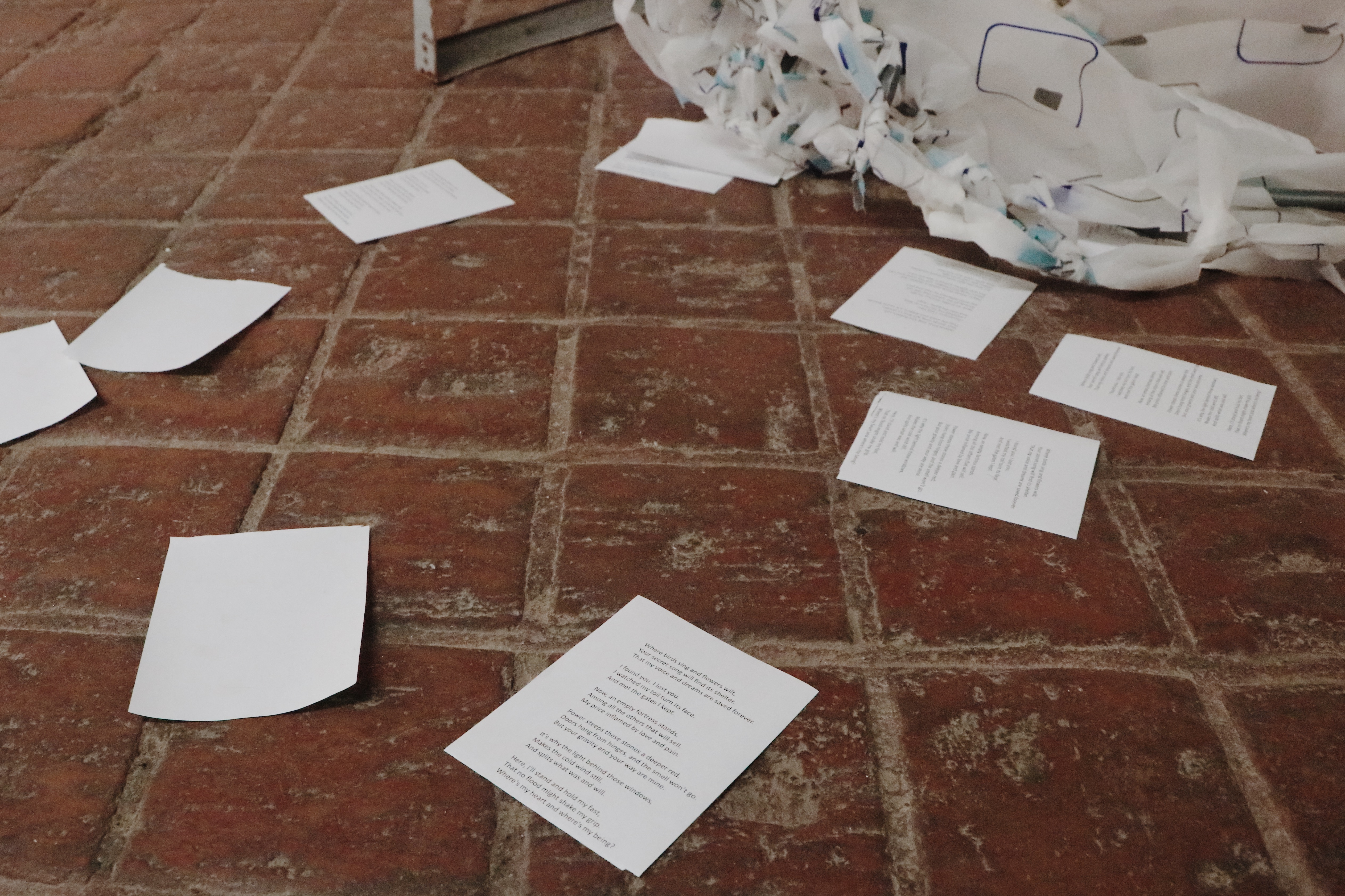
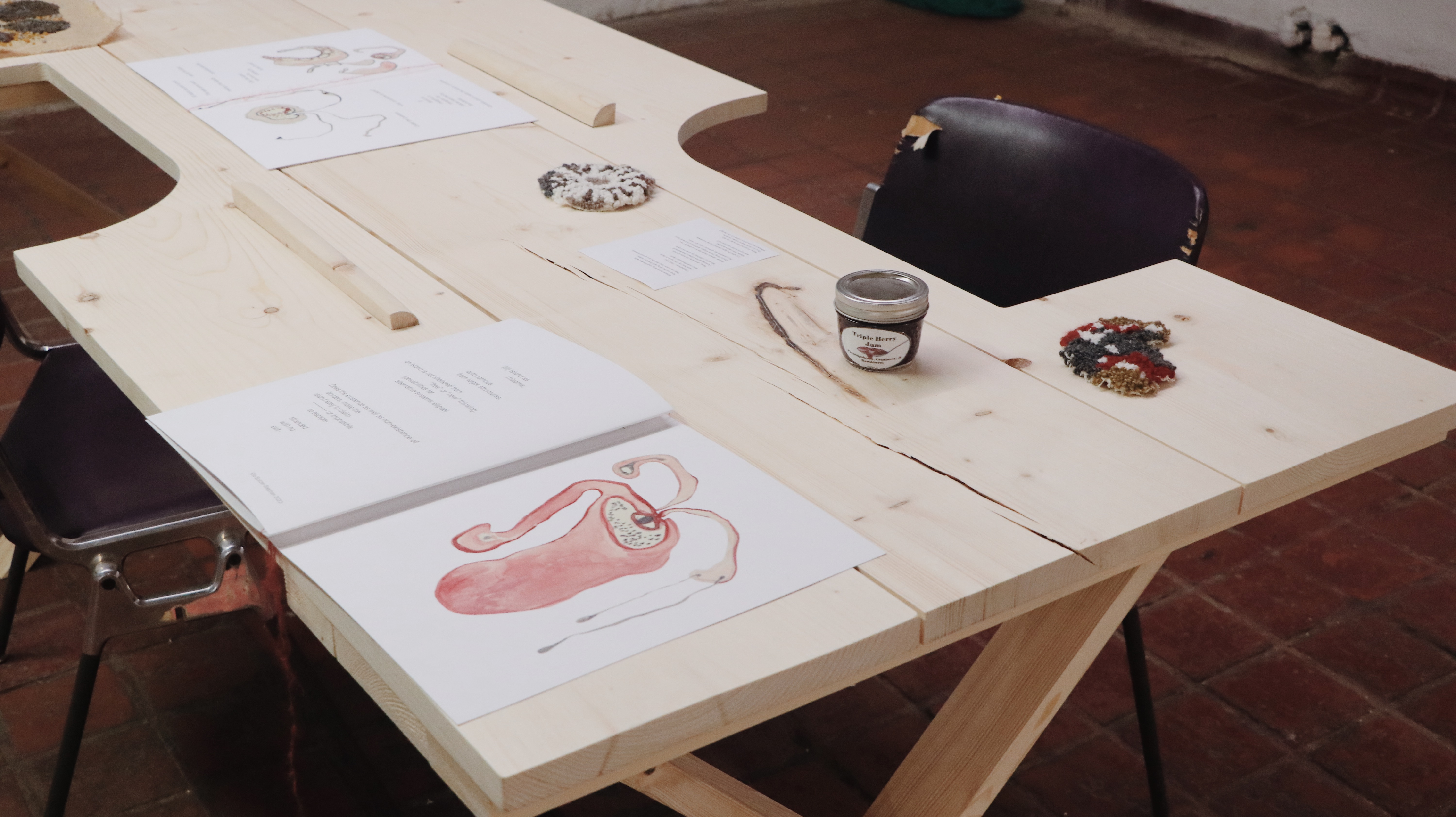
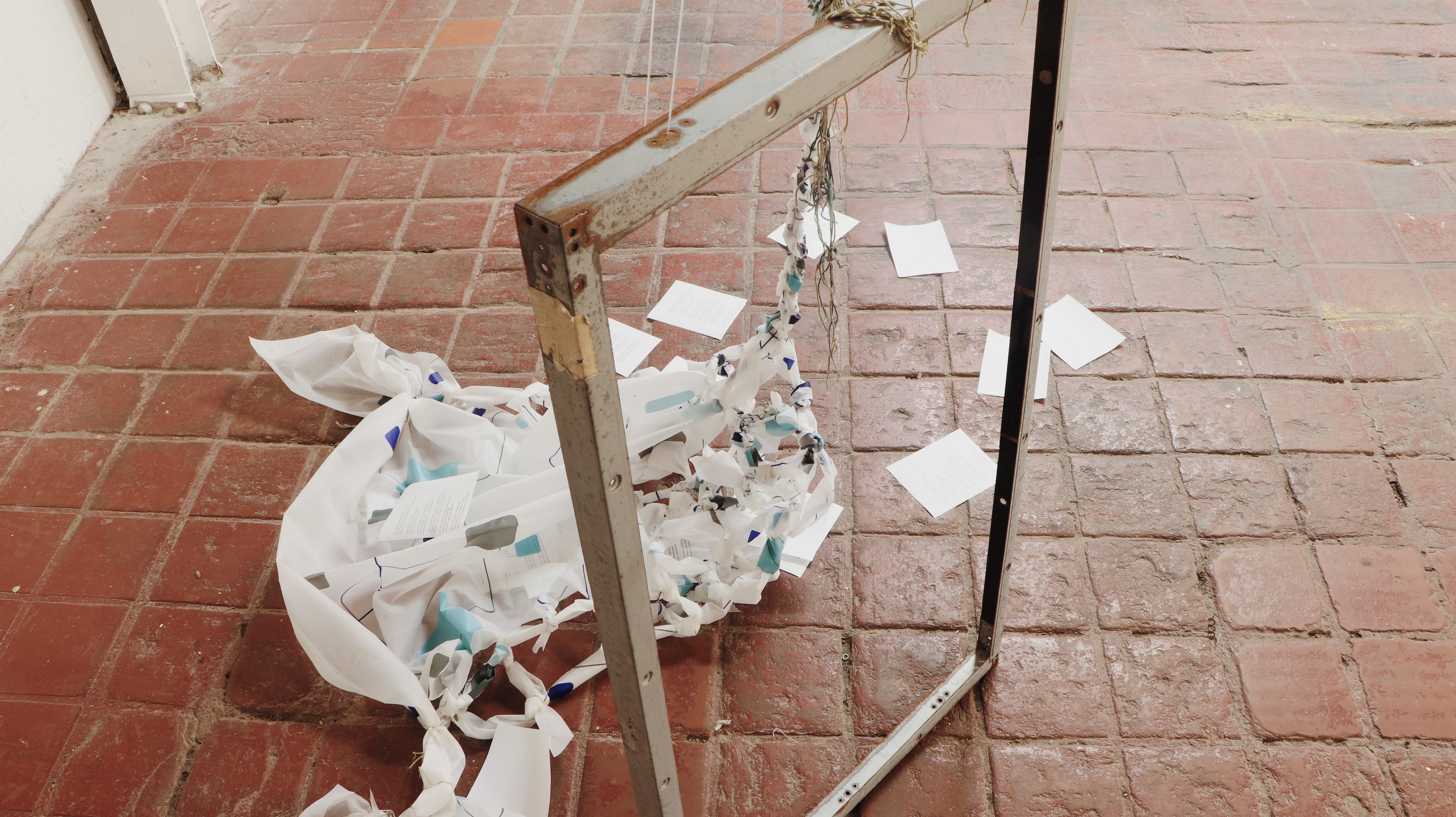
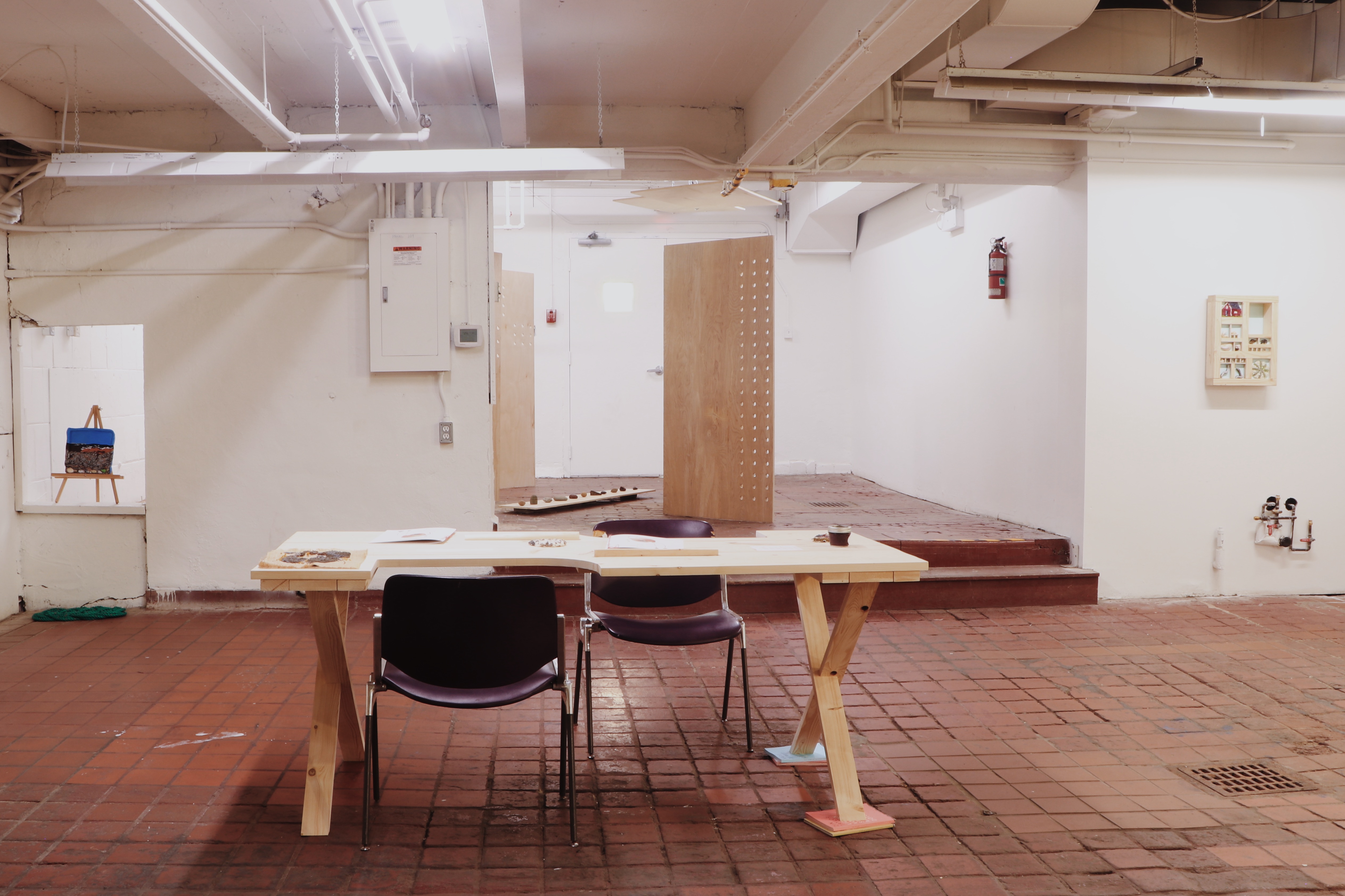
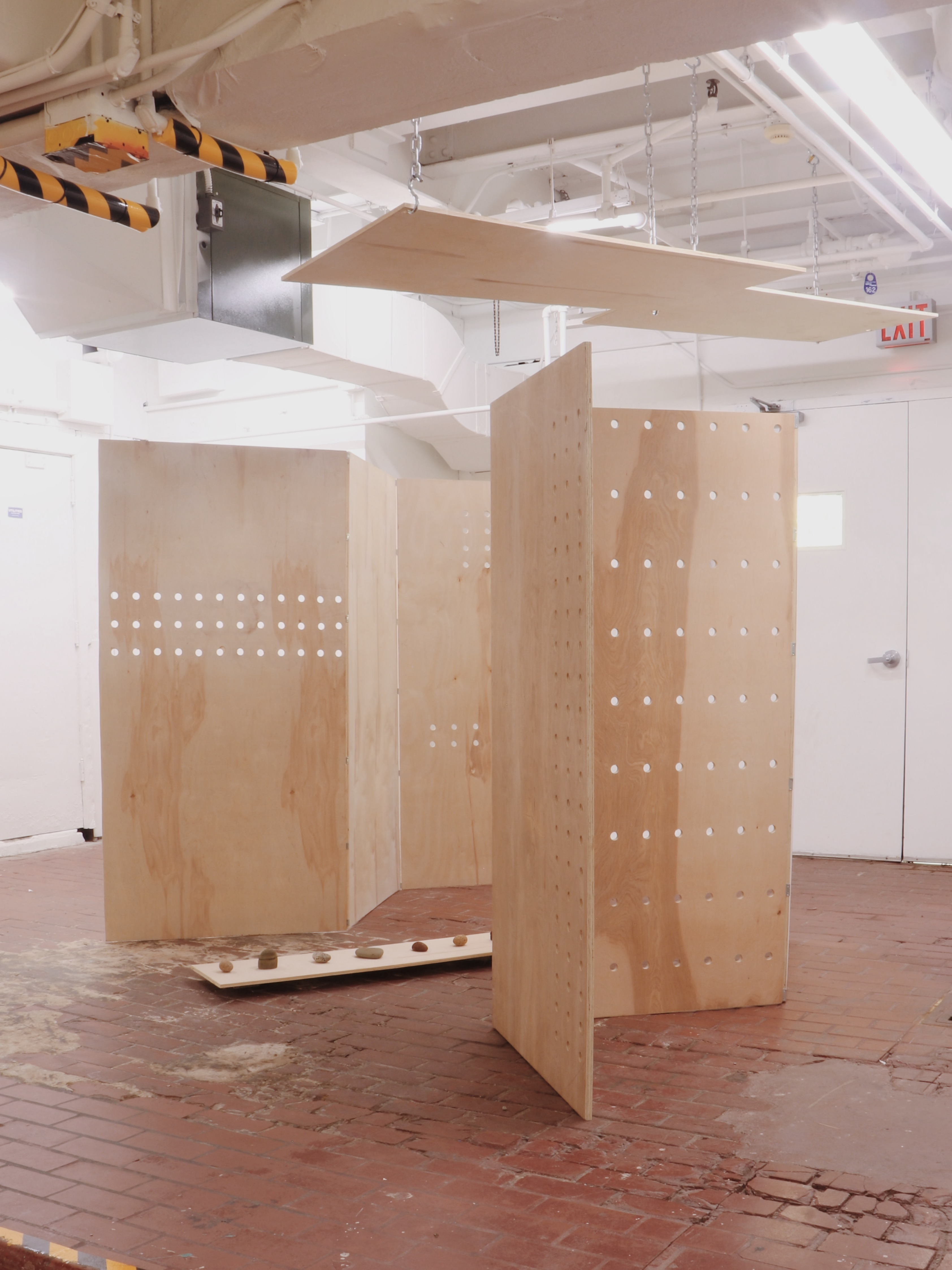
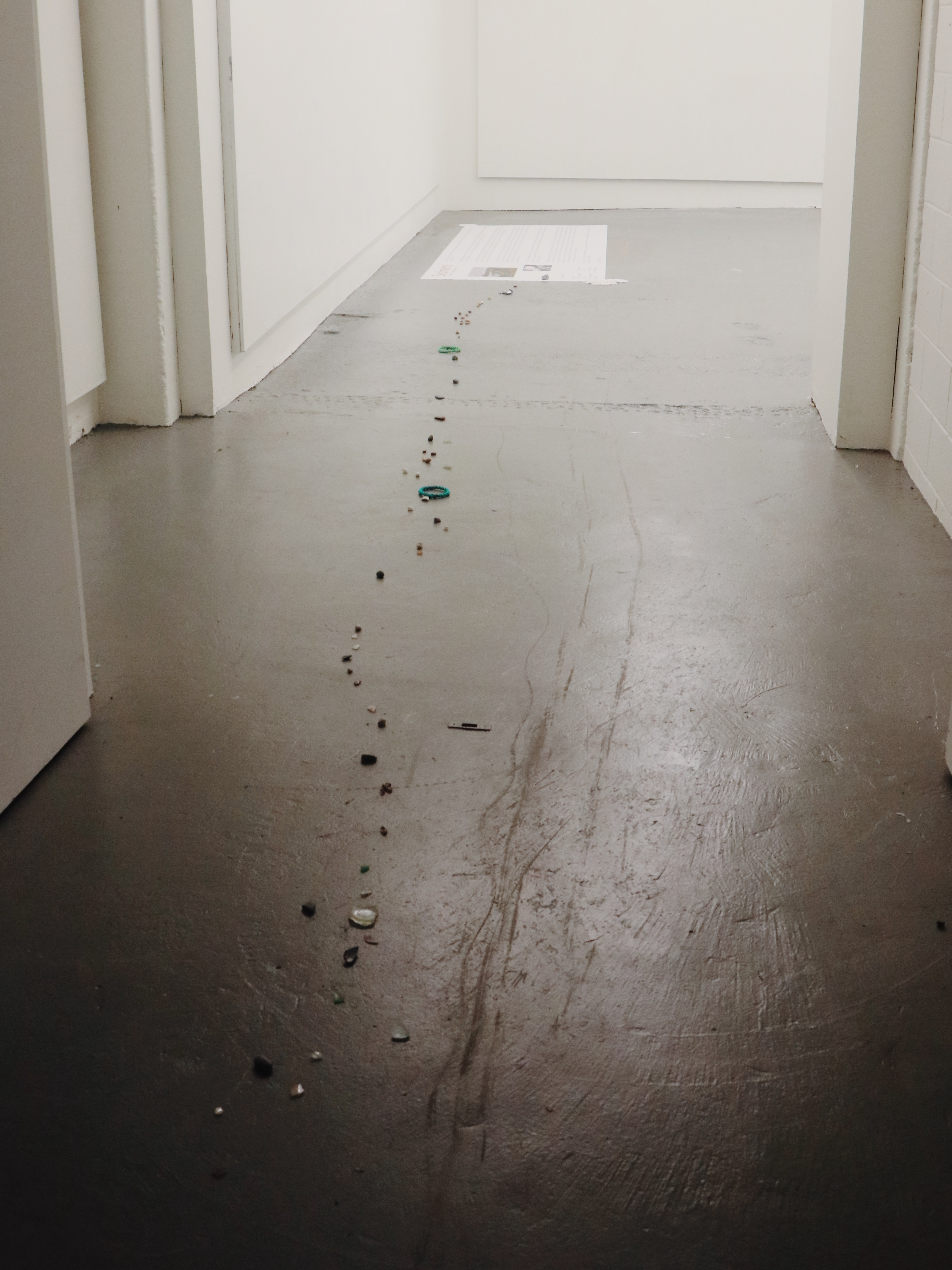
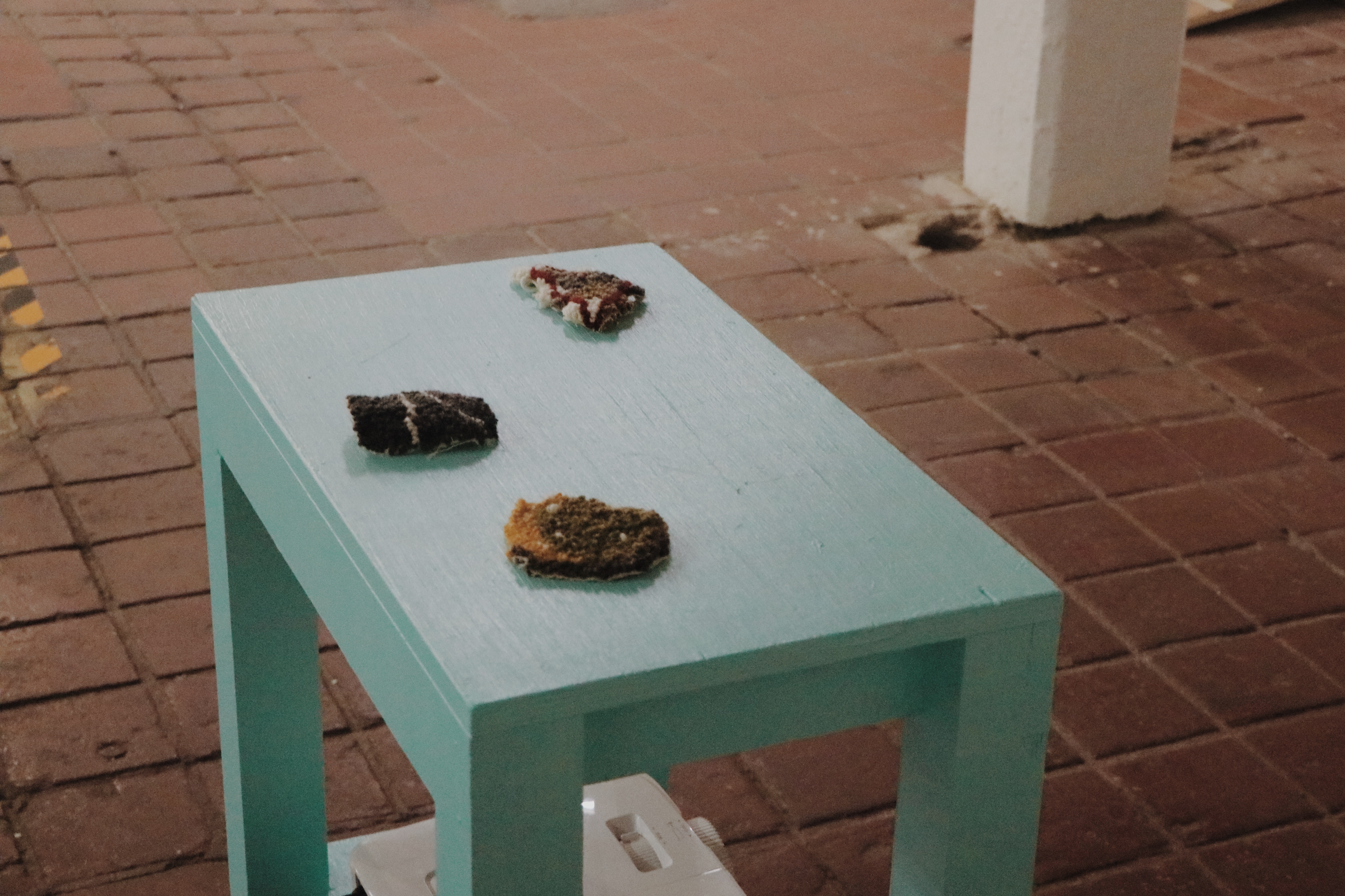
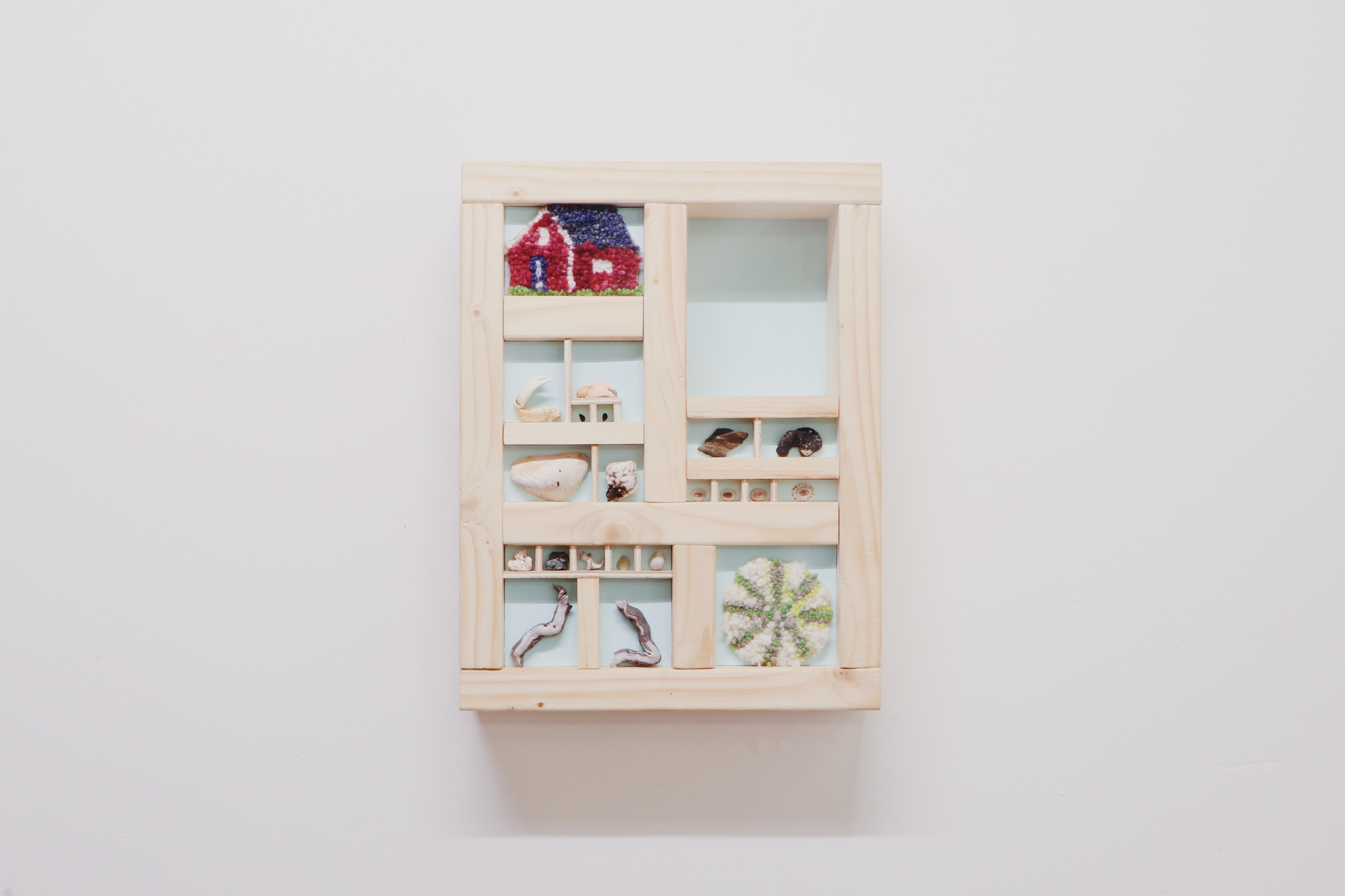
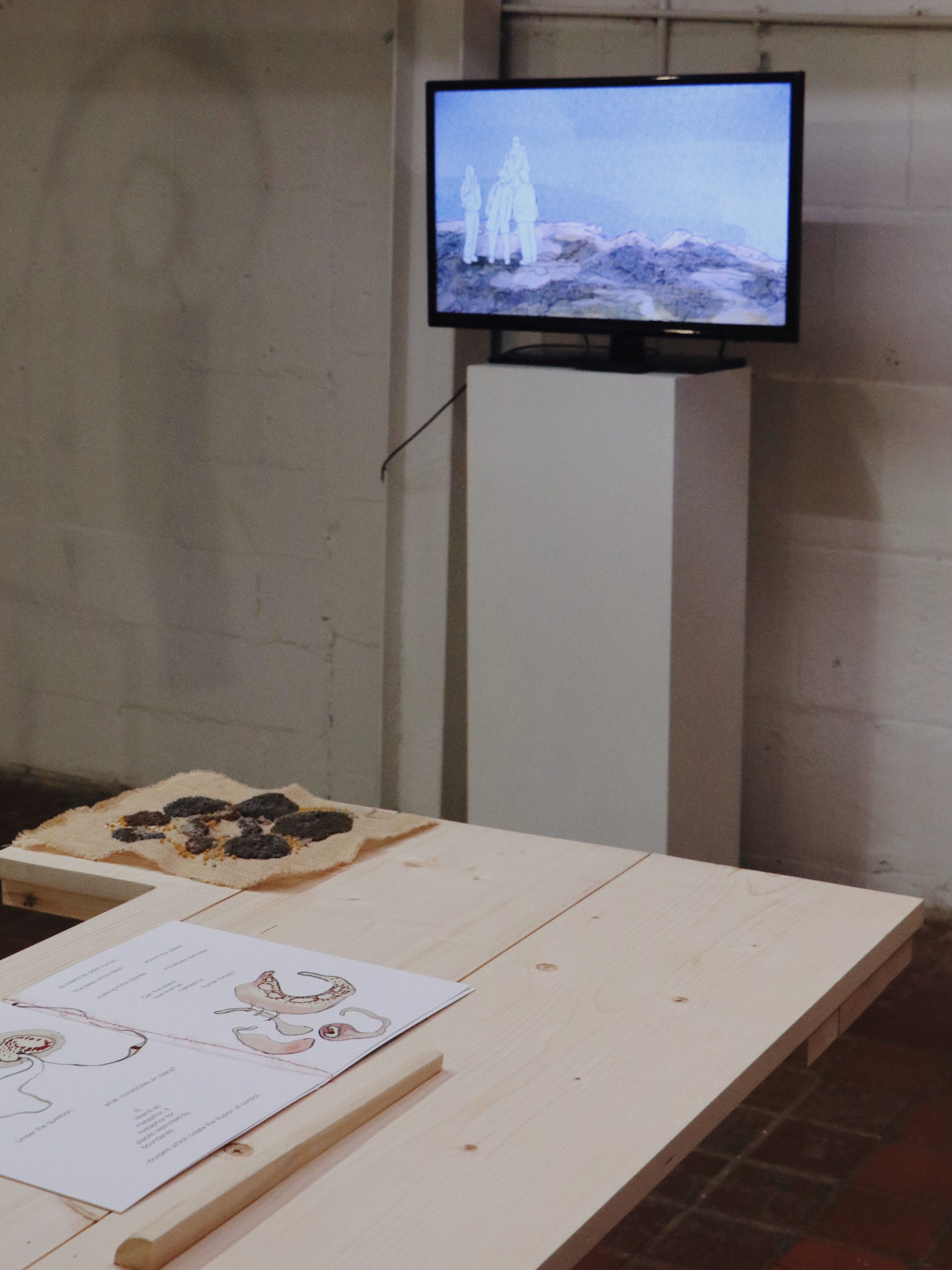
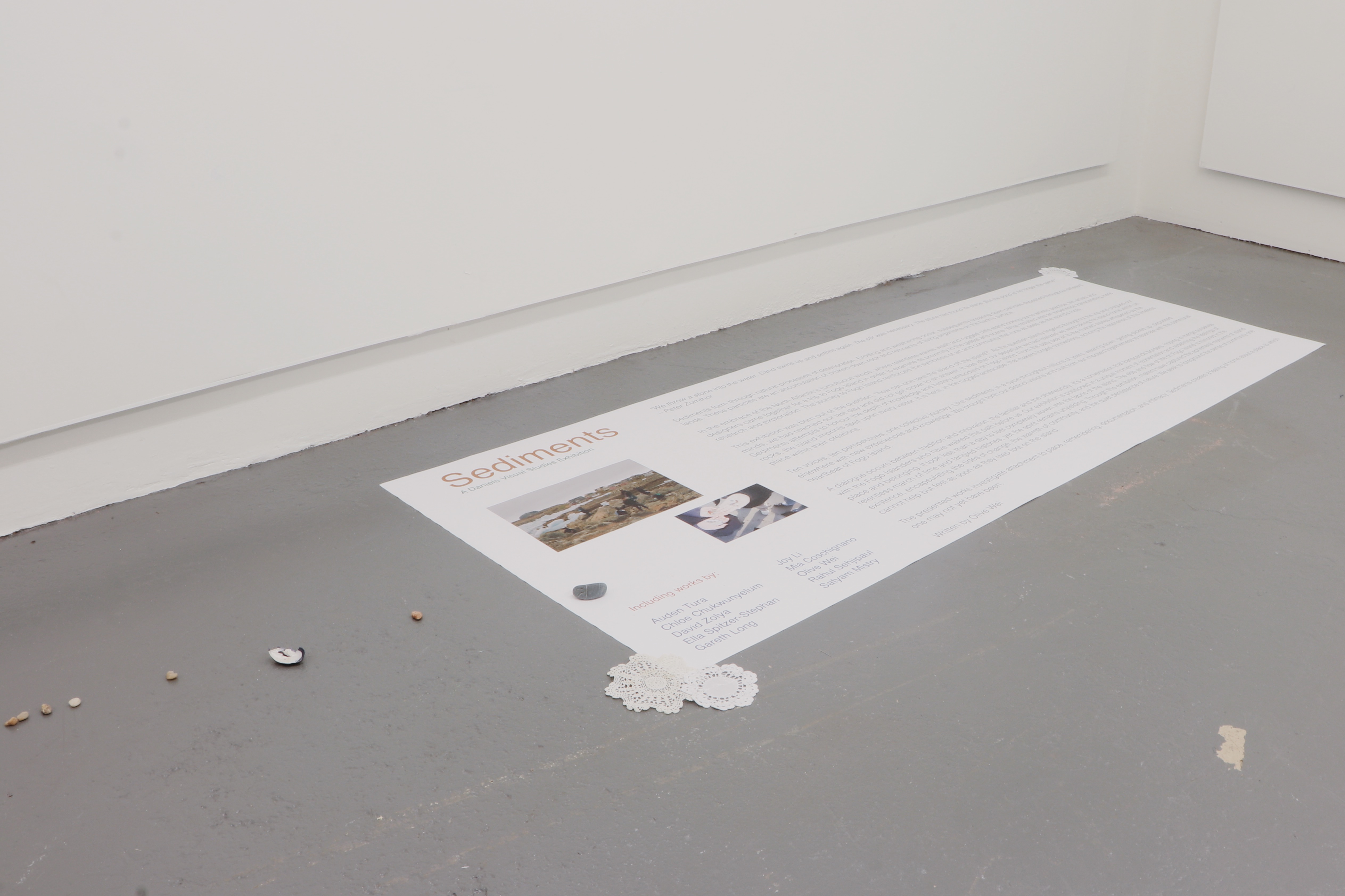
Throughout their time on Fogo Island, students were asked what knowledge they would be able to bring back from the island—how can one take the island off of the island? This question formed the basis of the exhibition, Sediments, that the group produced on their return to Toronto.

"As the question silently lingered throughout the trip and plagued our minds, we had reached our last day and did not get closer to an answer. It was after our departure we had realized we were taking the island within us,” Wei wrote in the exhibition statement. “Sediments attempts to honour the depth of knowledge and history embodied on Fogo Island.”

The presented works investigated attachment to place, remembering, documentation, and intimacy—and a feeling of home about a place one may not have been yet. “The best way one can take the island off the island is through sharing stories of the people, life, and togetherness one experiences while they’re there,” Wei says. “The trip is unique to everyone which lends itself to feeling like a personal, intimate memory.”

Sediments, an exhibition of visual studies work from Summer Studies Abroad: Fogo Island, was on view in the North Borden Building in September 2023. Featuring work from Auden Tura, Chloe Chukwunyelum, David Zolya, Ella Spitzer-Stephan, Gareth Long, Joy Li, Mia Coschignano, Olive Wei, Rahul Sehjipaul—the Daniels Faculty’s digital fabrication technologist, who supported the group on their trip—and Satyam Mistry. 

All images in this story are courtesy Satyam Mistry.

27.10.23 - Looking to study at the Daniels Faculty? Don’t miss these events in November!

The University of Toronto’s John H. Daniels Faculty of Architecture, Landscape, and Design is an unparalleled centre for learning and research, offering graduate programs in architecture, landscape architecture, forestry, urban design and visual studies, as well as unique undergraduate programs that use architecture and art as lenses through which students may pursue a broader education.   

Situated in the heart of Toronto—a hub for creative practice and home to many of Canada’s leading architects, landscape architects, urban designers, foresters, artists and curators—the Faculty focuses on interdisciplinary training and research in architecture, art and their allied practices, with a mission to educate students, prepare professionals and cultivate scholars who will play a leading role in creating more culturally engaged, ecologically sustainable environments.

U of T, which year after year ranks among the top universities in the world, provides a framework of knowledge and expertise on which all Faculty members may draw. Additionally, the environment in which our students learn and congregate is as unique as our program offerings.

The Daniels Building at 1 Spadina Crescent is a bold work of architecture and landscape on a prominent urban site between U of T’s St. George campus and the vibrant centre of Toronto. Across Spadina Crescent, the North and South Borden buildings (home to our visual studies programs) and the Earth Sciences Centre (HQ for forestry studies) complete the Faculty’s trifecta of sites. 

To learn first-hand how you can study at the Daniels Faculty, visit our campus throughout November for the following information-gathering events.

November 7 and 8: Graduate Open House

Stop by the Daniels Building at 1 Spadina Crescent or connect via Zoom on Tuesday the 7th and Wednesday the 8th to learn about the Faculty’s graduate programs in architecture, landscape architecture, urban design and forest conservation, as well as our research stream programs: our PhD in Architecture, Landscape, and Design, our Master of Science in Forestry, and our PhD in Forestry.

Learn, too, how to prepare for the application process, and pick up information on funding, financial aid and awards.  

Four tours of the Daniels Building will also be offered on Tuesday, November 7. 

To register in advance for this Graduate Open House and the individual tours, click here.

November 16: MFC Program Open House

Learn about the Faculty’s Master of Forest Conservation program—either in-person or online—by joining Assistant Professor Sally Krigstin, MFC Program Coordinator, for a presentation on the subject. The in-person session will take place at 3:00 p.m. in Room ES 1016B of the Earth Sciences Centre. For further Zoom, dial-in or other access, contact Laura Lapchinski, Program Administrator, at laura.lapchinski@daniels.utoronto.ca.

If you can’t make it on the 16th, recordings of the sessions will be made available. For more information, please visit the Daniels Forestry website.

November 23: U of T Fall Campus Day 2023 

U of T’s annual fall event for future undergrads, Fall Campus Day provides the opportunity for prospective students, as well as their parents, families and friends, to visit the downtown St. George campus and get details about our programs, colleges, residences, student life and more. Campus and residence tours, mini-lectures and presentations from the different faculties will be running throughout the day.

At the Daniels Faculty, tours and information sessions will take place at 1 Spadina Crescent from 10:00 a.m. to 3:00 p.m. Join us then to learn more about our undergraduate programs in Architectural Studies and Visual Studies, meet with faculty and students, tour Daniels Faculty facilities and more. 

Click here to register for the in-person FCD!

For more information on all three days, check out the Events page on the Daniels Faculty website.

decorative banner with five student faces

12.10.23 - Meet the inaugural cohort of IDEAS Impact Award Fellows

The IDEAS Impact Award seeks to recognize Daniels Faculty students for their contributions towards advancing inclusion, decolonial work, equity, accessibility and sustainability at the Faculty or in external communities. 

Seeing the opportunity to recognize their peers for exemplary contributions in this space, the Faculty’s three student unions—the Architectural and Visual Studies Student Union (AVSSU), the Forestry Graduate Student Association (FGSA) and the Graduate Architecture Landscape and Design Student Union (GALDSU)—established the award during the 2022-2023 academic year with the support of the Office of the Assistant Dean, Equity Diversity and Inclusion.  

Nominations were reviewed by the Student Impact Award Committee, which was composed of representatives from AVSSU, FGSA, GALDSU and the Office of the Assistant Dean, Equity Diversity and Inclusion. The mandate of the selection committee is to help the Daniels Faculty advance values of equity and inclusion by ensuring that the candidates selected meet or exceed the award criteria. 

Each recipient of the IDEAS Impact Award is given the lifetime title of Impact Fellow and will join a growing network of students in support of their development as social impact advocates and change-makers.

Meet the inaugural cohort of Impact Fellows:

Oluwatamilore (Tami) Ayeye  

Tami AyeyeA fourth-year student in the Honours Bachelor of Arts in Architectural Studies program, Ayeye is recognized for his impact as a mentor for younger students, and his sincere efforts in facilitating these relationships to build community among Black students. Through his spirited work in Black Students in Design, Ayeye supports fellow students while making design and industry skills more accessible to budding Black designers. 

Megan Barrientos  

Megan barrientos

Barrientos, a Master of Architecture (MARC) student, is recognized for asking critical questions about race and design, her demonstration of her involvement in supporting BIPOC communities, her responsiveness and spirited advocacy in the face of rising racial discrimination, and her honouring and support of Asian communities during critical times. 

Gal Volosky Fridman 

Gal Volosky Fridman

A third-year MARC student, Fridman is recognized for her commitment toward finding ways to create spaces that facilitate appropriate and meaningful experiences for the elderly population, and her efforts toward navigating a sincere and personal connection and new insights on larger global demographic trends. 

Farwa Mumtaz 

Farwa Mumtaz

Mumtaz, a recent graduate of the MARC program, is recognized for her efforts to facilitate meaningful connections and mentorship between students of all backgrounds while navigating the unforeseen challenges brought on by the pandemic, and for her sincere and fierce commitment to building meaningful relationships and honouring Muslim women and the Muslim community at large. 

Emilie Tamtik  

Emilie Tamtik

A third-year MARC student, Tamtik is recognized for facilitating a space for students to navigate unconventional and innovative modes of fashion design and production, her efforts to ask critical questions about the life of materials, and her work in planning and executing the Victoria College Environmental Fashion Show, demonstrating tangible impacts through sustainable design practices and honouring the creativity and activism of student designers. 

22.09.23 - Daniels Faculty to cohost interdisciplinary ROB|ARCH 2024 conference this spring

The presence of robotics in art, research, design and construction has undeniably changed the way these fields operate and will no doubt play an even bigger role in the future. For more than a decade, the Association for Robots in Architecture has been working to consolidate knowledge in this area, bringing universities together to form a transdisciplinary network of robot users worldwide.

This spring, the Daniels Faculty is pleased to host ROB|ARCH 2024, the Association’s highly regarded biennial workshop and conference, alongside the University of Toronto Robotics Institute, the Design + Technology Lab at The Creative School (Toronto Metropolitan University) and the Waterloo School of Architecture. 

Each gathering aims to bring together international teams of researchers and practitioners to share expertise, foster networks, increase knowledge and stimulate innovation. ROB|ARCH 2024 will consist of three days of hands-on workshops (May 21 to 23) and two days of conference presentations (May 24 to 25). 

The hosting team, which includes the Daniels Faculty’s Maria YabloninaZachary MollicaPaul Howard HarrisonNicholas Hoban and Brady Peters, has selected the theme Beyond Optimization. Intended as a provocation, the 2024 conference will reflect on the changes affecting the field of robotics in art, design and architecture—and how to respond by shifting priorities and examining the criteria by which we evaluate research. The hosts aim to move beyond technically focused discourse toward inclusive conversations that centre critical approaches in robotics. 

A detailed list of workshops and registration details will be announced in the fall of 2023, and discounted registration fees will be available for students. Conference events will be hosted in the Main Hall of the Daniels Building at 1 Spadina Crescent. 

Dates 

  • Workshops: May 21 to 23, 2024 
  • Conference: May 24 to 25, 2024 (call for papers deadline: October 16, 2023) 

Visit the ROB|ARCH website and follow @robotsinarchitecture for the latest information. 

03.10.23 - Announcing the 2023-2024 Master of Visual Studies Proseminar series

Presented by the John H. Daniels Faculty of Architecture, Landscape, and Design at the University of Toronto, the annual MVS Proseminar offers visual studies graduate students in curatorial studies and studio art the opportunity to connect and exchange with field-leading international and local artists, curators, writers, theorists, and other creative scholarly practitioners and researchers.

The 2023-2024 MVS Proseminar series is organized by Zach Blas, assistant professor, and Jean-Paul Kelly, assistant professor and director of the visual studies program at the Daniels Faculty.

All events take place in Main Hall at the Daniels Building at 1 Spadina Crescent (unless otherwise noted) and are free and open to the public. View or download the series poster.

Fall 2023

October 17, 6:30 p.m. ET
Amina Ross
Artist and educator

Amina Ross makes videos, sculptures, sounds, and situations that consider feeling, embodied knowledge, and intimacy as survival technologies for black, queer, trans, and feminine-spectrum people. Ross is the 2023-2024 Estelle Lebowitz Artist in Residence at Douglass College, Rutgers University. They also serve as faculty at Parsons School of Design, The New School, and an Adjunct Assistant Professor of Art at Vassar College.

November 14, 6:30 p.m. ET
Zach Blas
Artist and writer

Zach Blas works across installation, moving image, theory, and performance, engaging the materialities of computation while also drawing out the philosophies and imaginaries that undergird artificial intelligence, biometric recognition, predictive policing, airport security, and the internet. Blas is an Assistant Professor of Visual Studies in the Daniels Faculty at U of T.

November 21, 6:30 p.m. ET
Tina Rivers Ryan
Curator, art historian, and critic

Dr. Tina Rivers Ryan is a curator, art historian, and critic specializing in art since the 1960s and is widely known as an expert on digital art. Dr. Ryan is a curator at the Buffalo AKG Art Museum. This event is part of the Daniels Faculty's Fall 2023 Public Program in association with MVS Proseminar. Register in advance.

POSTPONED: November 28, 3-5 p.m. and 7-9 p.m. ET 
Weather Report: Where are we going with art and its institutions? 

Organized by the Art Museum at the University of Toronto and Fogo Island Arts (FIA), this tenth edition of The Fogo Island Dialogues is a series of panel discussions by renowned international museum directors and curators, moderated by significant contributors in the field.  

NOTE: Given the current context, Fogo Island Arts has decided to postpone the Fogo Island Dialogues originally scheduled for November 28, 2023, in Toronto. These remain important conversations that Fogo Island Arts look forward to in the future.

December 5, 6:30 p.m. ET 
Aisha Sasha John
Poet, dancer, and choreographer

Aisha Sasha John is interested in choreographing performances that occasion real love. She’s passionate about the creative potential of surrender and through her work builds structures that allow for experiences of entrancement. The expressive possibilities exclusive to Black being-together is one of her ongoing research interests. A celebrated poet, Aisha is author of the 2018 Griffin Poetry Prize nominated collection I have to live.

Winter 2024

January 16, 6:30 p.m. ET
Hearth 
Curatorial collective

Hearth seeks to provide a site to present projects by a diverse range of emerging collaborators within a context that values experimentation and community. Hearth works towards an anti-oppressive, queer-positive environment and welcomes marginalized and racialized folks through programming that celebrates the work of a diverse range of emerging collaborators.

February 13, 6:30 p.m. ET
Corina L. Apostol
Curator, art historian, and editor

Dr. Corina L. Apostol curates and researches at the intersection of art and politics, focusing on artists who create long-term, pedagogical, community-based projects to empower their audiences. Dr. Apostol is the co-founder of the seminal activist art and publishing collective ArtLeaks and editor-in-chief of the ArtLeaks Gazette. Dr. Apostol is an Assistant Professor in Social Practice in Contemporary Art and Culture in the Faculty of the Humanities at the University of Amsterdam.

February 27, 6:30 p.m. ET
P. Staff
Artist

P. Staff is a filmmaker, installation artist, and poet, whose interdisciplinary practice explores necropolitics, affect theory, the transpoetics of writers, modern dance, astrology, and end of life care to emphasise the processes by which bodies––especially those of people who are queer, trans, or disabled––are interpreted, regulated, and disciplined in a rigorously controlled society. This event is part of the Daniels Faculty's Winter 2024 Public Program in association with MVS Proseminar. Register in advance.

March 5, 6:30 p.m.
Cassils
Artist

Cassils, Associate Professor of Visual Studies in the Daniels Faculty at U of T, is a transgender artist who makes their own body the material and protagonist of their performances. Their art contemplates the history(s) of LGBTQI+ violence, representation, struggle and survival. Drawing from the idea that bodies are formed in relation to forces of power and social expectations, Cassils’s work investigates historical contexts to examine the present moment.

March 19, 6:30 p.m. ET
Elisa Giardina Papa
Artist

Elisa Giardina Papa is a research-based artist whose practice, employing discarded AI training datasets, censored cinema repositories, factitious colonial travel accounts, or fabricated heretical accusations, seeks forms of knowledge and desire that have been lost or forgotten, disqualified, and rendered nonsensical by hegemonic demands for order and legibility. Papa is an Assistant Professor in the Department of Modern Culture and Media at Brown University.

All images courtesy of the artists. Image captions: 1) Cassils - Tiresias, Performance Still No. 3 (ANTI Festival, Kupio, Finland), 2012. Photo: Cassils with Pekka Mekinen. 2) Amina Ross - sample animation. 3) Zach Blas Profundior (Lacryphagic Transmutation Deus-Motus-Data Network) Mixed-media installation. (12th Berlin Biennale, Hamburger Bahnhof – Museum für Gegenwart), 2022. Photo by Mathias Völzke.


orange shirt day banner

22.09.23 - Daniels Faculty to mark Orange Shirt Day and National Day for Truth & Reconciliation

The Daniels Faculty will honour the experiences of residential school survivors with a University-wide event to mark Orange Shirt Day and the National Day for Truth & Reconciliation. Daniels students, faculty and staff are invited to an in-person commemoration and live-stream on Friday, September 29, beginning at 9:30 a.m. in Main Hall. Register in advance here
Date: Friday, September 29, 2023 

Location: Daniels Building, 1 Spadina Crescent, Main Hall (DA170) 

Agenda

  • 9:30 a.m.: Arrival, light breakfast, coffee and tea 
  • 10:00 a.m.: Remarks of welcome from the Daniels Faculty Indigenous Advisors and Acting Dean 
  • 10:30 a.m.: Livestream of the University-wide Commemoration Event 
  • 12:00 p.m.: Closing remarks, Q&A, lunch 

We encourage all members of the Daniels community to wear an orange shirt on September 29 and 30 to honour the thousands of survivors of residential schools, those who did not return home and their families and communities.  

Image Credit: Artwork by MJ Singleton